

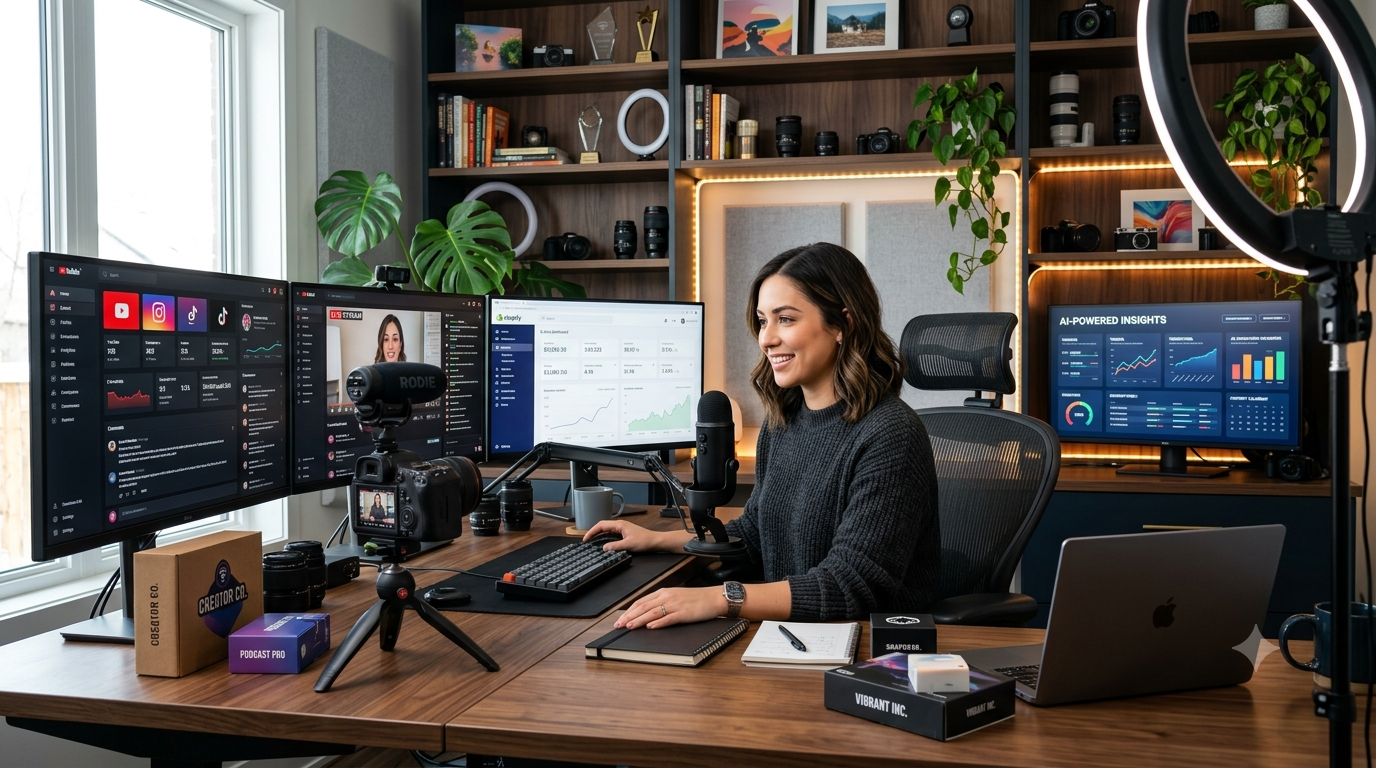
Not long ago, influencers and content creators were primarily seen as marketers who helped brands reach larger audiences through sponsored posts and product endorsements. Today, that dynamic has completely changed. Instead of promoting someone else’s products, many creators are building their own companies, launching successful brands, and competing directly with established businesses. This shift has given rise to creator-led brands, one of the most influential business trends shaping the global marketplace in 2026.
From beauty and fashion to food, fitness, technology, education, and consumer goods, creators are transforming their loyal audiences into thriving customer communities. Armed with millions of followers, deep audience insights, and direct communication channels, creators are bypassing traditional advertising models and building businesses that grow through authenticity and trust rather than massive marketing budgets.
The rapid rise of platforms such as YouTube, Instagram, TikTok, LinkedIn, podcasts, and newsletters has empowered individuals to become entrepreneurs on a global scale. At the same time, advances in e-commerce, artificial intelligence, print-on-demand manufacturing, and direct-to-consumer (DTC) technology have dramatically reduced the barriers to launching a brand. As a result, creator-led businesses are no longer niche ventures—they are becoming serious competitors to legacy companies across multiple industries.
For traditional businesses, this trend represents both a challenge and an opportunity. Companies that once relied on expensive advertising campaigns and retail distribution now find themselves competing against entrepreneurs who already have highly engaged communities ready to buy from them.
What Are Creator-Led Brands?
A creator-led brand is a business founded or owned by a content creator who has built an audience through digital platforms. Unlike traditional influencers who earn income by promoting products from other companies, creator entrepreneurs develop and sell their own products or services.
These brands often begin with a loyal community rather than a physical product. Because creators spend years building relationships through videos, articles, podcasts, or social media posts, they develop a deep understanding of their audience’s interests, challenges, and purchasing behavior.
Instead of guessing what customers want, creators often build products based on continuous conversations with their followers.
This audience-first approach significantly reduces many of the risks associated with launching new businesses.
Why Creator-Led Brands Are Growing So Quickly
Several major trends have fueled the growth of creator entrepreneurship.
The creator economy has expanded rapidly over the past decade, with millions of people generating income through digital content.
At the same time, consumers increasingly value authenticity over traditional advertising. Many people trust recommendations from creators they follow more than conventional marketing campaigns.
E-commerce platforms have also become more accessible. Entrepreneurs can now launch online stores, manage inventory, process payments, and ship products globally with relatively low startup costs.
Artificial intelligence has further accelerated this trend by helping creators automate customer service, generate marketing content, analyze audience data, and personalize shopping experiences.
Together, these developments have created ideal conditions for creator-led businesses to thrive.
Trust Has Become a Competitive Advantage
One of the biggest reasons creator-led brands succeed is trust.
Traditional companies often spend millions of dollars trying to establish credibility through advertising.
Creators build trust gradually by consistently sharing knowledge, experiences, entertainment, or education over several years.
Followers become familiar with the creator’s personality, values, and expertise long before any product launch occurs.
When creators introduce products that genuinely solve audience problems, customers often feel more confident purchasing because the recommendation comes from someone they already know and trust.
This relationship creates stronger customer loyalty than many traditional marketing campaigns can achieve.
Direct Access to Customers
Traditional businesses often rely on retailers, distributors, advertising agencies, and multiple intermediaries to reach consumers.
Creator-led brands operate differently.
Social media platforms, email newsletters, podcasts, private communities, and live streaming allow creators to communicate directly with their audiences.
This direct relationship provides immediate customer feedback, faster product validation, and stronger long-term engagement.
Creators can test product ideas, gather opinions, announce launches, and respond to customer concerns without depending on expensive market research.
The result is faster innovation and more responsive businesses.
How AI Is Helping Creator Entrepreneurs
Artificial intelligence has become one of the biggest growth drivers for creator-led brands in 2026.
AI tools assist creators with content production, video editing, graphic design, customer support, email marketing, inventory forecasting, and advertising optimization.
Instead of hiring large teams immediately, entrepreneurs can automate repetitive tasks while focusing on creativity and strategic decision-making.
AI-powered analytics also provide valuable insights into customer behavior, allowing creators to personalize recommendations and improve conversion rates.
Rather than replacing creativity, AI enables creators to scale their businesses more efficiently.
Industries Being Transformed
Creator-led brands are disrupting numerous industries.
Beauty remains one of the strongest categories, with creators launching skincare, cosmetics, and personal care products designed around community preferences.
Fashion creators continue introducing clothing lines that emphasize limited collections, sustainability, and direct customer engagement.
Fitness professionals have expanded beyond workout videos by offering supplements, athletic apparel, digital coaching programs, and wellness products.
Food creators are launching healthy snacks, beverages, cooking products, and kitchen equipment inspired by their content.
Educational creators increasingly sell online courses, memberships, books, software, and professional development resources.
Technology reviewers have even entered hardware and software markets, leveraging their expertise to build products for highly engaged audiences.
Why Traditional Companies Are Feeling the Pressure
Large corporations possess substantial resources, global supply chains, and established brand recognition.
However, they often struggle with speed.
Product development cycles may take months or even years.
Decision-making frequently involves multiple departments and lengthy approval processes.
Creator-led businesses operate much more quickly.
Because founders communicate directly with customers, they can identify trends, launch products, and adjust strategies rapidly.
Traditional companies also face growing skepticism from consumers who increasingly prioritize transparency and authenticity.
Creators often appear more relatable than corporate brands, making customer relationships stronger.
This changing consumer behavior is forcing established businesses to rethink their marketing and innovation strategies.
Community Is the New Competitive Advantage
Perhaps the greatest strength of creator-led brands is community.
Successful creators do not simply build audiences—they cultivate engaged communities that actively participate in discussions, provide feedback, and support new product launches.
Customers become advocates rather than passive buyers.
Many communities contribute product ideas, participate in testing programs, share reviews, and recommend products to friends.
This level of engagement reduces customer acquisition costs while strengthening long-term loyalty.
Traditional businesses increasingly attempt to replicate this community-driven approach, but authentic relationships are difficult to manufacture.
Challenges Creator-Led Brands Must Overcome
Despite their rapid growth, creator-led businesses face important challenges.
Many brands depend heavily on the founder’s personal reputation.
Negative publicity, changing platform algorithms, or reduced audience engagement can directly affect business performance.
Scaling operations also requires expertise beyond content creation.
Managing inventory, logistics, finance, hiring, legal compliance, and international expansion demands strong business leadership.
Creators who successfully transition into entrepreneurs often surround themselves with experienced professionals capable of supporting long-term growth.
Balancing creative authenticity with commercial expansion remains another ongoing challenge.
The Future of Creator Commerce
The creator economy continues evolving rapidly.
Artificial intelligence, live shopping, social commerce, subscription models, and personalized digital experiences will likely expand creator-led businesses even further.
Consumers increasingly expect brands to provide genuine interaction rather than one-way advertising.
Creators are particularly well positioned to meet these expectations because community engagement has always been central to their success.
Many experts predict that future businesses will combine content creation, commerce, education, and community into integrated customer experiences.
Rather than separating marketing from business operations, creator-led companies naturally merge both functions.
What Traditional Companies Can Learn
Established businesses do not necessarily need to become creators themselves.
However, they can learn valuable lessons.
Listening more closely to customers, building authentic communities, increasing transparency, embracing direct communication, and responding more quickly to market feedback all strengthen competitiveness.
Many companies are already collaborating with creators as strategic partners rather than temporary influencers.
Others are investing in employee-generated content, community-driven product development, and personalized customer engagement.
Businesses that adapt to changing consumer expectations will be better positioned for long-term success.
Conclusion
Creator-led brands are redefining modern entrepreneurship by proving that trust, authenticity, and community can be just as valuable as traditional advertising budgets. Instead of relying on retailers and large marketing campaigns, creators are building businesses around loyal audiences who already believe in their expertise and values. With the support of AI-powered tools, e-commerce platforms, and direct customer engagement, these entrepreneurs are launching products faster, responding to market needs more effectively, and competing with some of the world’s most established companies.
As the creator economy continues to expand in 2026, this business model is expected to influence industries ranging from beauty and fashion to technology, education, fitness, and consumer goods. Traditional companies are recognizing that modern consumers value genuine relationships and meaningful interactions as much as product quality.
The rise of creator-led brands is more than a passing trend—it’s a reflection of how business is evolving in the digital age. Companies that embrace transparency, build stronger communities, and prioritize customer trust will be better prepared to thrive in an increasingly creator-driven marketplace.








Leave a Reply