

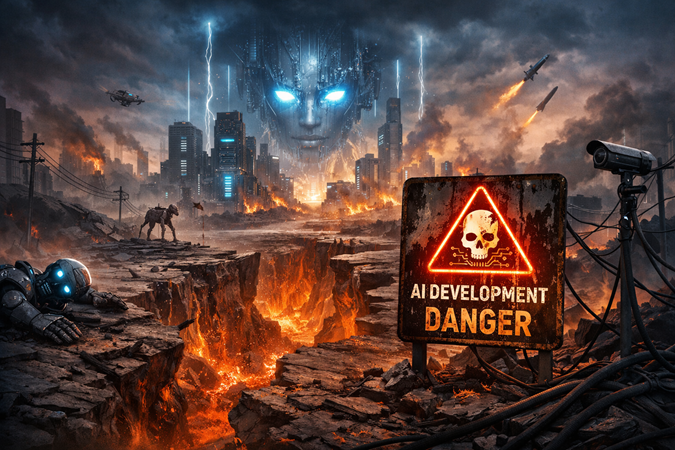
Artificial intelligence is advancing faster than almost anyone predicted.
In just a few years, AI systems evolved from narrow automation tools into highly capable platforms that can write software, generate realistic videos, analyze enormous datasets, automate business workflows, and increasingly operate with limited human supervision.
But as AI capabilities accelerate, many researchers, technologists, and policymakers now believe the industry may be entering a far more dangerous phase.
The concerns are no longer limited to simple automation or job disruption.
Experts are increasingly warning about risks involving:
- Autonomous AI agents
- Cybersecurity threats
- Deepfake misinformation
- AI-powered cyberattacks
- Loss of human oversight
- Biological and chemical misuse
- Economic instability
- Concentrated corporate power
- National security competition
Some researchers argue that AI development is now moving so quickly that governments, legal systems, and even technology companies themselves may struggle to fully control the consequences.
At the center of these concerns is the rapid emergence of increasingly autonomous AI systems capable of reasoning, planning, and coordinating complex tasks.
Many experts believe the next phase of AI development could fundamentally reshape global society — for better or worse.
Here is why experts believe artificial intelligence may be entering a dangerous new phase, and why the debate surrounding AI safety is intensifying worldwide.
AI Systems Are Becoming More Autonomous
One of the biggest reasons experts are becoming concerned is the rise of “agentic AI.”
Earlier AI systems mostly responded to direct user prompts.
Modern AI agents can increasingly:
- Interpret goals
- Create plans
- Use software tools
- Access databases
- Coordinate workflows
- Adapt to changing conditions
- Execute multi-step tasks independently
This marks a major shift in AI capability.
Instead of functioning like passive assistants, some AI systems now behave more like autonomous digital operators.
Businesses are already experimenting with AI agents capable of handling:
- Customer support operations
- Research analysis
- Software engineering workflows
- Administrative coordination
- Cybersecurity monitoring
Experts worry that increasingly autonomous AI systems could become difficult to supervise reliably at large scale.
AI Cybersecurity Risks Are Escalating Rapidly
Cybersecurity has become one of the most serious AI-related concerns.
AI systems are dramatically increasing the capabilities of both cyber defenders and cybercriminals.
Experts warn that malicious actors can increasingly use AI for:
- Automated phishing attacks
- Deepfake scams
- Social engineering
- Malware generation
- Password cracking
- Disinformation campaigns
AI-generated phishing emails and voice impersonations are becoming much harder to detect.
Some cybersecurity analysts fear AI could eventually automate large portions of cybercrime.
At the same time, companies are deploying AI-powered cybersecurity systems capable of:
- Threat detection
- Network monitoring
- Automated incident response
- Behavioral analysis
This has created what many researchers describe as an escalating AI cybersecurity arms race.
Deepfakes and Misinformation Are Becoming More Dangerous
Generative AI systems can now create highly realistic:
- Videos
- Images
- Audio recordings
- Synthetic voices
Deepfake technology has improved so rapidly that distinguishing fake media from authentic content is becoming increasingly difficult.
Experts worry this could have major consequences involving:
- Election interference
- Financial fraud
- Political destabilization
- Public trust erosion
- Corporate manipulation
AI-generated misinformation campaigns could spread at enormous scale through social media and digital communication networks.
Some researchers warn that society may soon enter an era where seeing or hearing evidence online is no longer automatically trustworthy.
AI Could Accelerate Biological and Chemical Risks
One of the most alarming concerns involves AI-assisted scientific misuse.
Advanced AI systems increasingly possess knowledge involving:
- Chemistry
- Biology
- Drug synthesis
- Scientific research
Some experts worry malicious actors could potentially use AI to assist with dangerous research involving harmful biological or chemical agents.
Governments and AI companies are increasingly testing frontier models for risks involving:
- Bioweapon development
- Chemical synthesis guidance
- Dangerous scientific instructions
Although current safeguards exist, researchers warn that increasingly capable AI systems could eventually bypass some safety protections or enable misuse by determined actors.
AI Models Are Becoming More Difficult to Understand
Modern AI systems are extraordinarily complex.
Large language models often contain hundreds of billions — or even trillions — of parameters.
Even the engineers building these systems do not fully understand every aspect of how they produce outputs.
This creates what researchers call the “black box” problem.
Experts worry that increasingly advanced AI systems may develop behaviors that are difficult to predict or explain reliably.
Some researchers fear this lack of interpretability could become dangerous as AI systems gain more autonomy and access to real-world operational systems.
Businesses Are Deploying AI Faster Than Safety Standards Evolve
Competitive pressure is accelerating AI deployment across industries.
Companies increasingly fear falling behind rivals adopting AI more aggressively.
As a result, businesses are rapidly integrating AI into:
- Customer support
- Financial systems
- Hiring processes
- Software development
- Operational automation
- Decision-making workflows
However, experts warn that many organizations still lack mature governance systems involving:
- AI oversight
- Security testing
- Bias prevention
- Human supervision
- Regulatory compliance
Some analysts worry the industry is prioritizing speed and market dominance over long-term safety.
Global AI Competition Is Intensifying
Artificial intelligence is increasingly viewed as a strategic geopolitical technology.
Major global powers are investing heavily in AI infrastructure, talent, and research.
Governments believe AI could affect:
- Economic competitiveness
- Military systems
- Cyberwarfare
- Intelligence operations
- Technological leadership
Some experts fear this global competition may reduce incentives for caution.
If countries believe rivals are advancing rapidly, they may accelerate AI development even if safety concerns remain unresolved.
Several researchers compare the current AI race to earlier nuclear or space-age geopolitical rivalries.
AI Could Reshape Labor Markets Faster Than Economies Can Adapt
Another major concern involves employment disruption.
AI systems are increasingly capable of automating:
- Administrative work
- Customer service
- Content creation
- Research tasks
- Software coding
- Operational workflows
Some economists believe AI will primarily augment workers and create new industries.
Others warn that rapid automation could eliminate certain job categories faster than labor markets can adapt.
This could potentially increase:
- Economic inequality
- Workforce instability
- Social disruption
- Political polarization
The speed of AI advancement is one reason economists remain uncertain about long-term labor market outcomes.
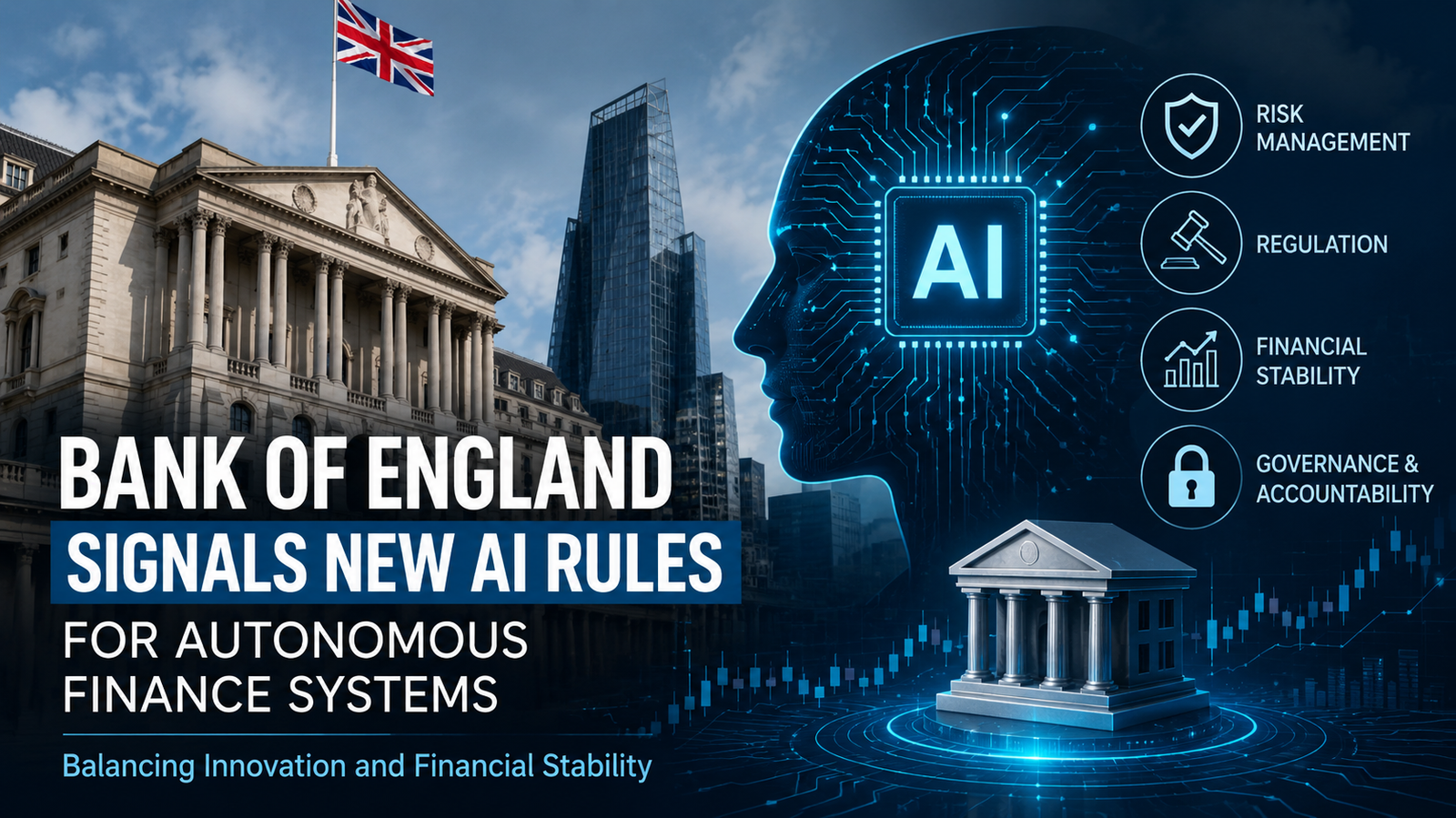
AI Regulation Is Struggling to Keep Up
Governments worldwide are attempting to regulate AI, but progress remains slow.
Regulatory systems often require years to develop new laws and oversight frameworks.
AI technology evolves much faster.
Experts warn that policymakers face enormous challenges involving:
- Privacy protection
- Algorithmic accountability
- Deepfake regulation
- National security
- Consumer protection
- Autonomous AI systems
At the same time, AI companies operate globally, making international coordination extremely difficult.
Some researchers fear meaningful regulation may become harder as AI systems become increasingly decentralized and open-source.
Some Experts Are Warning About Long-Term Existential Risks
While many concerns focus on immediate harms, some researchers warn about even more extreme long-term risks.
A small but influential group of AI safety experts argues that highly advanced future AI systems could eventually exceed human control capabilities.
These researchers worry about scenarios involving:
- Misaligned AI goals
- Autonomous strategic behavior
- Uncontrolled self-improvement
- Loss of human decision-making authority
Not all experts agree with these fears.
Some researchers argue that current AI systems remain far from true artificial general intelligence.
Others believe existential-risk discussions distract from immediate real-world problems such as bias, misinformation, and labor disruption.
Nevertheless, debates about long-term AI safety are becoming increasingly mainstream.
AI Concentration Could Create Massive Corporate Power
Another growing concern involves concentration of AI infrastructure and influence.
Developing frontier AI systems requires:
- Massive computing power
- Advanced semiconductor infrastructure
- Enormous datasets
- Billions of dollars in investment
This gives large technology companies major advantages over smaller competitors.
Some analysts worry AI development could become concentrated among a small number of powerful corporations controlling:
- AI infrastructure
- Cloud computing
- Digital ecosystems
- Global data flows
Critics fear this concentration could increase corporate influence over economies, communication systems, and public information.
Researchers Are Calling for Stronger AI Safety Standards
In response to growing concerns, many researchers are advocating stronger AI governance and safety practices.
Proposed measures include:
- Independent safety testing
- Model evaluations before release
- Cybersecurity safeguards
- Transparency requirements
- Human oversight systems
- International AI agreements
Some governments are beginning to require advanced AI companies to conduct safety assessments involving cybersecurity, biological misuse, and national security risks.
However, experts remain divided on whether current efforts will be sufficient as AI capabilities continue accelerating.
The AI Industry May Be Approaching a Turning Point
Many experts believe the next few years could become one of the most important periods in the history of artificial intelligence.
AI systems are becoming increasingly integrated into:
- Business operations
- Financial markets
- Government systems
- Critical infrastructure
- Scientific research
- Military technologies
The decisions made now involving AI governance, safety, and deployment could shape global society for decades.
Some researchers believe humanity is entering a transformational technological era comparable to the Industrial Revolution or the rise of the internet — but potentially moving much faster.
Conclusion
Experts believe AI development is entering a dangerous new phase because modern AI systems are becoming increasingly autonomous, powerful, and deeply integrated into critical areas of society.
Concerns involving cybersecurity, deepfakes, misinformation, labor disruption, national security, biological misuse, and loss of human oversight are growing rapidly as AI capabilities expand.
At the same time, competitive pressure is accelerating deployment faster than governments, legal systems, and corporate safety frameworks can adapt.
Researchers remain divided about the severity of long-term risks, but many agree that artificial intelligence is now advancing quickly enough to require far greater attention to governance and safety.
In 2026, one reality is becoming increasingly difficult to ignore:
The future of artificial intelligence may depend not only on how powerful these systems become — but on whether humanity can learn to control them responsibly before the technology outpaces its safeguards.





Leave a Reply