


The global venture capital landscape is moving at unprecedented speed in 2026.
Across Silicon Valley, London, Bengaluru, and Dubai, venture capital firms are aggressively competing to identify and fund the next AI unicorn — startups valued at over $1 billion.
This race is being driven by a simple reality: artificial intelligence is producing startups that scale faster, grow larger, and attract global customers earlier than almost any previous technology cycle.
As a result, venture capital firms are deploying record levels of capital into AI-focused startups, with some firms raising multi-billion-dollar funds specifically dedicated to artificial intelligence investments. :contentReference[oaicite:0]{index=0}
In early 2026, venture capital activity has become heavily concentrated in AI, with the sector absorbing a significant share of global startup funding and dominating unicorn creation. :contentReference[oaicite:1]{index=1}
This article explores why VC firms are racing to back AI unicorns, how the investment landscape is changing, and which forces are driving this unprecedented competition.
1. AI Has Become the Dominant Venture Capital Theme
Artificial intelligence is no longer a niche investment category — it is now the central focus of global venture capital activity.
Most top-tier VC firms have shifted their strategies toward AI-first investing, building dedicated funds and teams focused entirely on AI startups.
This includes investments across:
- Foundation AI models
- AI infrastructure and compute
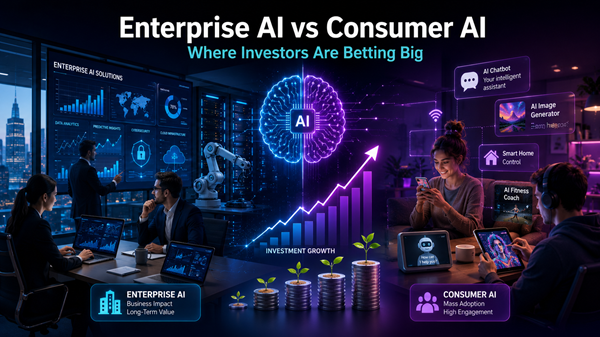
- Enterprise AI applications
- AI cybersecurity tools
- Autonomous systems and robotics
Leading venture capital firms such as Andreessen Horowitz (a16z) and Sequoia Capital are now backing a wide range of AI startups across the entire technology stack, from infrastructure to consumer applications. :contentReference[oaicite:2]{index=2}
This shift shows how AI has moved from an experimental theme to a core investment pillar for global venture capital.
2. The Race to Find “AI Unicorns” Is Intensifying
A defining feature of today’s startup ecosystem is the rapid rise of AI unicorns.
AI startups are reaching billion-dollar valuations faster than almost any previous generation of technology companies.
Some startups are even achieving unicorn status at extremely early stages, including seed and Series A funding rounds.
This accelerated valuation growth is pushing venture capital firms to act faster and invest earlier than ever before.
VC firms fear that delaying investment could mean missing out on companies that may eventually dominate entire industries.
As a result, competition for early-stage AI deals has become extremely aggressive.
3. Mega-Funds Are Fueling the Investment Frenzy
One of the biggest changes in venture capital is the rise of mega-funds focused on AI.
Major VC firms are raising historically large funds to deploy into artificial intelligence startups at scale.
Some of the world’s largest venture firms have raised multi-billion-dollar funds specifically designed to invest in AI companies across multiple stages of growth.
This includes early-stage startups, growth-stage companies, and late-stage AI unicorns preparing for IPOs.
The size of these funds allows VC firms to:
- Write larger checks
- Lead massive funding rounds
- Support startups through multiple growth stages
- Compete with corporate investors and sovereign funds
This has dramatically increased competition in AI startup funding rounds.
4. AI Startups Are Scaling Faster Than Traditional Companies
One of the key reasons VC firms are aggressively backing AI startups is their unprecedented speed of growth.
Unlike traditional software companies, AI startups can scale globally in a very short time due to:
- Cloud-based distribution
- API-driven business models
- Enterprise integration tools
- Self-improving machine learning systems
This means AI startups can achieve millions of users or enterprise customers much earlier in their lifecycle.
For venture capital firms, this creates the possibility of faster returns and larger exits compared to traditional startup categories.
5. The “Winner-Takes-Most” Nature of AI Is Driving VC Aggression
AI markets are increasingly structured as winner-takes-most ecosystems.
In many segments — especially foundation models and AI infrastructure — a small number of companies are expected to dominate global markets.
This creates strong incentives for venture capital firms to back the leading contenders early.
VC firms are increasingly making large bets on a few startups rather than spreading investments across many smaller companies.
This strategy is high-risk but also offers the potential for extremely large returns if the chosen startup becomes the market leader.
6. Corporate Investors Are Increasing Competitive Pressure
Traditional venture capital firms are no longer the only major investors in AI startups.
Large technology corporations are now aggressively investing in AI startups and infrastructure companies.
These corporate investors bring:
- Large capital reserves
- Strategic partnerships
- Cloud infrastructure support
- Distribution advantages
This has significantly increased competition in funding rounds, forcing VC firms to act faster and offer more attractive deal terms.
In many cases, AI startups receive multiple competing investment offers from both venture capital firms and corporate investors simultaneously.
7. AI Infrastructure Startups Are Becoming Highly Valuable Targets
While AI applications get most public attention, venture capital firms are also heavily investing in infrastructure startups.
These companies provide essential systems that power AI development, including:
- GPU cloud computing
- AI model training platforms
- Data processing systems
- High-performance computing infrastructure
As AI models become more complex, demand for compute infrastructure is skyrocketing.
This has made AI infrastructure startups some of the most valuable and strategically important companies in the entire ecosystem.
8. Early-Stage AI Startups Are Raising Record Seed Rounds
Another major trend is the rise of extremely large seed-stage funding rounds.
Startups are now raising hundreds of millions of dollars even before launching full commercial products.
These early investments reflect strong investor confidence in AI founders and research teams, especially those with experience from leading AI labs and technology companies.
In some cases, early-stage AI startups are being valued at over $1 billion before generating significant revenue.
This demonstrates how dramatically venture capital risk tolerance has shifted in the AI era.
9. AI Talent Competition Is Driving Investment Decisions
Another key factor behind VC activity is competition for elite AI talent.
The best AI researchers, engineers, and founders are in extremely high demand.
Venture capital firms often invest in startups led by top-tier AI talent even before product-market fit is fully proven.
This is because experienced AI teams are seen as significantly more likely to build breakthrough technologies.
As a result, talent quality has become one of the most important investment criteria in the AI startup ecosystem.
10. Fear of Missing Out Is Intensifying VC Competition
Venture capital firms are also driven by strong competitive pressure from peers.
If one firm misses a successful AI startup, it may lose out on potentially massive returns in the future.
This fear of missing out has created a highly competitive environment where:
- Funding decisions happen faster
- Due diligence timelines are shorter
- Valuations increase rapidly between rounds
In many cases, startups receive funding from multiple top-tier VC firms simultaneously to avoid losing access to high-demand deals.
11. AI Is Creating a New Venture Capital Cycle
The AI boom is not just increasing investment — it is reshaping how venture capital itself operates.
VC firms are increasingly:
- Specializing in AI-focused funds
- Building in-house technical teams
- Partnering with cloud providers and chip companies
- Investing earlier in company lifecycles
This marks a shift from traditional venture investing to technology-driven investment strategies.
AI is no longer just an investment category — it is becoming the foundation of venture capital strategy itself.
Conclusion: The Race for AI Unicorns Is Just Beginning
Venture capital firms are racing to back the next generation of AI unicorns because they believe artificial intelligence represents the most important technological shift in decades.
The combination of rapid startup scaling, massive market potential, and infrastructure-driven demand is creating an investment environment unlike anything seen before.
While risks remain, including overvaluation and market volatility, the scale of capital flowing into AI suggests that this competition is far from over.
In many ways, the race has just begun — and the firms that identify the right AI unicorns early may define the next era of global technology leadership.









Leave a Reply