


Artificial intelligence has become the centerpiece of global technology innovation, and in 2026, one trend stands above all others: acquisitions. While billion-dollar funding rounds continue to make headlines, the real race is happening behind closed boardroom doors, where tech giants are competing to acquire promising AI startups before their rivals do.
The world’s largest technology companies are no longer waiting years to develop every AI capability internally. Instead, they are buying innovative startups with cutting-edge models, elite engineering teams, proprietary datasets, and specialized AI tools that can immediately strengthen their product portfolios.
For founders, acquisitions provide capital, global reach, and access to millions of customers. For acquiring companies, they offer speed, talent, and a competitive advantage in one of the fastest-moving industries in history.
As 2026 unfolds, AI startup acquisitions are becoming one of the strongest indicators of where the industry is heading. Understanding these deals offers valuable insights for investors, entrepreneurs, developers, and anyone following the future of artificial intelligence.
Why AI Acquisitions Are Accelerating in 2026
Artificial intelligence is evolving faster than almost any previous technology cycle. Building world-class AI systems requires enormous investments in infrastructure, computing power, research talent, and proprietary data.
Rather than spending years developing every capability internally, many technology companies are choosing acquisitions as the quickest path to innovation.
Generative AI, enterprise automation, robotics, cybersecurity, healthcare AI, financial technology, and autonomous systems are all witnessing increased merger and acquisition activity. The objective is no longer simply expanding product portfolios—it is securing leadership in the AI economy before competitors do.
What Makes an AI Startup an Attractive Acquisition Target?
Not every AI startup becomes an acquisition candidate. Buyers look beyond revenue and focus on long-term strategic value.
A startup with a highly specialized engineering team, proprietary machine learning models, unique datasets, enterprise customers, and scalable infrastructure often becomes significantly more valuable than one with short-term revenue alone.
Companies also evaluate intellectual property, regulatory compliance, AI safety practices, cloud infrastructure, and integration potential before making billion-dollar acquisition decisions.
1. Enterprise AI Platforms Continue to Lead Acquisition Activity
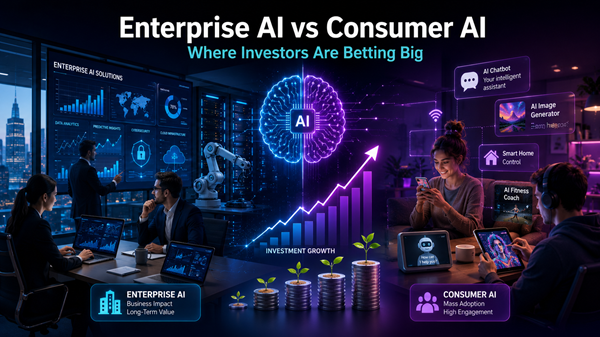
Enterprise AI remains one of the hottest acquisition categories.
Large software companies are aggressively purchasing startups that help businesses automate workflows, generate reports, summarize meetings, analyze documents, and improve employee productivity.
These platforms fit naturally into existing enterprise software ecosystems, making integration relatively straightforward while creating immediate value for corporate customers.
As organizations continue expanding AI adoption, enterprise automation startups are expected to remain among the most desirable acquisition targets throughout 2026.
2. AI Infrastructure Companies Attract Premium Valuations
Behind every powerful AI application lies enormous computing infrastructure.
Cloud providers and semiconductor companies continue acquiring businesses specializing in GPU optimization, distributed computing, inference acceleration, model deployment, and AI infrastructure management.
As demand for computational resources continues growing, infrastructure startups are becoming increasingly strategic assets rather than simple service providers.
Many analysts believe infrastructure acquisitions could represent some of the largest AI deals announced during 2026.
3. Healthcare AI Becomes a Major Acquisition Hotspot
Artificial intelligence is transforming healthcare faster than almost any other industry.
Companies developing AI-powered diagnostics, medical imaging solutions, drug discovery platforms, clinical decision support systems, and patient monitoring technologies are attracting significant acquisition interest.
Healthcare organizations recognize that AI has the potential to reduce costs, improve diagnosis accuracy, and accelerate medical research.
Rather than building these capabilities internally, many pharmaceutical companies and healthcare technology providers are choosing strategic acquisitions to strengthen their innovation pipelines.
4. Cybersecurity AI Startups Gain Strategic Importance
Cyber threats are becoming increasingly sophisticated, making artificial intelligence an essential component of modern cybersecurity.
AI startups capable of detecting threats in real time, identifying suspicious network behavior, preventing ransomware attacks, and automating security operations are becoming attractive acquisition targets.
As businesses expand digital operations, cybersecurity powered by machine learning is shifting from a competitive advantage to a business necessity.
This growing demand continues driving acquisition activity across the cybersecurity landscape.
5. Robotics and Industrial AI Drive Manufacturing Innovation
Manufacturing companies are rapidly embracing automation powered by artificial intelligence.
Startups developing intelligent robotics, computer vision systems, predictive maintenance software, warehouse automation, and industrial AI platforms are receiving growing attention from global manufacturers.
Acquiring these startups enables established companies to modernize production facilities without spending years building AI capabilities from scratch.
Industrial automation is expected to remain one of the fastest-growing AI acquisition sectors over the next several years.
6. Financial Technology AI Continues Expanding
Banks, insurance providers, investment firms, and payment companies increasingly rely on artificial intelligence to improve customer experiences and operational efficiency.
Startups specializing in fraud detection, automated lending decisions, personalized financial advice, compliance monitoring, and algorithmic trading have become valuable acquisition targets.
Financial institutions understand that acquiring proven AI solutions often delivers faster returns than developing entirely new platforms internally.
7. Generative AI Companies Remain the Most Competitive Targets
The explosive growth of generative AI continues influencing acquisition strategies across every technology sector.
Organizations developing advanced language models, AI coding assistants, image generation tools, video creation platforms, voice synthesis technology, and enterprise copilots remain among the industry’s most sought-after startups.
Competition for these companies has intensified because generative AI now serves as a foundation for software development, customer service, education, healthcare, legal technology, and creative industries.
How AI Talent Is Driving Billion-Dollar Deals
Many acquisitions are no longer centered solely on products.
Some of the largest technology companies acquire startups primarily to secure highly specialized AI researchers, engineers, and leadership teams.
Elite AI talent remains scarce worldwide, making experienced researchers incredibly valuable.
These “acqui-hires” provide immediate access to expertise that would otherwise take years to recruit individually.
As competition for AI professionals intensifies, talent-driven acquisitions are expected to become increasingly common.
Regulatory Scrutiny Is Increasing
Governments around the world are paying closer attention to AI mergers.
Competition regulators want to ensure that acquisitions do not reduce market competition or limit future innovation.
Privacy regulations, AI transparency requirements, national security concerns, and data protection laws now play an increasingly important role in evaluating large AI transactions.
Companies pursuing acquisitions must balance rapid expansion with evolving regulatory expectations.
What These Deals Mean for Startups
For founders, acquisitions have become one of the most realistic exit strategies.
Rather than waiting for an IPO, many entrepreneurs choose strategic acquisitions that provide financial returns while allowing their technology to scale globally.
Joining an established technology company often provides startups with greater computing resources, global sales channels, engineering support, and access to millions of enterprise customers.
When managed successfully, acquisitions can accelerate innovation rather than slowing it down.
What Investors Should Watch in 2026
Investors should look beyond headline acquisition values and focus on strategic fit.
The most successful acquisitions usually involve complementary technologies, strong cultural alignment, clear product integration plans, and long-term market opportunities.
Watching acquisition activity also helps identify emerging AI sectors before they become mainstream investment themes.
Healthcare AI, enterprise software, infrastructure, robotics, cybersecurity, autonomous systems, and financial AI all appear positioned for continued consolidation.
The Future of AI Consolidation
Artificial intelligence remains in its early stages.
Thousands of startups continue building specialized AI solutions, but only a small percentage will ultimately become independent technology giants.
Many will instead become part of larger ecosystems through acquisitions that combine innovation with global distribution.
As AI becomes increasingly embedded across every industry, acquisition activity is likely to remain one of the defining characteristics of the technology market throughout the remainder of the decade.
Final Thoughts
The biggest AI startup acquisitions in 2026 represent much more than financial transactions. They illustrate how rapidly artificial intelligence is transforming industries, redefining competition, and reshaping corporate strategy worldwide.
Whether the focus is enterprise software, healthcare, cybersecurity, robotics, infrastructure, or generative AI, acquisitions are enabling companies to innovate faster while expanding their technological capabilities.
For investors, entrepreneurs, and technology enthusiasts alike, tracking these acquisitions offers a valuable window into the future of artificial intelligence. The companies making today’s strategic purchases are likely positioning themselves to become tomorrow’s AI leaders, making this one of the most exciting periods in technology history.









Leave a Reply