


Research has always been the foundation of innovation, learning, and business growth. Whether a student is preparing an academic paper, a professional is analyzing industry trends, or a company is making strategic decisions, quality research determines the accuracy of outcomes.
However, modern research has become increasingly complex. Millions of research papers, reports, articles, datasets, and digital resources are published every year, making it difficult to find reliable information quickly. Manually searching, reading, organizing, and summarizing information can consume hours of valuable time.
This is where artificial intelligence is transforming the research process.
AI research tools are helping students, professionals, researchers, and businesses discover information faster, analyze large volumes of data, summarize complex documents, generate insights, and improve productivity. By combining machine learning, natural language processing, and advanced search capabilities, these platforms are changing how people approach knowledge discovery.
As AI technology continues advancing in 2025 and 2026, research tools are becoming more intelligent, personalized, and accessible. From academic studies to corporate decision-making, AI-powered research assistants are becoming essential digital partners.
What Are AI Research Tools?
AI research tools are software platforms that use artificial intelligence to assist users in finding, analyzing, organizing, and understanding information.
Traditional search engines provide links to information, but AI research platforms go further by understanding questions, identifying relevant sources, summarizing findings, comparing information, and helping users extract meaningful conclusions.
These tools can analyze research papers, business reports, websites, books, scientific studies, and large datasets within seconds.
For example, instead of spending hours reading dozens of academic papers, a researcher can use AI to identify key findings, summarize methodologies, and highlight important references.
For businesses, AI research tools can analyze competitors, monitor market trends, and support data-driven decisions.
Why AI Research Tools Are Becoming Essential
The biggest challenge today is not the lack of information—it is managing the overwhelming amount of information available.
Students often struggle to identify trustworthy academic sources.
Professionals need quick access to accurate industry insights.
Businesses require faster analysis to remain competitive.
AI research tools address these challenges by reducing repetitive tasks and helping users focus on deeper thinking and creativity.
These platforms improve research efficiency by automating information gathering, document analysis, citation management, and knowledge organization.
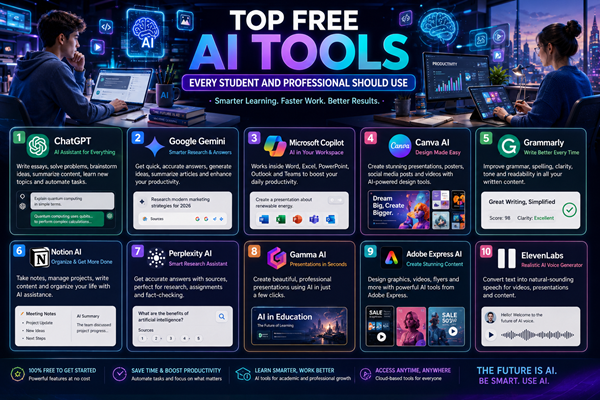
1. Perplexity AI: AI-Powered Research and Answer Engine
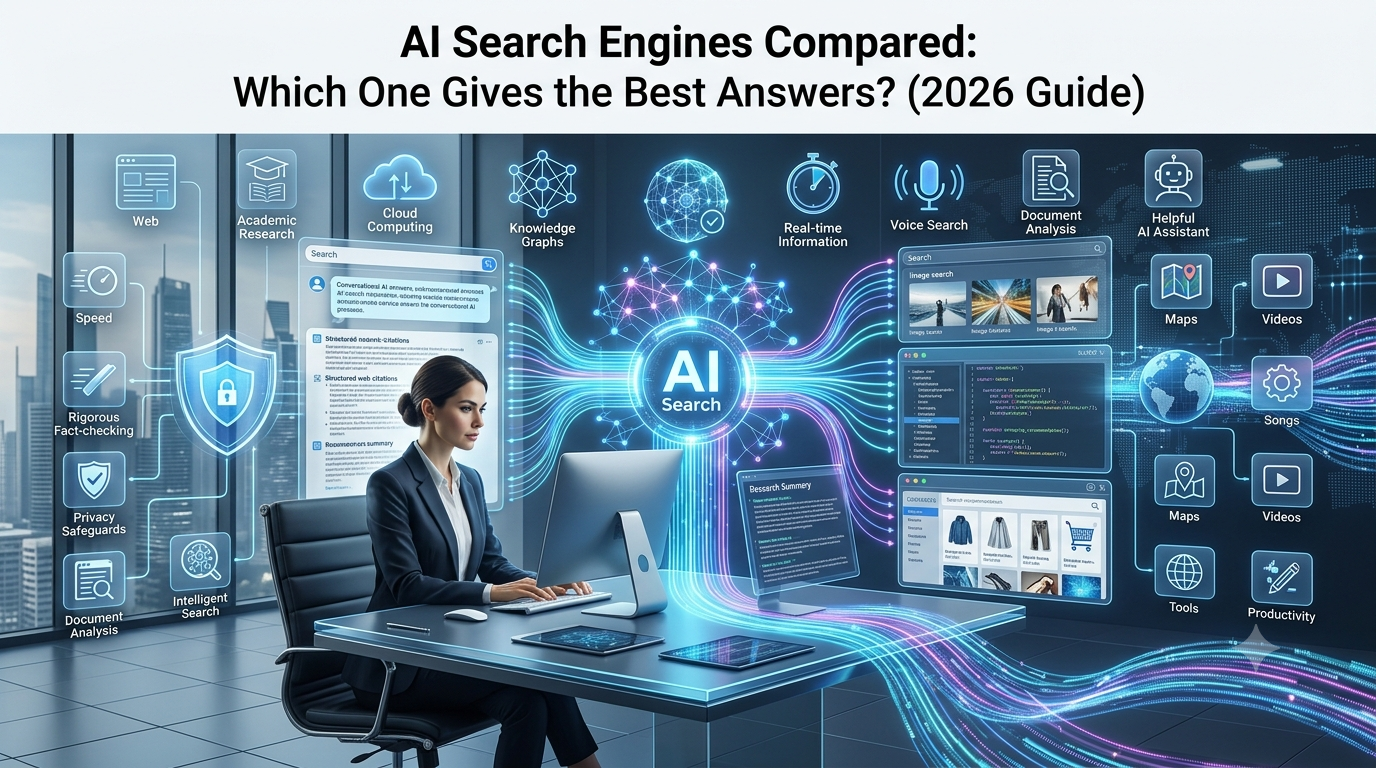
Perplexity AI has become one of the most popular AI research tools because of its ability to provide direct answers with source references.
Unlike traditional search engines, Perplexity uses artificial intelligence to understand user questions and generate detailed responses by analyzing information from multiple sources.
Students can use it for academic exploration, professionals can research industry topics, and businesses can gather competitive intelligence.
Its citation-based responses make it especially useful for users who need transparent information sources.
The platform is also gaining popularity because it combines conversational AI with research-focused search capabilities, making information discovery faster and more interactive.
2. Consensus: AI Research Assistant for Scientific Papers
Consensus is designed specifically for academic and scientific research.
The platform helps users search through scientific studies and understand research findings without manually reviewing hundreds of papers.
For students and researchers, Consensus can simplify complex academic literature by identifying relevant studies and summarizing scientific evidence.
Researchers studying healthcare, technology, psychology, and social sciences can use the platform to quickly understand existing knowledge around specific topics.
As academic publishing continues growing, AI-powered research assistants like Consensus are becoming valuable tools for navigating scientific information.
3. Elicit: Simplifying Literature Reviews
Elicit focuses on helping researchers conduct literature reviews more efficiently.
Literature reviews often require researchers to analyze dozens or even hundreds of papers to understand existing knowledge on a topic.
Elicit uses AI to discover relevant academic papers, summarize important information, and organize research findings.
For university students, this can significantly reduce the time required to prepare assignments, dissertations, and research projects.
Professional researchers also benefit from faster evidence gathering and improved research organization.
4. ChatGPT: A Versatile AI Research Companion
ChatGPT has become one of the most widely used AI assistants across education, business, and professional research.
Its flexibility allows users to brainstorm ideas, summarize documents, explain complex concepts, analyze information, create research outlines, and improve writing quality.
Students use ChatGPT to understand difficult topics and organize study materials.
Professionals use it for reports, presentations, market analysis, and strategic planning.
Businesses use AI assistants to support knowledge management and internal research processes.
With continued improvements in reasoning capabilities and document analysis, AI assistants like ChatGPT are becoming powerful research partners.
5. Google Gemini: Research Across the Digital Ecosystem
Google Gemini provides AI-powered research capabilities integrated with Google’s broader technology ecosystem.
Its ability to process text, images, and other forms of information makes it useful for different research scenarios.
Students can use Gemini to explore topics, analyze information, and organize learning resources.
Businesses can leverage it for market research, productivity improvement, and workplace collaboration.
The connection with Google’s information ecosystem gives Gemini a unique advantage for users who require broad knowledge access.
6. Semantic Scholar: AI for Academic Discovery
Semantic Scholar uses artificial intelligence to help researchers discover scientific papers more effectively.
The platform analyzes millions of academic publications and highlights important research connections.
Researchers can identify influential studies, track developments in specific fields, and understand relationships between different scientific topics.
For academics and students working on research-heavy projects, Semantic Scholar provides a smarter way to navigate scholarly information.
7. Scite: Understanding Research Accuracy
Scite focuses on helping users understand how scientific papers are cited and discussed within the research community.
The platform provides citation context, showing whether studies support, contradict, or simply mention previous research.
This capability is extremely valuable because not all published research has equal impact or reliability.
Students, academics, and businesses involved in scientific fields can use Scite to evaluate information quality before making decisions.
8. NotebookLM: AI-Powered Personal Research Assistant
NotebookLM, developed by Google, allows users to upload their own documents and interact with them through AI.
Instead of searching across the internet, users can create a personalized research environment based on their selected sources.
Students can upload textbooks and lecture notes.
Professionals can analyze reports and documents.
Businesses can organize internal knowledge resources.
The ability to ask questions directly from personal documents makes NotebookLM an increasingly valuable research tool.
How Businesses Are Using AI Research Tools
AI research tools are no longer limited to education and academic environments.
Companies across industries are adopting AI research platforms to improve decision-making and productivity.
Marketing teams use AI to analyze customer behavior and competitor strategies.
Financial professionals use AI research tools to study market trends.
Consulting firms use them to prepare reports faster.
Product teams use AI to understand customer needs and identify emerging opportunities.
By reducing research time, organizations can respond faster to market changes and make more informed decisions.
How Students Can Benefit From AI Research Tools
For students, AI research tools provide opportunities to learn more effectively.
They help with finding reliable sources, understanding complex subjects, organizing notes, improving writing, and preparing academic projects.
However, students should use AI as a learning assistant rather than a replacement for critical thinking.
The most successful learners combine AI capabilities with their own analysis, creativity, and curiosity.
The Future of AI Research Tools
The future of AI research will become even more intelligent and personalized.
Upcoming AI systems are expected to provide deeper reasoning, better source verification, real-time information analysis, and advanced collaboration features.
Researchers may soon have AI assistants capable of conducting complex investigations, generating hypotheses, and identifying patterns across massive information networks.
Businesses will increasingly depend on AI research systems for strategic planning and innovation.
As AI continues evolving, the role of human expertise will remain essential. Artificial intelligence can accelerate discovery, but human judgment determines how knowledge is applied.
Final Thoughts
AI research tools are transforming how students, professionals, and businesses discover and use information. By automating time-consuming research tasks, these platforms allow users to focus on analysis, creativity, and decision-making.
From academic literature reviews to business intelligence and market analysis, AI-powered research assistants are becoming valuable tools across industries.
As technology advances through 2026 and beyond, AI research tools will continue becoming smarter, faster, and more integrated into everyday workflows.
The future of research is not about replacing human intelligence—it is about combining human creativity with artificial intelligence to unlock new possibilities.








Leave a Reply