

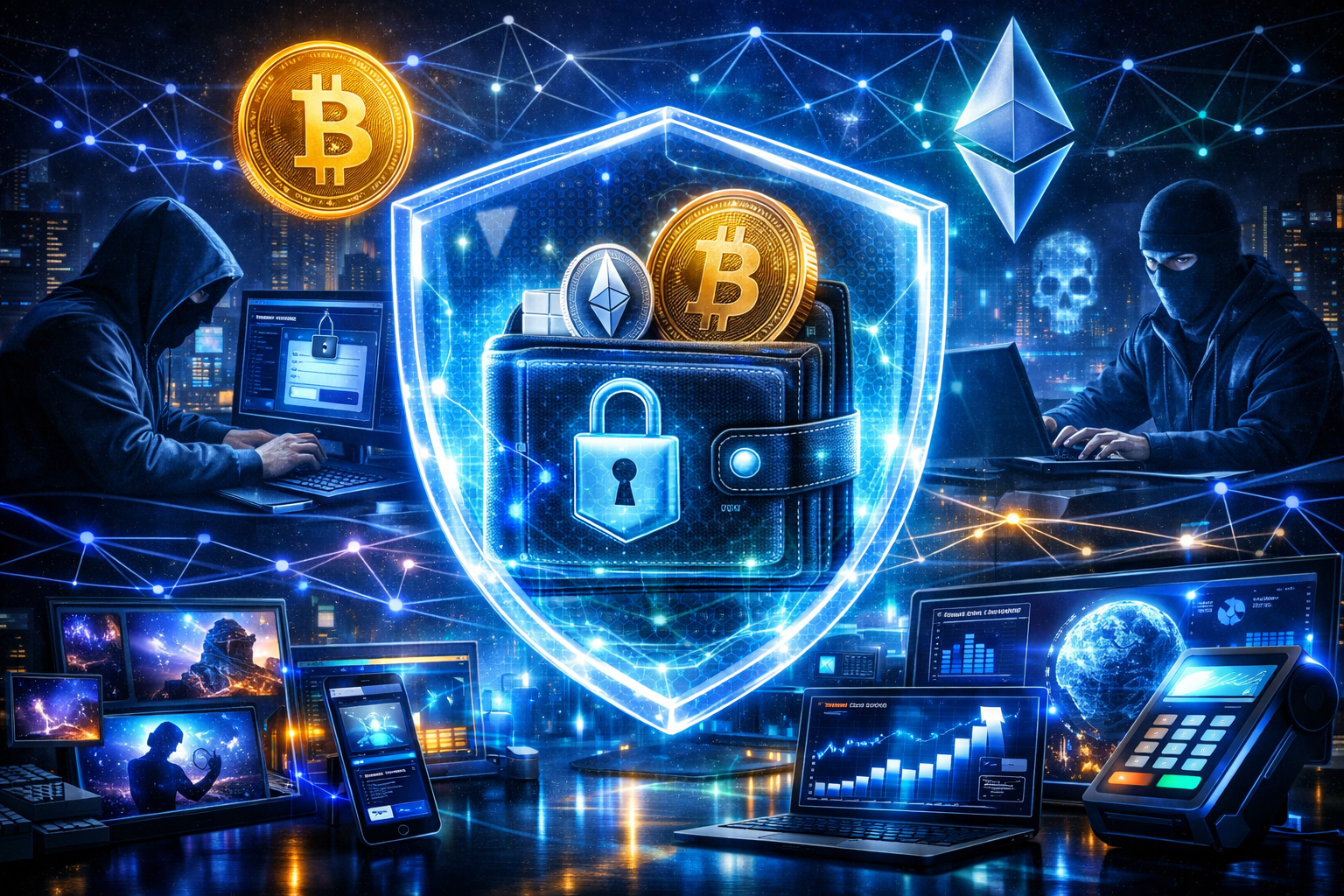
Cryptocurrency has transformed the way people invest, trade, and transfer money across the world. From Bitcoin and Ethereum to stablecoins and tokenized assets, digital currencies have opened exciting financial opportunities that were unimaginable just a decade ago. However, wherever money flows, scammers inevitably follow. As crypto adoption reaches record highs in 2025 and 2026, cybercriminals are becoming more sophisticated, creating convincing fake websites, AI-powered phishing attacks, fraudulent investment schemes, and malicious applications that can empty digital wallets within minutes.
Imagine spending months building a crypto portfolio only to lose everything because you clicked on a fake wallet link or trusted a fraudulent investment opportunity promising guaranteed returns. Unfortunately, this has happened to thousands of investors worldwide. The decentralized nature of blockchain makes cryptocurrency transactions irreversible, meaning recovering stolen funds is often extremely difficult.
The good news is that most crypto scams follow recognizable patterns. Once you understand how these scams work and learn the warning signs, you can dramatically reduce your chances of becoming a victim. This guide explains the most common cryptocurrency scams in 2026 and provides practical strategies to protect your digital assets.
Why Crypto Scams Continue to Rise
Cryptocurrency has become one of the fastest-growing financial sectors in the world. As more beginners enter the market, scammers find new opportunities to exploit inexperienced investors.
Unlike traditional banking systems, blockchain transactions cannot usually be reversed after confirmation. This feature makes cryptocurrencies attractive not only for legitimate users but also for criminals looking to move stolen funds quickly.
Artificial intelligence has also changed the landscape. Fraudsters now use AI-generated websites, realistic voice cloning, fake customer support chats, and convincing social media profiles to deceive investors more effectively than ever before.
Understanding these evolving threats is the first step toward protecting yourself.
The Most Common Crypto Scams in 2025 and 2026
1. Phishing Scams
Phishing remains one of the biggest threats facing cryptocurrency users.
Scammers create fake websites that look almost identical to popular exchanges, wallet providers, or blockchain services. Victims unknowingly enter their login credentials or recovery phrases, giving attackers complete access to their funds.
Many phishing attacks begin with fake emails or text messages claiming there is suspicious activity on your account. Others appear through sponsored search results or fake social media advertisements.
Before entering sensitive information, always verify the website address carefully. Even a single misplaced letter can indicate a fraudulent site.
2. Fake Investment Platforms
One of the oldest crypto scams continues to evolve.
Fraudulent investment platforms promise extraordinary daily or weekly profits with little or no risk. Their websites often display fake trading dashboards showing impressive returns designed to encourage larger deposits.
Initially, users may even be allowed to withdraw small amounts to build trust.
Eventually, withdrawals stop, customer support disappears, and the platform vanishes with investors’ money.
Remember that legitimate investments never guarantee unrealistic profits.
3. Rug Pulls
Rug pulls occur when developers launch a cryptocurrency project, attract investors, increase the token’s value, and suddenly abandon the project after withdrawing liquidity.
This scam became especially common in decentralized finance and meme coin markets.
Although regulations and investor awareness have improved, rug pulls continue appearing throughout 2025 and 2026.
Researching project teams, tokenomics, liquidity locks, and independent audits can significantly reduce this risk.
4. Fake Giveaways
Social media platforms remain popular targets for giveaway scams.
Fraudsters impersonate celebrities, influencers, cryptocurrency founders, or well-known companies, claiming they will double any cryptocurrency sent to a specified wallet.
Victims transfer funds expecting larger returns that never arrive.
Legitimate organizations never require users to send cryptocurrency first to receive rewards.
5. Romance Scams
Romance scams have become increasingly sophisticated.
Scammers build online relationships over weeks or even months before introducing cryptocurrency investment opportunities.
Victims often trust the individual enough to invest through fake trading platforms controlled entirely by criminals.
These scams exploit emotions rather than technical weaknesses, making them particularly dangerous.
How to Recognize Warning Signs
Protecting yourself begins with identifying suspicious behavior before making financial decisions.
1. Guaranteed Profits
Every investment carries some degree of risk.
Anyone promising fixed daily profits or guaranteed returns should immediately raise concerns.
Even experienced investors cannot accurately predict cryptocurrency markets.
2. Artificial Urgency
Scammers often pressure victims by claiming limited-time opportunities.
Statements like “Invest within one hour,” “Only five spots remain,” or “Act immediately before prices explode” are designed to prevent rational thinking.
Legitimate investment opportunities rarely require rushed decisions.
3. Requests for Recovery Phrases
Your wallet recovery phrase provides complete access to your digital assets.
No legitimate wallet provider, exchange, blockchain developer, or customer support representative will ever request it.
Anyone asking for your recovery phrase is attempting to steal your cryptocurrency.
4. Unverified Social Media Accounts
Modern scammers create highly convincing social media profiles using AI-generated images and fake engagement.
Always verify official accounts through company websites before interacting.
Practical Ways to Protect Your Cryptocurrency
1. Use Hardware Wallets
Hardware wallets remain one of the safest methods for storing long-term cryptocurrency investments.
Because private keys remain offline, hackers cannot easily access them through internet-based attacks.
Many experienced investors store significant holdings in cold wallets while keeping only small trading balances online.
2. Enable Two-Factor Authentication
Two-factor authentication adds another layer of security.
Even if someone obtains your password, they still need your authentication code before accessing your account.
Avoid SMS-based authentication whenever possible and use dedicated authentication apps instead.
3. Verify Every Website
Before logging into any cryptocurrency platform, double-check the web address.
Bookmark official websites rather than relying on search engine advertisements or unsolicited links.
Small precautions often prevent major financial losses.
4. Keep Software Updated
Wallet applications, browsers, operating systems, and antivirus software should always remain updated.
Security updates frequently address vulnerabilities that attackers attempt to exploit.
5. Diversify Storage
Avoid storing all digital assets in a single wallet or exchange.
Diversification reduces overall risk if one platform experiences technical issues or security breaches.
AI Is Changing Crypto Scams
Artificial intelligence has improved both cybersecurity and cybercrime.
Fraudsters increasingly use AI-generated voices during fake customer support calls.
Deepfake videos may imitate cryptocurrency founders announcing fraudulent token launches.
AI chatbots can maintain convincing conversations with victims across messaging platforms.
Fortunately, cybersecurity companies are also using artificial intelligence to detect suspicious blockchain transactions, identify phishing websites, and improve fraud prevention systems.
The battle between attackers and defenders continues evolving rapidly.
Why Education Is Your Strongest Defense
Technology alone cannot prevent every scam.
The most effective security measure remains education.
Investors who understand blockchain basics, wallet management, private keys, smart contracts, and cryptocurrency markets are significantly less likely to become victims.
Before investing in any project, spend time researching its development team, whitepaper, community activity, security audits, partnerships, and long-term roadmap.
Knowledge reduces emotional decision-making and increases confidence.
What Businesses Should Learn
Crypto scams do not affect only individual investors.
Businesses accepting cryptocurrency payments or investing in blockchain infrastructure must strengthen cybersecurity practices.
Employee training, multi-signature wallets, transaction approval policies, regular audits, and secure custody solutions help reduce organizational risks.
As cryptocurrency adoption expands, corporate security strategies must evolve accordingly.
The Future of Crypto Security
The cryptocurrency industry is becoming safer every year.
Governments continue introducing clearer regulations.
Exchanges increasingly strengthen compliance procedures.
Blockchain analytics companies improve fraud detection.
Artificial intelligence enhances transaction monitoring.
Wallet providers introduce stronger authentication systems.
Although scams will never disappear entirely, the ecosystem continues becoming more secure through better technology, improved regulation, and increased public awareness.
Final Thoughts
Cryptocurrency offers enormous opportunities, but it also demands personal responsibility. Unlike traditional financial systems, blockchain places greater control directly in the hands of users. That control brings both freedom and accountability.
Most crypto scams rely on manipulation rather than technological brilliance. They exploit greed, fear, urgency, trust, or lack of knowledge. By recognizing common warning signs, verifying every transaction carefully, securing your wallets properly, and continuously educating yourself about emerging threats, you can significantly reduce the likelihood of becoming a victim.
As blockchain technology continues expanding throughout 2026 and beyond, investors who prioritize security alongside investment strategy will be best positioned to benefit from the digital economy. Protecting your cryptocurrency is not simply about avoiding losses—it is about ensuring that the opportunities offered by decentralized finance remain yours to enjoy for years to come.








Leave a Reply