

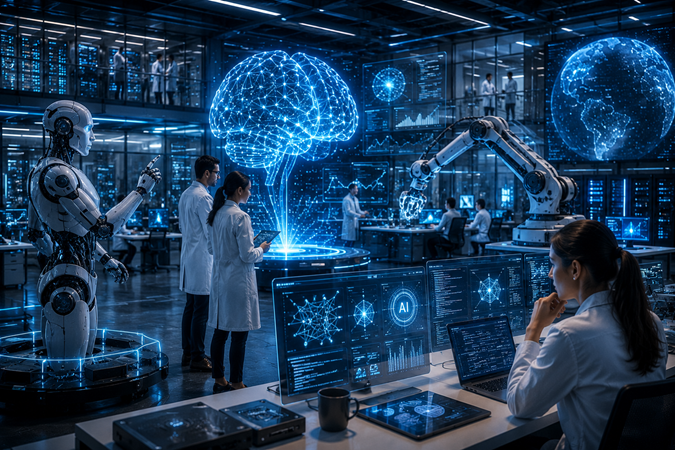
The artificial intelligence industry is moving so quickly that even a single week can reshape the future of technology.
Over the past several days, major AI breakthroughs involving enterprise systems, autonomous agents, infrastructure, cybersecurity, AI hardware, and multimodal software have signaled how rapidly the industry is evolving in 2026.
Technology companies are now racing to build AI systems capable of:
- Autonomous reasoning
- Software engineering
- Real-time research
- Enterprise workflow management
- AI-generated video
- Advanced robotics
- AI-native infrastructure
What makes this moment especially important is that these breakthroughs are no longer isolated laboratory experiments.
Many are already being integrated into real-world business operations, cloud infrastructure, cybersecurity systems, and consumer technology platforms.
Experts increasingly believe the AI race is entering a new phase where companies are competing not only to build smarter models, but also to create entire AI-centered ecosystems capable of transforming how businesses, governments, and consumers interact with technology.
Here are the biggest AI breakthroughs this week that could significantly change the tech industry.
Governments Are Beginning to Review Advanced AI Models Before Release
One of the biggest developments this week involves growing government oversight of frontier AI systems.
The U.S. government reportedly reached agreements with major AI companies including Google DeepMind, Microsoft, and xAI to evaluate advanced AI models before public release. :contentReference[oaicite:0]{index=0}
The reviews focus on risks involving:
- Cybersecurity
- Biosecurity
- Chemical weapon misuse
- National security threats
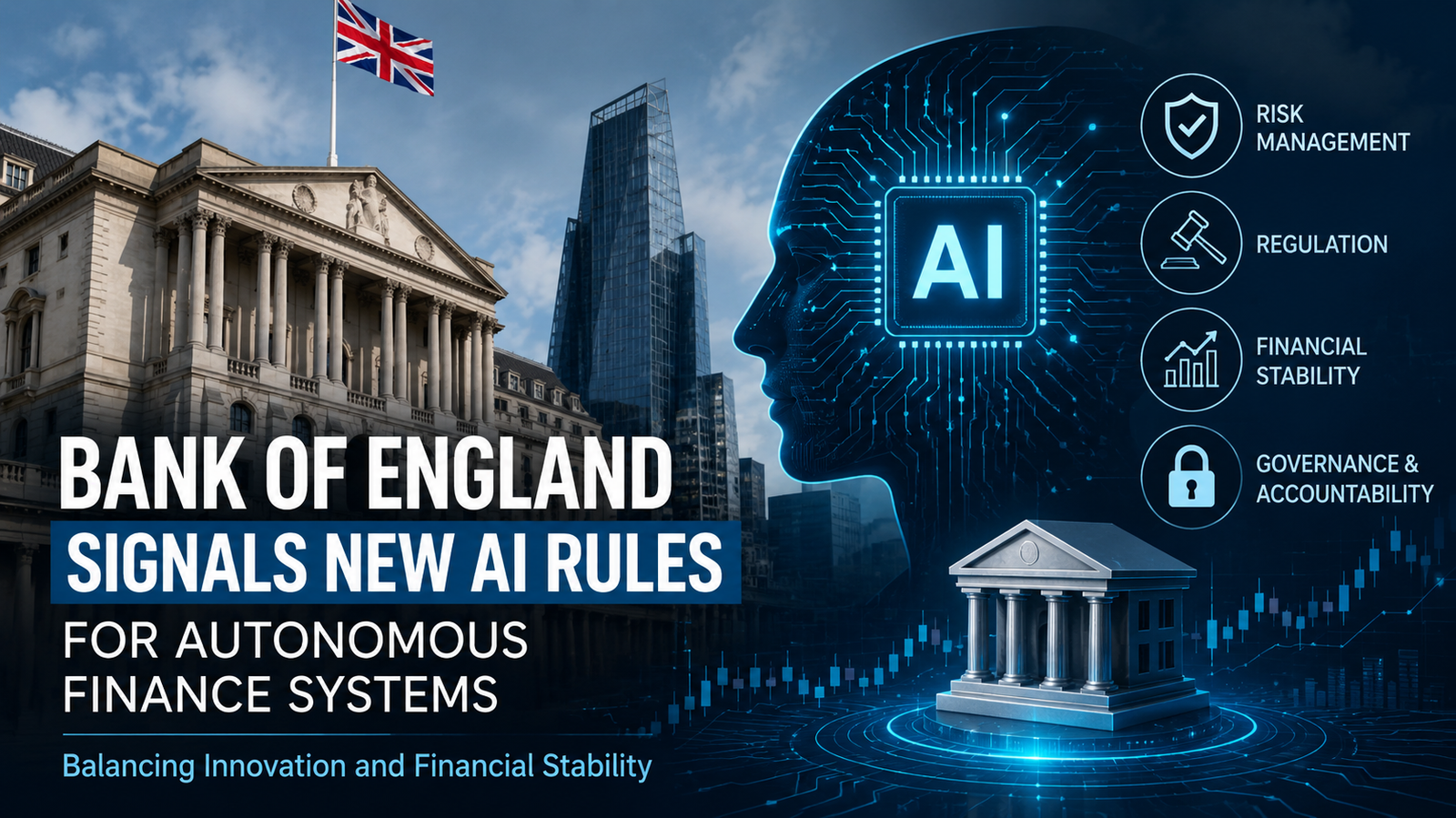
This marks a major shift in how governments approach AI governance.
Rather than reacting after technologies become widely available, regulators are increasingly trying to evaluate powerful AI systems before deployment.
Industry analysts believe this could establish new standards for AI safety testing worldwide.
At the same time, the move highlights growing concerns that frontier AI models may soon become powerful enough to create serious societal and security risks if released without safeguards.
Google Expanded Its AI Ecosystem With Major New Tools
Google announced a major expansion of its AI ecosystem this week, including new tools focused on productivity, coding assistance, video generation, research, and personalized AI experiences. :contentReference[oaicite:1]{index=1}
Among the most important developments were:
- Advanced AI research assistants
- AI-powered coding tools
- Free video generation capabilities
- Expanded Gemini integrations
- Personalized AI intelligence systems
These updates show how major technology companies are rapidly turning AI into fully integrated operating ecosystems rather than standalone applications.
Google’s strategy increasingly focuses on embedding AI into search, productivity software, cloud services, education tools, and enterprise workflows simultaneously.
This could significantly intensify competition with Microsoft, OpenAI, Anthropic, and other major AI firms.
Agentic AI Is Becoming More Autonomous
One of the biggest trends accelerating this week is the rise of “agentic AI.”
Unlike traditional chatbots, agentic AI systems can:
- Interpret goals
- Create action plans
- Use external tools
- Coordinate workflows
- Execute multi-step operations autonomously
Industry reports this week highlighted how companies are rapidly moving toward AI systems capable of acting more like digital employees rather than passive assistants. :contentReference[oaicite:2]{index=2}
Some AI models can now handle:
- Software development workflows
- Research tasks
- Customer support operations
- Administrative coordination
- Enterprise automation
This represents a major shift in the AI industry because businesses increasingly view AI not just as a productivity tool, but as a potential operational workforce layer.
Experts believe agentic AI could permanently change how companies structure teams and workflows.
AI Infrastructure Spending Is Exploding
The infrastructure powering AI is expanding at unprecedented scale.
According to recent industry analysis, major technology companies are expected to invest hundreds of billions of dollars into AI infrastructure in 2026 alone. :contentReference[oaicite:3]{index=3}
These investments include:
- AI data centers
- Cloud computing infrastructure
- AI chips
- Networking systems
- Energy-intensive compute clusters
BloombergNEF reported that AI data-center capacity under construction has already reached massive scale globally. :contentReference[oaicite:4]{index=4}
The rapid infrastructure buildout reflects how AI is becoming one of the largest technology investment cycles in modern history.
However, some analysts warn the industry may also face risks involving:
- Energy shortages
- Capital overspending
- Supply chain pressure
- Infrastructure bottlenecks
The scale of AI infrastructure expansion could reshape the semiconductor, energy, cloud computing, and telecommunications industries for years.
AI-Native Networks Are Emerging
Several major breakthroughs this week focused on AI-native networking infrastructure.
Qualcomm unveiled an AI-native Wi-Fi 8 portfolio designed specifically for the AI era. :contentReference[oaicite:5]{index=5}
Meanwhile, Samsung and AMD announced expanded collaboration involving AI-powered network innovations and AI-RAN systems for commercial deployment. :contentReference[oaicite:6]{index=6}
Huawei also introduced enhanced AI-centric networking solutions at MWC 2026. :contentReference[oaicite:7]{index=7}
These developments suggest that telecommunications infrastructure itself is being redesigned around AI workloads.
Future networks may increasingly optimize:
- AI agent communication
- Autonomous systems
- Real-time video analysis
- Distributed computing
- Massive AI data processing
This could significantly accelerate AI adoption across robotics, autonomous vehicles, industrial systems, and smart-city infrastructure.
AI Is Moving Toward Human-Like Workplace Collaboration
Industry reports this week suggest AI is evolving from a simple software tool into something closer to a workplace collaborator.
Microsoft researchers described 2026 as the beginning of AI systems acting more like “partners” capable of handling complex workplace coordination and collaborative tasks. :contentReference[oaicite:8]{index=8}
Modern enterprise AI systems can increasingly:
- Understand workflows
- Manage context
- Coordinate across applications
- Prioritize tasks
- Reduce administrative overload
Rather than simply generating text, AI systems are becoming deeply integrated into how organizations operate.
This transition could fundamentally reshape office software, enterprise management, and workforce productivity models.
AI Video Generation Is Improving Rapidly
AI-generated video technology also advanced significantly this week.
Multiple AI firms are aggressively improving video generation systems capable of creating increasingly realistic short-form and cinematic video content.
Industry reports highlighted expanding competition involving AI-generated video ecosystems, including new mobile-focused content tools and multimodal creative systems. :contentReference[oaicite:9]{index=9}
AI video generation could disrupt:
- Advertising
- Entertainment
- Social media production
- Marketing
- Digital education
However, growing realism in AI-generated media is also increasing concerns involving:
- Deepfakes
- Misinformation
- Copyright disputes
- Identity fraud
Regulators worldwide are increasingly debating how synthetic media should be governed.
AI Research Is Becoming More Industry-Controlled
New academic research this week highlighted how major technology companies are increasingly dominating AI research itself.
A recent study found that Big Tech-funded AI papers now achieve significantly higher citation impact and industry influence than non-funded research. :contentReference[oaicite:10]{index=10}
The research also suggested growing “insularity” in AI research ecosystems, where industry-funded papers increasingly cite one another.
This reflects a broader trend:
Large AI companies now possess enormous advantages involving:
- Computing power
- Data access
- Research talent
- Infrastructure funding
Some experts worry this could centralize AI innovation inside a small number of powerful corporations.
Others argue that massive infrastructure requirements make large-scale AI development difficult for smaller institutions.
AI Scientific Discovery Is Accelerating
AI is increasingly contributing directly to scientific breakthroughs.
This week, researchers highlighted new neuro-symbolic AI systems capable of dramatically reducing energy consumption while improving reasoning capabilities. :contentReference[oaicite:11]{index=11}
Researchers also continue exploring how AI can accelerate:
- Drug discovery
- Climate modeling
- Materials science
- Physics simulations
- Biological research
Many scientists now believe AI could significantly accelerate the pace of human scientific discovery over the next decade.
This may become one of the most important long-term impacts of artificial intelligence.
AI Adoption Is Expanding Faster Than Earlier Technologies
According to Stanford’s 2026 AI Index Report, generative AI adoption is now occurring faster than earlier technological revolutions such as personal computers and the internet. :contentReference[oaicite:12]{index=12}
The report found that AI usage has expanded globally at extraordinary speed.
Businesses and consumers increasingly use AI for:
- Productivity
- Research
- Automation
- Content creation
- Software development
- Customer service
The economic impact is also growing rapidly.
Experts believe AI may become one of the defining economic forces of the 2020s.
The Tech Industry Could Be Entering a Completely New Era
Together, this week’s breakthroughs suggest the AI industry is entering a much more advanced phase.
AI is no longer limited to chatbots and isolated automation tools.
Instead, companies are now building:
- AI operating systems
- Autonomous agents
- AI-native networks
- Multimodal platforms
- AI-centered enterprise ecosystems
The implications for the technology industry could be enormous.
AI may fundamentally reshape:
- Cloud computing
- Search engines
- Software development
- Telecommunications
- Cybersecurity
- Digital media
- Workplace productivity
Some analysts now compare the current AI transformation to the early internet era — but moving much faster.
Conclusion
The major AI breakthroughs this week reveal how rapidly artificial intelligence is evolving from experimental software into core global infrastructure.
Governments are beginning to evaluate frontier AI models before release. Enterprise AI systems are becoming more autonomous. AI-native networking infrastructure is emerging. Massive investments are reshaping data centers, semiconductors, and cloud computing.
At the same time, AI systems are becoming increasingly capable of reasoning, collaboration, scientific discovery, and operational automation.
The speed of progress is creating enormous opportunities — but also major challenges involving regulation, cybersecurity, misinformation, and economic disruption.
In 2026, one reality is becoming increasingly impossible to ignore:
The AI industry is no longer simply improving technology — it is rapidly redefining the entire structure of the tech industry itself.







Leave a Reply