

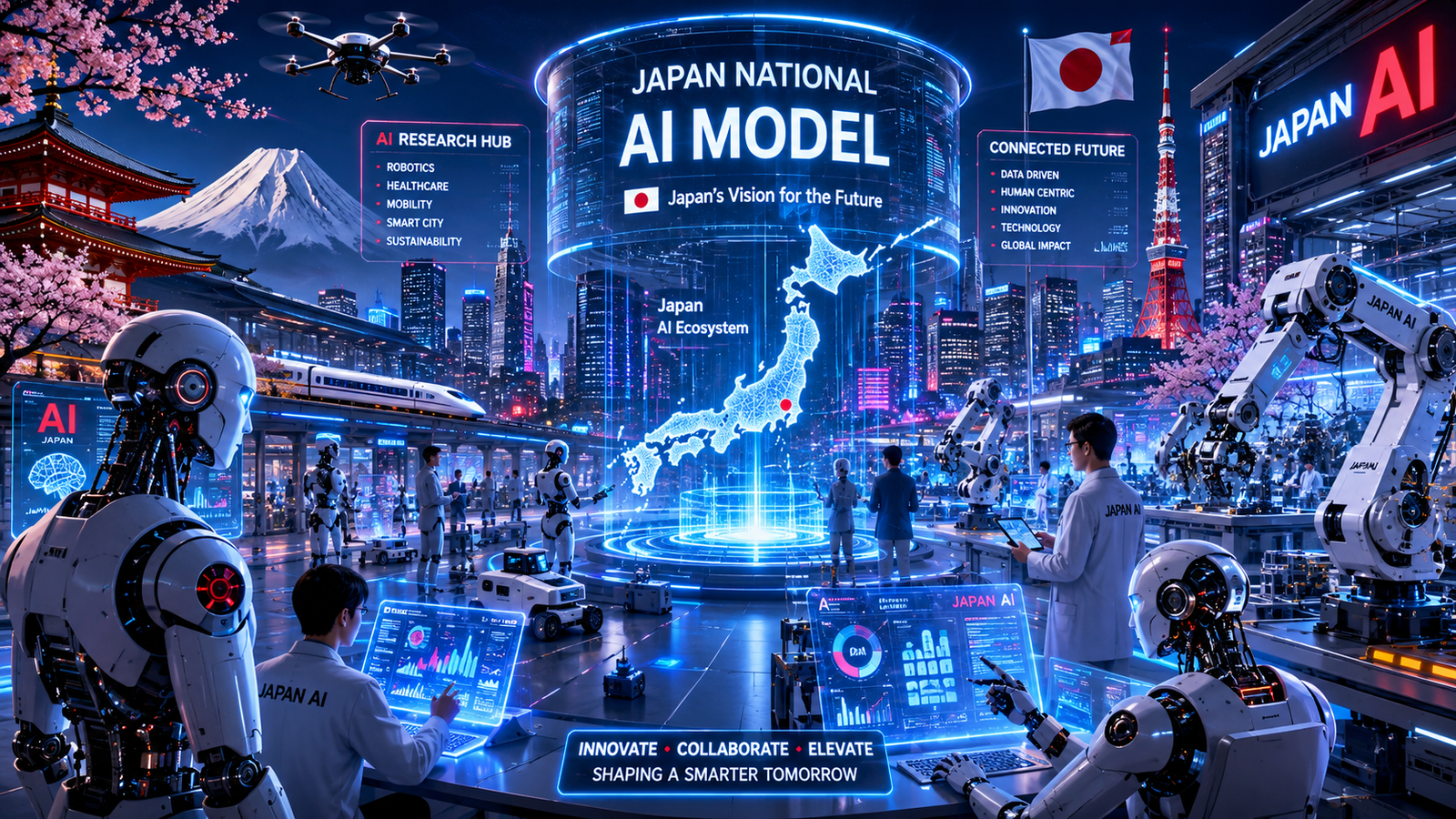
Japan is setting its sights on a future powered by artificial intelligence and robotics. In a sweeping national strategy aimed at strengthening economic growth and addressing long-term demographic challenges, the country plans to develop its own advanced AI foundation model while deploying approximately 10 million AI-powered robots by 2040.
The initiative reflects Japan’s determination to become a global leader in next-generation technologies, reducing reliance on foreign AI platforms while accelerating innovation across healthcare, manufacturing, logistics, and public services.
A National AI Model for Greater Digital Independence
At the center of Japan’s strategy is the creation of a domestically developed large AI model. Rather than depending entirely on overseas AI providers, the government wants to establish a sovereign AI ecosystem designed specifically for Japanese businesses, public institutions, and citizens.
A national AI model would offer several strategic benefits, including enhanced data security, better support for the Japanese language, and greater control over critical digital infrastructure. It also positions Japan to compete more effectively in an increasingly AI-driven global economy.
Government officials view AI as more than just a productivity tool—it is becoming a key component of national competitiveness and technological resilience.
AI-Powered Robots to Transform Daily Life
Japan’s roadmap envisions the deployment of around 10 million intelligent robots over the next 15 years. These machines are expected to support industries facing severe labor shortages while improving efficiency and service quality.
Potential applications include:
- Healthcare and elderly care assistance
- Manufacturing automation
- Warehouse and logistics operations
- Agriculture and food production
- Disaster response and emergency services
- Public infrastructure maintenance
- Hospitality and customer support
Unlike traditional industrial robots, many of these next-generation systems will integrate advanced artificial intelligence, allowing them to understand environments, interact with people, and perform increasingly complex tasks with minimal human supervision.
Addressing Japan’s Aging Population
One of the primary motivations behind the strategy is Japan’s rapidly aging society. The country continues to experience declining birth rates alongside a shrinking workforce, creating significant challenges for businesses and public services.
AI and robotics are expected to help bridge labor gaps by automating repetitive tasks and assisting workers in sectors where recruiting employees has become increasingly difficult.
Healthcare is expected to be one of the biggest beneficiaries. AI-powered assistants could support caregivers, monitor patients, transport medical supplies, and help older adults maintain greater independence.
Building a Competitive AI Economy
Beyond solving workforce shortages, Japan aims to establish itself as one of the world’s leading AI innovation hubs.
The national strategy includes investments in:
- Artificial intelligence research
- Semiconductor manufacturing
- Advanced robotics
- Computing infrastructure
- Digital transformation across industries
These investments are designed to stimulate economic growth, encourage private-sector innovation, and strengthen Japan’s position within the global AI supply chain.
Competing in the Global AI Race
Countries around the world are racing to secure leadership in artificial intelligence. The United States continues to dominate frontier AI development, while China has significantly expanded investment in AI infrastructure and industrial applications.
Japan’s latest roadmap demonstrates its intention to remain competitive by focusing on areas where it has long held expertise, particularly robotics, precision engineering, and advanced manufacturing.
Rather than attempting to replicate existing AI ecosystems, Japan aims to combine cutting-edge AI software with world-class robotics capabilities, creating practical solutions for real-world challenges.
AI Sovereignty Becomes a National Priority
An important aspect of the strategy is achieving greater AI sovereignty. Governments worldwide are increasingly recognizing the importance of controlling their own AI infrastructure, data, and computing resources.
By developing a homegrown AI foundation model, Japan hopes to:
- Reduce dependence on foreign AI technologies
- Improve national cybersecurity
- Protect sensitive government and enterprise data
- Support domestic AI startups and researchers
- Encourage innovation tailored to local industries
This approach reflects a broader international movement toward building sovereign AI capabilities.
Opportunities and Challenges Ahead
While the vision is ambitious, significant hurdles remain before Japan can fully realize its 2040 goals.
Some of the key challenges include:
- Securing sufficient computing power
- Training competitive AI models
- Expanding semiconductor production
- Addressing AI ethics and governance
- Developing skilled AI talent
- Managing the high costs of nationwide AI deployment
Success will depend on continued collaboration between government agencies, technology companies, research institutions, and industry leaders.
What This Means for the Future
Japan’s long-term AI strategy signals a major shift toward integrating artificial intelligence into every aspect of society. From hospitals and factories to farms and public services, AI-powered systems are expected to become an essential part of everyday life.
If the country achieves its objectives, Japan could strengthen its leadership in robotics while creating one of the world’s most advanced AI ecosystems. The initiative also highlights a growing global trend: nations are increasingly investing in sovereign AI technologies to secure economic growth, technological independence, and long-term resilience.
As the international AI race accelerates, Japan’s commitment to developing its own AI model and deploying millions of intelligent robots may shape the future of automation far beyond its borders.











Leave a Reply