


Artificial intelligence is no longer an emerging technology—it has become a critical part of how businesses operate. From automating customer service and streamlining supply chains to improving healthcare and financial services, AI is transforming industries at an unprecedented pace. However, with this rapid adoption comes an equally important challenge: regulation.
Governments around the world are introducing new AI laws and regulatory frameworks to ensure artificial intelligence is used responsibly, transparently, and ethically. For businesses, this means AI innovation is no longer just about building smarter systems. It is also about ensuring those systems comply with evolving legal requirements.
In 2026, AI regulation has become a major business priority. Organizations that ignore compliance risk facing financial penalties, legal challenges, reputational damage, and loss of customer trust. On the other hand, companies that embrace responsible AI practices are gaining a competitive advantage by demonstrating accountability and transparency.
Whether you are a startup integrating AI into your products or a global enterprise deploying advanced machine learning systems, understanding the latest AI regulations is essential. This guide explores the most important global AI regulatory trends in 2026 and explains what every business should know to stay ahead.
1. Why AI Regulations Are Becoming More Important
Artificial intelligence has reached a point where its decisions can significantly affect people’s lives.
AI systems now influence hiring decisions, loan approvals, insurance claims, medical diagnoses, education, law enforcement, and online content moderation. As AI becomes more powerful, governments want to ensure these technologies remain fair, transparent, and accountable.
Without proper oversight, AI systems may unintentionally introduce bias, misuse personal data, generate misinformation, or make decisions that are difficult to explain.
For this reason, regulators worldwide are creating legal frameworks that encourage innovation while protecting individuals and businesses from potential risks.
The Business Perspective
Rather than viewing regulation as an obstacle, forward-thinking organizations increasingly see compliance as a way to build customer confidence and strengthen long-term growth.
2. Risk-Based AI Regulation Is Becoming the Global Standard
One of the most significant developments in 2026 is the widespread adoption of risk-based regulatory approaches.
Instead of regulating every AI application equally, governments classify AI systems according to their potential impact.
Low-risk applications such as grammar correction or image enhancement generally face fewer restrictions. High-risk AI systems used in healthcare, banking, education, employment, transportation, and public services are subject to much stricter oversight.
Businesses deploying AI in sensitive industries must now conduct detailed risk assessments, maintain technical documentation, and continuously monitor system performance.
This balanced approach encourages innovation while ensuring stronger protections where AI decisions have greater consequences.
3. Transparency Requirements Are Expanding
Modern AI regulations increasingly require organizations to explain how their AI systems operate.
Customers, regulators, and business partners want to understand how automated decisions are made, what data is being used, and whether human oversight exists.
Businesses are now expected to document training datasets, model behavior, system limitations, and decision-making processes.
Explainable AI has therefore become an important competitive advantage rather than simply a technical feature.
Organizations that provide greater transparency often earn stronger customer trust while reducing regulatory risk.
4. Data Privacy Remains a Top Priority
Artificial intelligence depends heavily on data.
However, collecting and processing personal information brings significant privacy responsibilities.
In 2026, businesses must ensure that AI systems comply with global privacy requirements by collecting only necessary data, protecting sensitive information, obtaining appropriate user consent, and implementing robust cybersecurity measures.
Consumers are becoming increasingly aware of how their personal information is used, making responsible data governance essential for maintaining public trust.
Organizations that prioritize privacy from the beginning are better positioned to adapt to future regulatory changes.
Why Privacy Matters
Strong data protection not only reduces legal risks but also strengthens customer relationships and brand reputation.
5. Human Oversight Is Still Essential
Despite remarkable advances in artificial intelligence, governments continue emphasizing the importance of human involvement in critical decisions.
AI should support human expertise rather than replace it completely.
Businesses using AI for recruitment, healthcare, financial approvals, legal services, or public administration are increasingly required to ensure qualified professionals review important automated decisions.
Human oversight helps identify errors, reduce algorithmic bias, and improve accountability.
This collaborative approach recognizes that while AI is highly efficient, human judgment remains irreplaceable in many situations.
6. Industry-Specific AI Rules Are Emerging
Different industries face unique regulatory challenges.
Healthcare organizations must demonstrate that AI-assisted diagnostic systems meet rigorous safety standards.
Financial institutions are required to explain automated lending decisions while monitoring bias and fraud.
Manufacturing companies deploying autonomous robotics must ensure operational safety.
Educational platforms using AI must protect student privacy and maintain fairness in automated assessments.
As AI adoption expands, industry-specific regulations continue becoming more detailed throughout 2026.
Businesses should therefore monitor both general AI legislation and sector-specific compliance requirements.
7. Responsible AI Is Becoming a Competitive Advantage
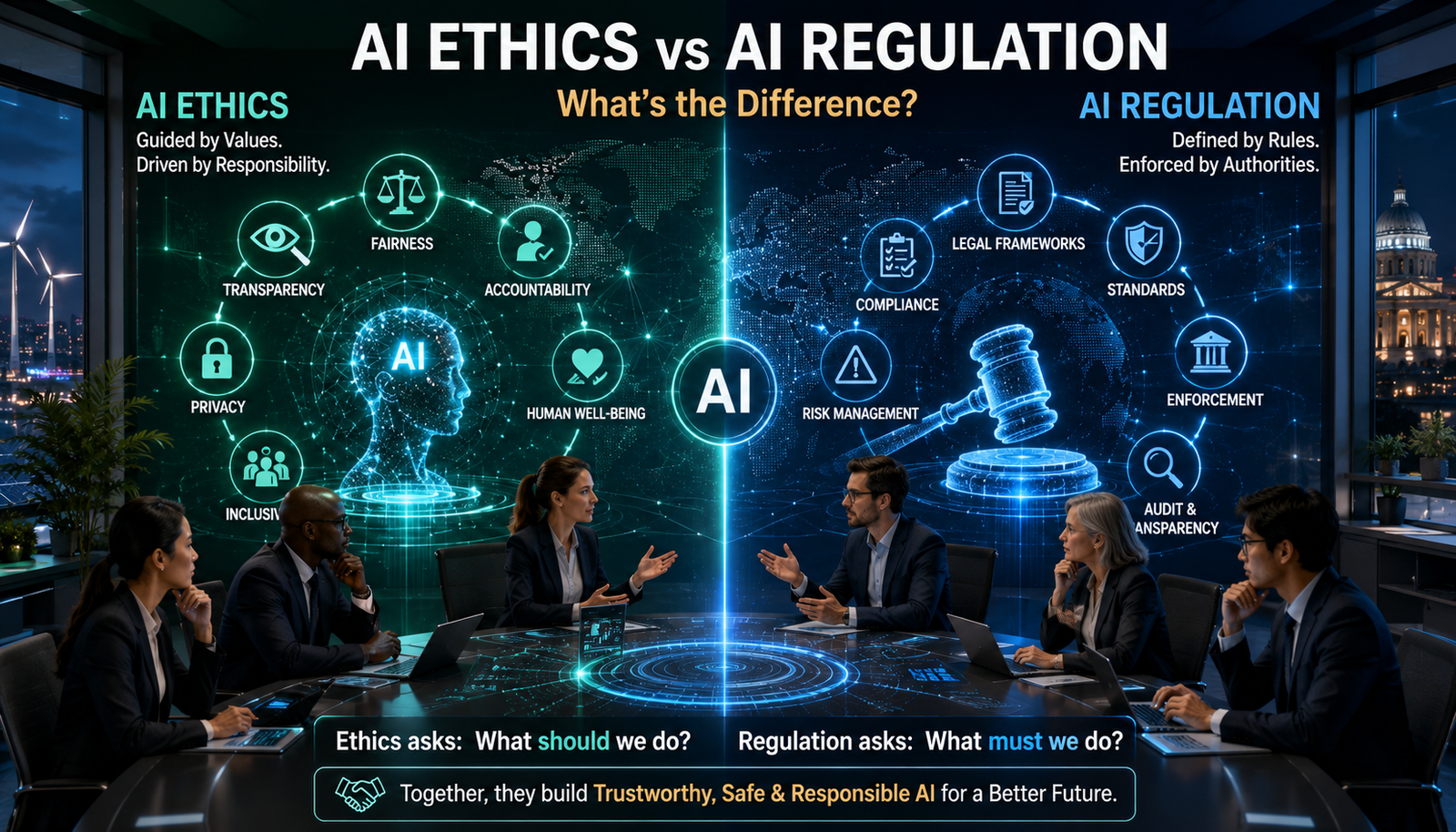
Responsible AI extends beyond legal compliance.
Organizations increasingly establish internal governance frameworks covering fairness, accountability, bias monitoring, cybersecurity, environmental sustainability, and ethical decision-making.
Customers, investors, and employees increasingly expect companies to demonstrate responsible AI practices.
Businesses that invest in ethical AI governance often strengthen their reputation while attracting greater customer loyalty.
Responsible innovation is quickly becoming a defining characteristic of successful AI-driven organizations.
8. International Compliance Is More Complex Than Ever
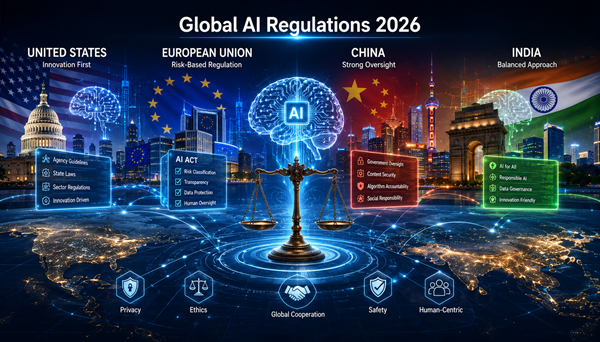
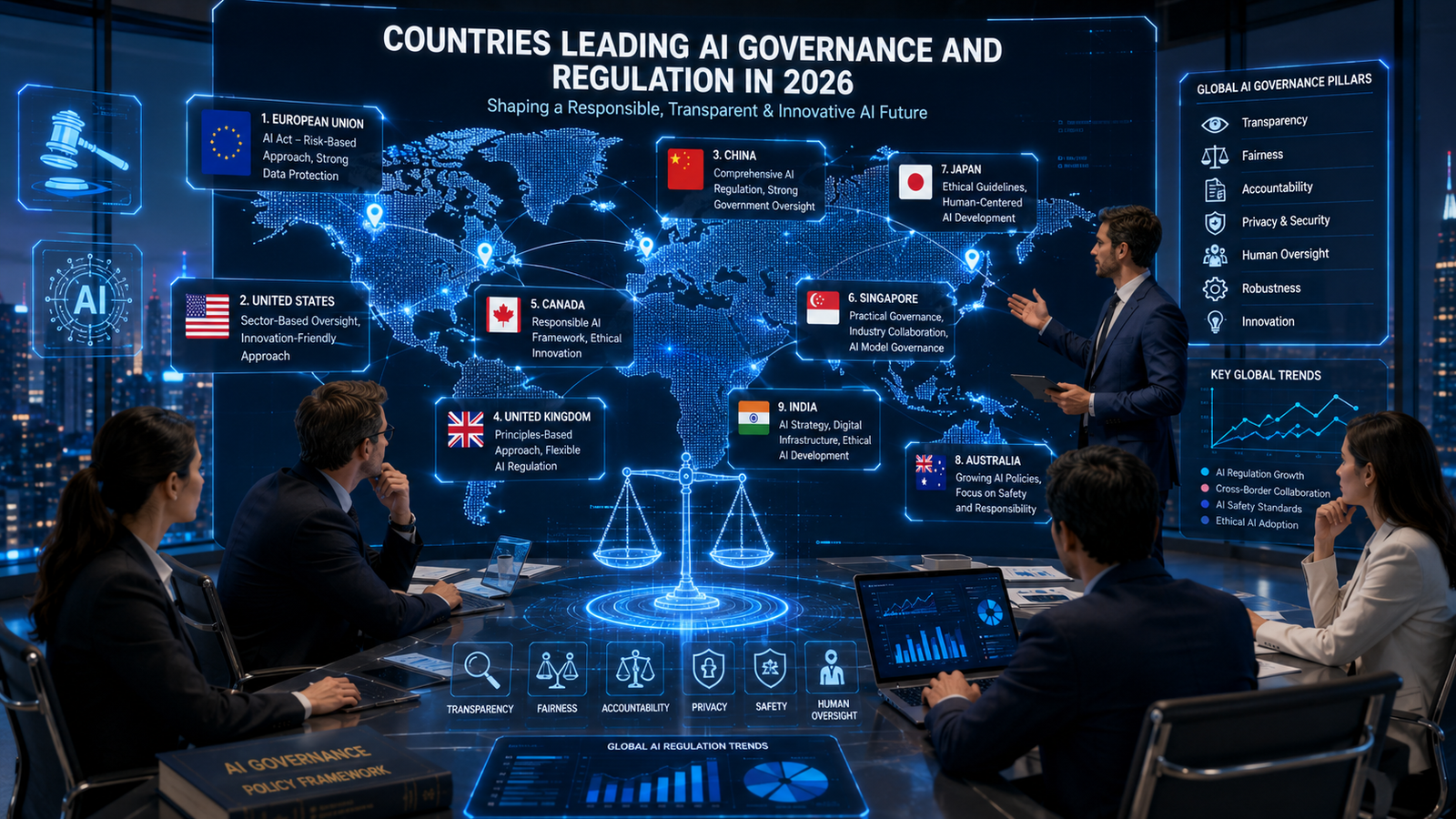
Companies operating across multiple countries now face the challenge of complying with different regulatory frameworks.
An AI product available globally may need to satisfy varying legal requirements related to transparency, privacy, documentation, cybersecurity, and consumer protection.
International organizations continue working toward greater regulatory alignment, but significant regional differences remain.
Businesses expanding internationally should develop flexible compliance strategies capable of adapting to multiple legal environments.
Strong governance frameworks simplify this process while reducing regulatory uncertainty.
9. AI Governance Is Moving Into the Boardroom
Artificial intelligence is no longer solely an IT responsibility.
Executive leadership teams and corporate boards increasingly oversee AI governance, risk management, and regulatory compliance.
Organizations are appointing AI governance officers, establishing ethics committees, and implementing formal AI policies covering development, deployment, monitoring, and auditing.
This strategic oversight helps ensure AI initiatives align with business objectives while minimizing legal and operational risks.
Companies treating AI governance as a leadership priority are generally better prepared for future regulatory developments.
10. Preparing Your Business for the Future of AI Regulation
Regulatory requirements will continue evolving as artificial intelligence becomes more sophisticated.
Businesses should therefore adopt a proactive approach rather than reacting only when new laws are introduced.
Developing transparent AI systems, documenting decision-making processes, strengthening cybersecurity, investing in employee training, monitoring algorithm performance, and conducting regular compliance reviews all contribute to long-term success.
Organizations that integrate compliance into their AI development lifecycle are more likely to innovate confidently while maintaining public trust.
Preparing today also reduces the cost and complexity of adapting to tomorrow’s regulatory landscape.
Why AI Compliance Should Be Viewed as an Opportunity
Many businesses initially view regulation as an administrative burden.
However, compliance offers significant strategic benefits.
Transparent and trustworthy AI systems strengthen customer confidence, attract enterprise clients, improve investor confidence, reduce legal exposure, and differentiate organizations in increasingly competitive markets.
Responsible AI practices also encourage higher-quality development processes, leading to more reliable, secure, and effective AI products.
Businesses that embrace compliance early often discover that good governance supports innovation rather than limiting it.
Looking Ahead: The Future of Global AI Regulation
Artificial intelligence will continue transforming industries at an extraordinary pace, and governments will continue refining regulatory frameworks to balance innovation with public protection.
Future regulations are likely to address emerging technologies such as autonomous AI agents, advanced generative AI, synthetic media, quantum-enhanced machine learning, and increasingly capable foundation models.
For businesses, the most successful strategy will be staying informed, building flexible compliance programs, and treating responsible AI as a core business value rather than a legal obligation.
Organizations that prioritize transparency, fairness, privacy, and accountability today will be well positioned to thrive in the rapidly evolving AI economy of tomorrow. In 2026 and beyond, regulatory compliance is no longer separate from AI strategy—it is an essential part of building sustainable, trustworthy, and globally competitive artificial intelligence solutions.








Leave a Reply