


Artificial intelligence has evolved from a competitive advantage into a core business necessity. From customer service chatbots and AI-powered marketing to predictive analytics and automated decision-making, organizations across every industry now rely on AI to improve efficiency and drive growth. However, as AI adoption continues to accelerate, governments around the world are introducing stricter regulations to ensure that these technologies are developed and used responsibly.
In 2026, AI compliance is no longer just a legal requirement for large technology companies. Businesses of every size, including startups, eCommerce brands, healthcare providers, financial institutions, manufacturers, and marketing agencies, must understand how global AI regulations affect their operations. Companies that ignore these rules risk legal penalties, financial losses, reputational damage, and declining customer trust.
This guide explains the most important global AI regulations in 2026, why they matter, and what businesses should do to remain compliant while continuing to innovate.
Why AI Regulations Matter More Than Ever
The rapid growth of artificial intelligence has transformed industries at an unprecedented pace. While AI offers enormous opportunities, it also introduces serious concerns regarding privacy, bias, misinformation, intellectual property, cybersecurity, and transparency.
Governments are responding by creating legal frameworks that balance innovation with public safety. These regulations are designed to ensure that AI systems are fair, explainable, secure, and accountable.
For businesses, compliance is no longer optional. Customers increasingly expect organizations to use AI responsibly, and regulators are becoming more aggressive in enforcing compliance standards. Businesses that proactively embrace responsible AI practices often gain stronger customer trust and long-term competitive advantages.
1. The Global Shift Toward AI Governance
Unlike previous years where only a few countries introduced AI-related guidelines, 2026 marks the beginning of comprehensive AI governance across multiple regions.
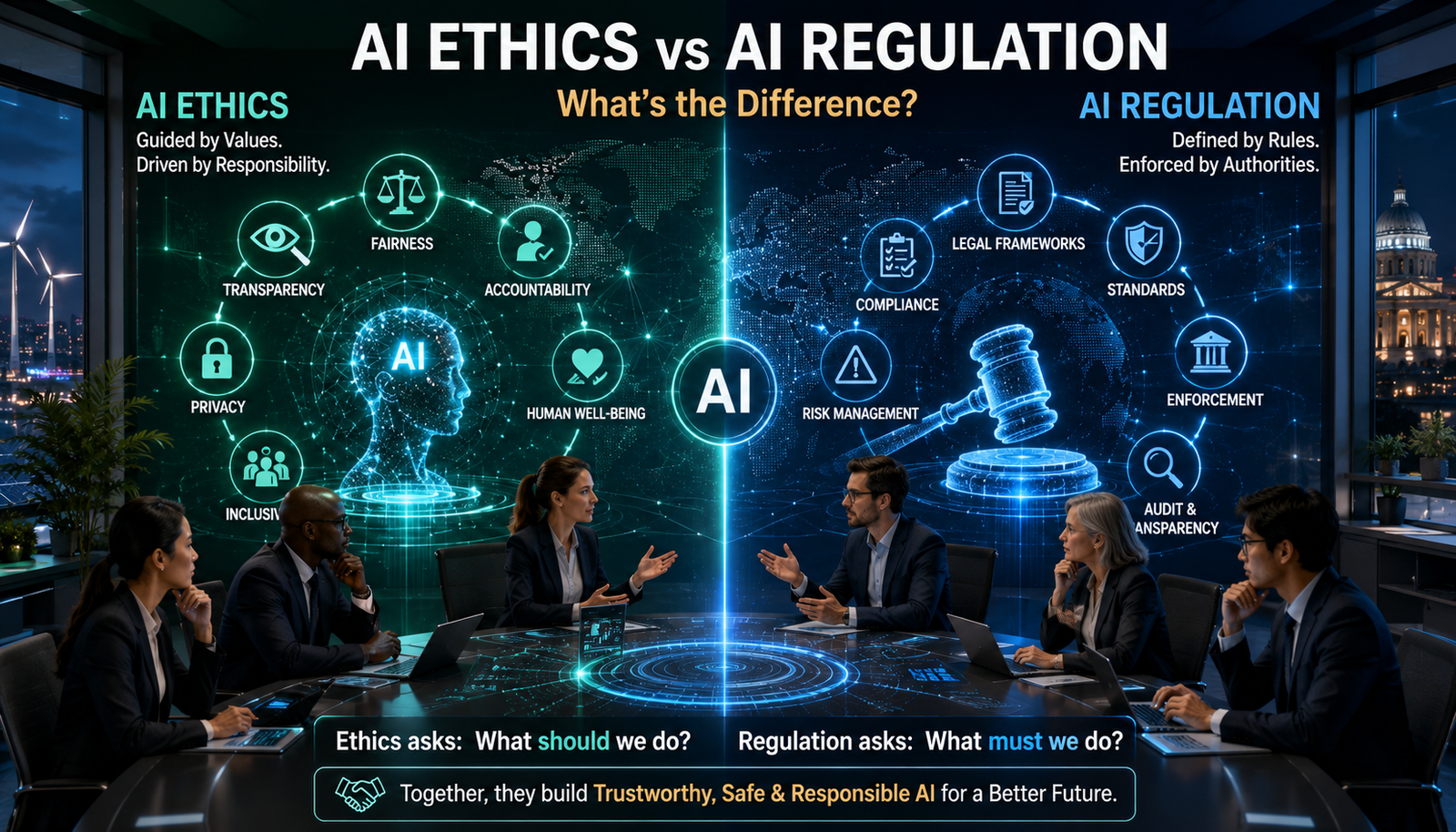
Governments are moving beyond voluntary ethical principles and introducing legally enforceable requirements. Businesses operating internationally must now comply with multiple regulatory frameworks simultaneously.
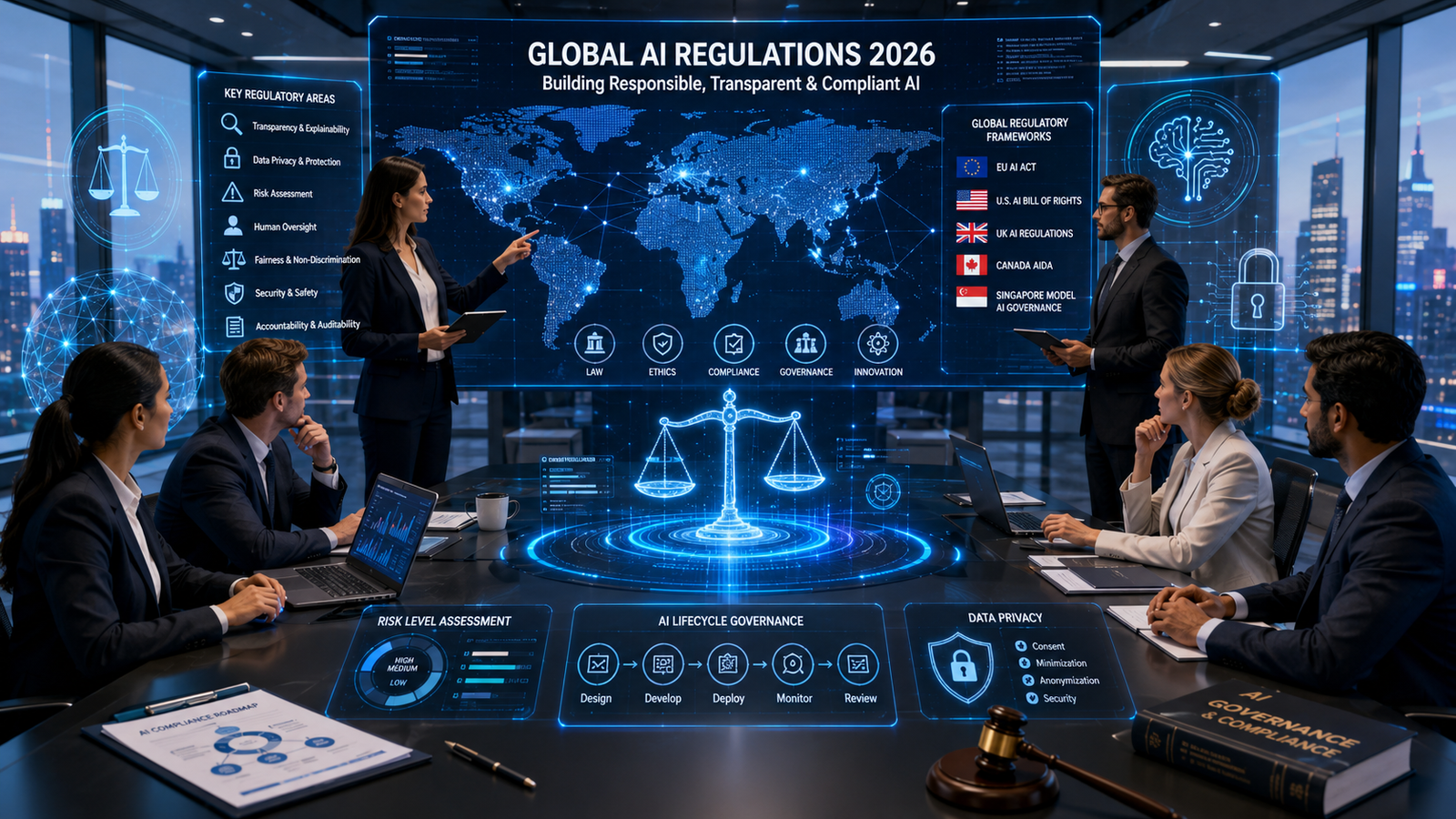
Although each country has its own approach, most regulations focus on similar objectives. These include protecting personal data, reducing algorithmic discrimination, increasing transparency, improving cybersecurity, ensuring human oversight, and clearly defining accountability when AI systems make important decisions.
Organizations serving customers across different countries should no longer view AI regulation as a local issue. It has become a global business priority.
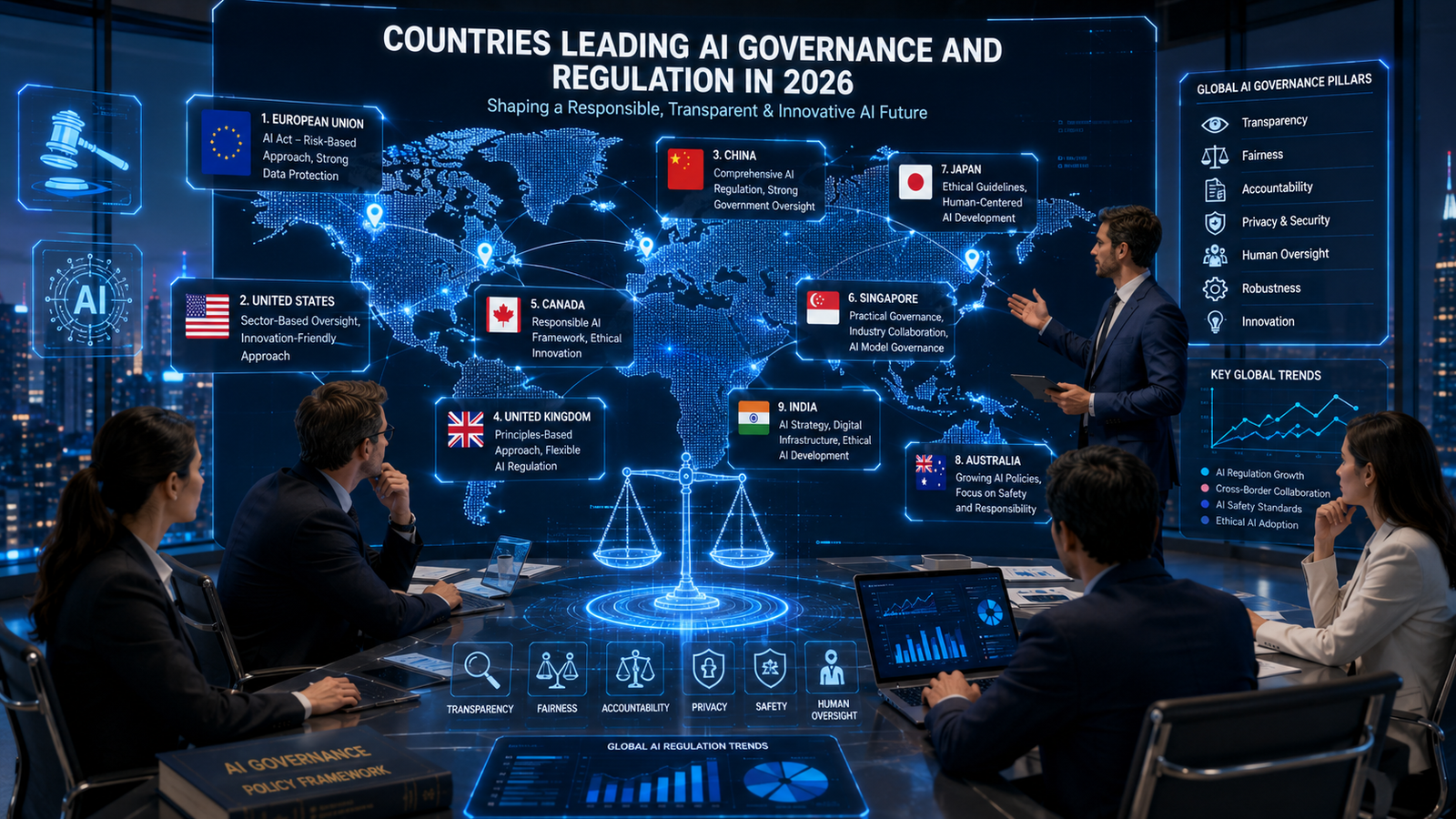
2. Europe’s AI Act Sets the Global Standard
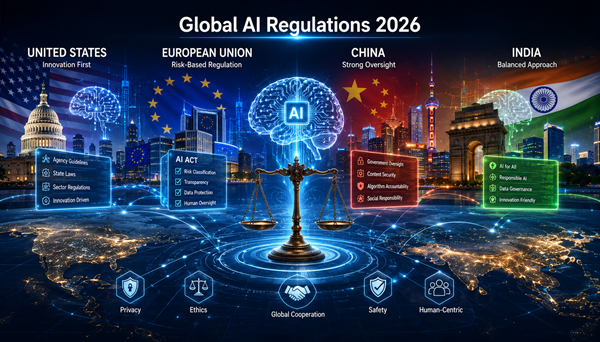
The European Union continues to lead AI regulation through its comprehensive AI Act, which significantly influences businesses worldwide.
Rather than regulating every AI application equally, the legislation classifies AI systems according to risk levels.
Minimal-risk applications face relatively few obligations, while high-risk systems used in healthcare, banking, recruitment, education, transportation, and law enforcement must meet extensive compliance requirements before deployment.
Businesses using high-risk AI are expected to perform risk assessments, maintain detailed documentation, monitor system performance, implement human oversight, and ensure transparency throughout the AI lifecycle.
Even companies located outside Europe may be required to comply if they offer AI-powered products or services to European customers. This global reach means organizations everywhere should evaluate whether their AI systems fall within the regulation’s scope.
3. The United States Focuses on Sector-Specific Regulation
Instead of implementing one nationwide AI law, the United States continues to regulate AI through industry-specific policies, executive guidance, and state-level legislation.
Financial institutions face stricter oversight regarding algorithmic lending decisions. Healthcare providers must ensure AI-assisted diagnoses remain safe and explainable. Employment-related AI tools are increasingly scrutinized to prevent hiring discrimination.
Several states have introduced additional requirements for AI transparency, biometric data protection, automated decision-making, and consumer rights.
Businesses operating across multiple states often need separate compliance strategies because regulatory expectations can vary significantly depending on location and industry.
4. Asia Continues Rapid AI Regulatory Development
Several Asian economies have become leaders in balancing AI innovation with responsible governance.
Countries including Singapore, Japan, South Korea, China, and India continue expanding their AI policies to encourage innovation while protecting citizens.
China maintains strict oversight regarding generative AI, content moderation, cybersecurity, and algorithm registration. Singapore emphasizes trustworthy AI governance through practical frameworks that encourage responsible innovation. Japan promotes human-centered AI while supporting international cooperation. India continues developing AI governance policies alongside expanding digital privacy regulations.
Companies operating across Asia should closely monitor regulatory developments because requirements continue evolving as AI adoption grows.
5. Transparency Has Become a Legal Requirement
One of the biggest regulatory trends in 2026 is transparency.
Customers increasingly have the right to know when they are interacting with AI instead of humans. Businesses are expected to disclose AI-generated content, explain automated decisions when appropriate, and provide accessible information about how AI systems use personal data.
Transparency builds customer confidence while reducing legal risks. Organizations that openly communicate how AI supports their products and services generally experience stronger consumer trust than businesses attempting to hide AI involvement.
Clear disclosure policies are becoming an essential part of responsible AI governance.
6. Data Privacy Remains the Foundation of AI Compliance
Artificial intelligence depends heavily on data. Consequently, privacy regulations remain closely connected to AI governance.
Businesses must ensure that training data, customer information, employee records, and behavioral analytics comply with existing privacy laws.
Organizations should collect only necessary information, obtain appropriate user consent where required, protect sensitive personal data, and establish clear retention policies.
Strong data governance not only reduces regulatory risk but also improves AI model quality by ensuring cleaner, more reliable datasets.
7. AI Bias and Fairness Receive Greater Attention
Governments are increasingly concerned that AI systems may unintentionally discriminate against certain individuals or groups.
Biased algorithms can negatively affect hiring decisions, loan approvals, insurance pricing, healthcare recommendations, educational opportunities, and criminal justice outcomes.
Businesses are now expected to regularly test AI systems for fairness, identify potential sources of bias, monitor performance after deployment, and document corrective actions whenever unfair outcomes are detected.
Responsible organizations understand that fairness testing is not simply a compliance exercise. It directly improves customer satisfaction and brand reputation.
8. Cybersecurity Requirements Are Expanding
As AI systems become more powerful, they also become attractive targets for cybercriminals.
Regulators increasingly expect businesses to implement robust cybersecurity measures protecting AI infrastructure, training data, cloud environments, APIs, and machine learning models.
Security now extends beyond traditional network protection. Companies should also monitor for adversarial attacks, model manipulation, prompt injection, data poisoning, unauthorized access, and AI-generated cyber threats.
Organizations investing in AI security today are better prepared for future regulatory expectations.
9. Human Oversight Is Still Essential
Despite advances in automation, regulators continue emphasizing that humans should remain responsible for important business decisions.
High-impact AI systems should support human decision-making rather than completely replacing it.
Businesses should establish clear review processes allowing qualified employees to validate AI recommendations before making decisions affecting customers, employees, finances, healthcare, or legal rights.
Maintaining human oversight reduces operational risks while demonstrating responsible AI governance.
10. How Businesses Can Prepare for AI Compliance
Preparing for AI regulations does not necessarily require massive investments, but it does require strategic planning.
Start by identifying every AI tool currently used across the organization. Many companies discover that employees use multiple AI applications without centralized oversight.
Next, classify each AI system according to its potential risk level and business impact. Higher-risk applications should receive additional monitoring, documentation, testing, and governance.
Develop internal AI policies covering acceptable use, employee responsibilities, security standards, data privacy requirements, and ethical guidelines.
Regular employee training also plays a crucial role because compliance depends on how people use AI technologies in daily operations.
Finally, establish ongoing monitoring processes since regulations continue evolving rapidly across different countries.
Common Compliance Mistakes Businesses Should Avoid
Many organizations mistakenly assume that AI compliance only applies to technology companies. In reality, any business using AI for marketing, customer service, recruitment, finance, healthcare, legal services, or operations may face regulatory obligations.
Another common mistake is focusing solely on privacy while ignoring transparency, fairness, cybersecurity, and documentation requirements.
Some companies also fail to maintain records explaining how AI systems were developed, tested, and monitored. Without proper documentation, demonstrating compliance during regulatory reviews becomes extremely difficult.
Businesses should treat AI governance as an ongoing process rather than a one-time legal checklist.
The Future of Global AI Regulation
The regulatory landscape will continue evolving beyond 2026 as artificial intelligence becomes even more integrated into everyday business operations.
International cooperation between governments is expected to increase, leading to greater consistency in AI standards across borders. At the same time, emerging technologies such as autonomous AI agents, multimodal AI, advanced robotics, synthetic media, and next-generation foundation models will introduce new regulatory challenges.
Organizations that build responsible AI governance today will adapt more easily to future legal requirements while maintaining customer trust and market competitiveness.
Conclusion
Global AI regulations in 2026 represent a major turning point for businesses worldwide. Compliance is no longer simply about avoiding penalties. It has become an essential component of building trustworthy, secure, and sustainable AI systems.
Businesses that prioritize transparency, privacy, fairness, cybersecurity, and responsible governance will be better positioned to innovate confidently while meeting evolving legal expectations. Rather than viewing regulations as barriers, forward-thinking organizations should see them as opportunities to strengthen customer relationships, improve operational quality, and differentiate themselves in an increasingly AI-driven marketplace.
As AI continues transforming every industry, staying informed about global regulatory developments will remain one of the smartest investments any business can make.







Leave a Reply