

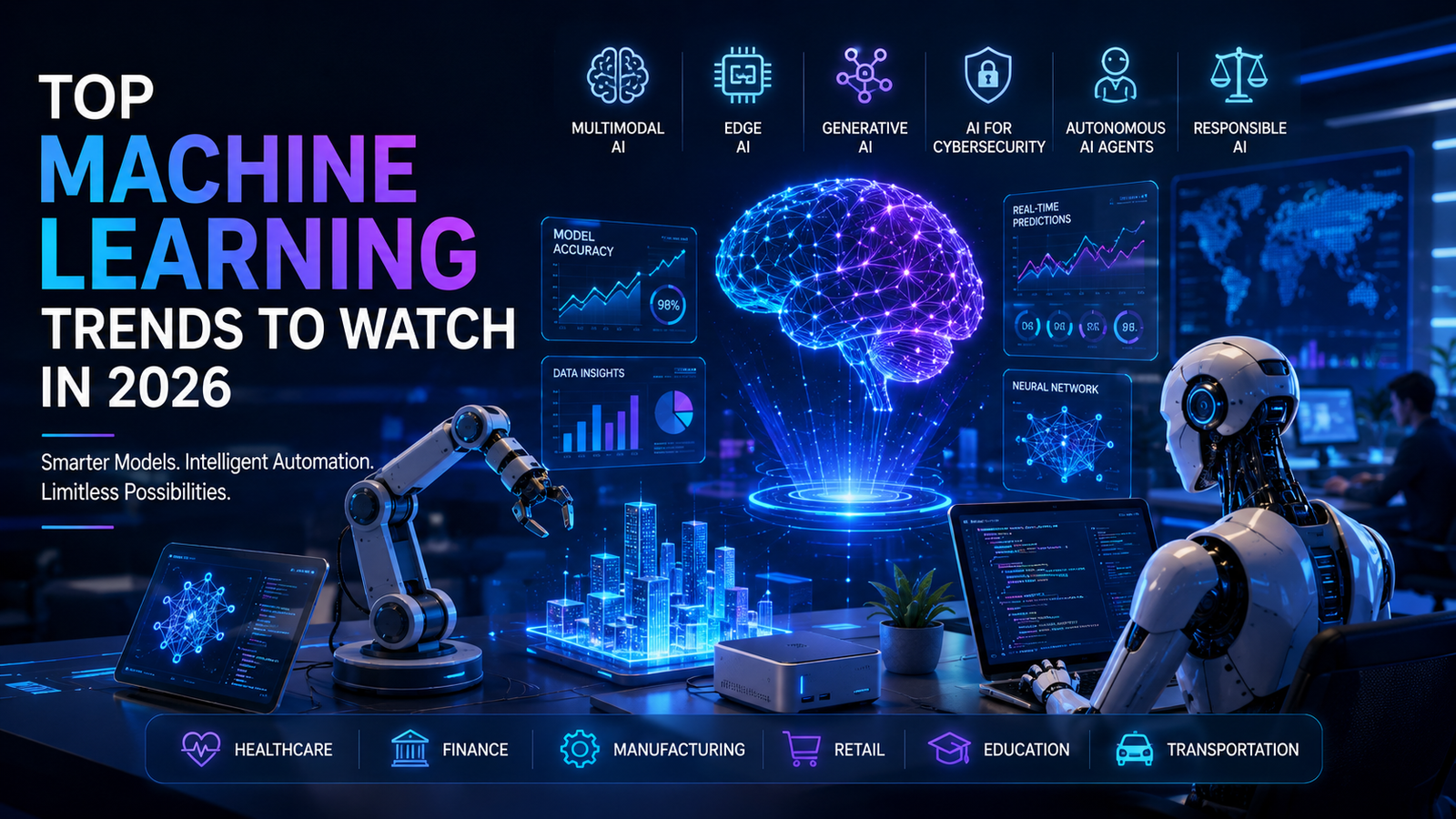
Machine learning has quietly become one of the most influential technologies shaping our world. From the recommendations you receive on streaming platforms to fraud detection in banking and personalized healthcare treatments, machine learning is working behind the scenes to make technology smarter and more efficient. As we move into 2026, its influence is expanding faster than ever before.
Businesses are no longer asking whether they should adopt machine learning. Instead, they are asking how quickly they can integrate it into their operations before competitors gain an advantage. At the same time, developers, researchers, and technology leaders continue pushing the boundaries of what machine learning models can achieve.
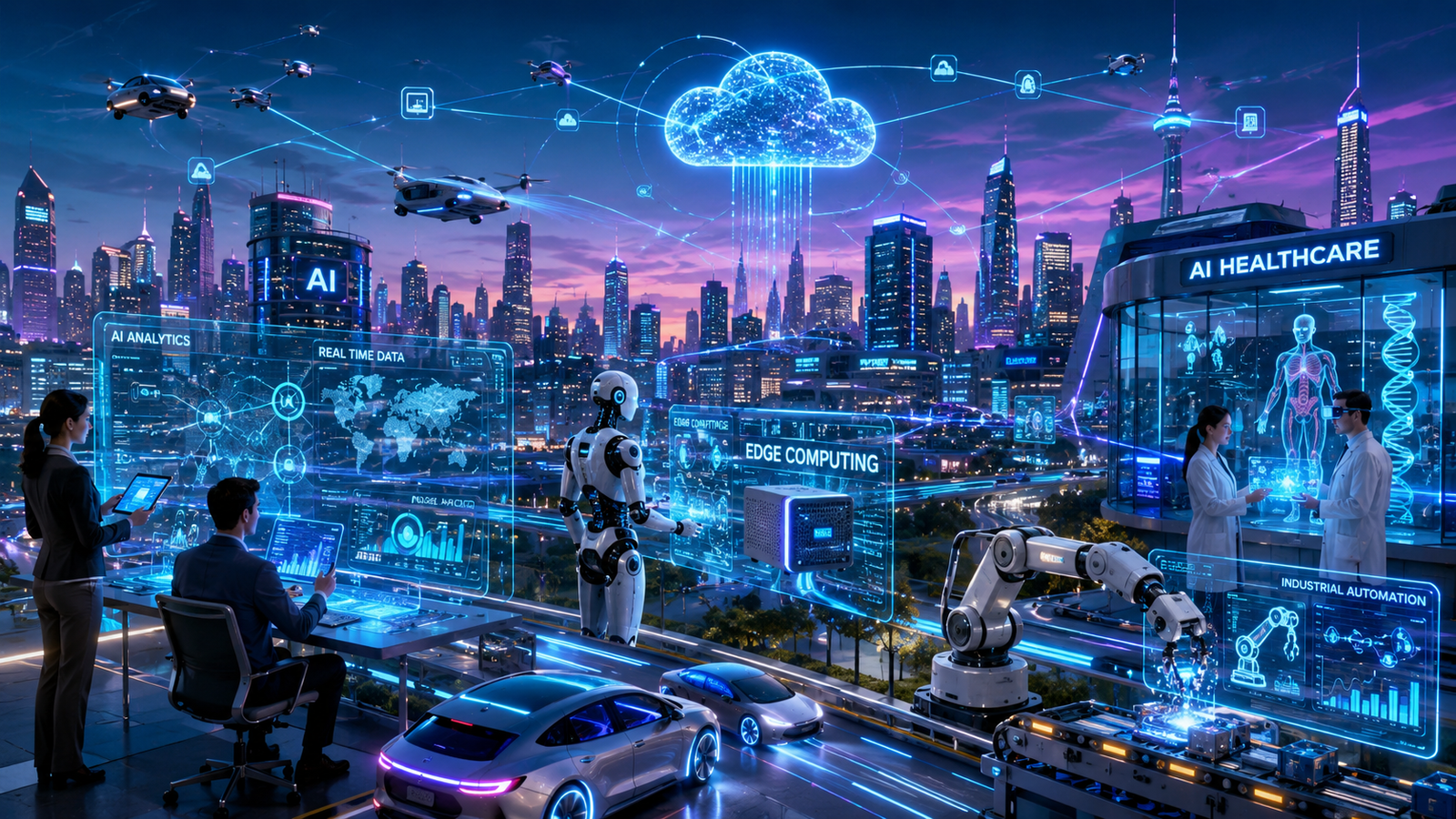
The year 2026 promises to be a turning point. New breakthroughs in generative AI, multimodal learning, automation, edge computing, and responsible AI are reshaping industries worldwide. These innovations are not only improving business productivity but also creating entirely new opportunities across healthcare, finance, education, manufacturing, cybersecurity, and entertainment.
If you want to stay ahead in the rapidly evolving AI landscape, understanding these machine learning trends is essential. Here are the most important developments expected to dominate 2026 and beyond.
1. Multimodal Machine Learning Will Become the New Standard
Machine learning systems are becoming far more intelligent because they can now understand multiple types of information simultaneously.
Instead of processing only text or images independently, modern models analyze text, speech, images, videos, documents, and even sensor data within a single framework. This approach, known as multimodal machine learning, enables AI systems to understand context more naturally.
For example, customer support systems can now analyze a user’s written message, attached screenshot, and voice recording together before providing an accurate solution. Similarly, medical AI platforms can combine patient records, medical images, laboratory reports, and physician notes to support faster diagnoses.
Throughout 2026, multimodal learning will become a foundational capability rather than a premium feature.
Why It Matters
Multimodal AI improves decision-making, delivers more accurate results, enhances user experiences, and expands AI applications across industries.
2. Smaller, More Efficient AI Models Will Gain Popularity
For years, larger machine learning models dominated headlines. However, businesses are now prioritizing efficiency over sheer size.
Compact AI models consume fewer computing resources, respond more quickly, and cost significantly less to operate while maintaining impressive accuracy.
These lightweight models are especially valuable for smartphones, laptops, wearable devices, industrial equipment, and Internet of Things (IoT) systems where computing power is limited.
In 2026, organizations are expected to adopt smaller, optimized machine learning models that provide excellent performance without requiring massive cloud infrastructure.
3. Edge Machine Learning Will Expand Rapidly
Instead of sending every piece of information to cloud servers, edge machine learning allows AI models to process data directly on local devices.
This reduces latency, improves privacy, and enables real-time decision-making.
Autonomous vehicles, smart factories, healthcare devices, security cameras, and industrial robots increasingly rely on edge AI because instant responses are often critical.
Imagine a self-driving vehicle waiting for cloud processing before reacting to an obstacle. Even a slight delay could be dangerous. Edge machine learning solves this challenge by keeping intelligence closer to the source.
As hardware continues improving throughout 2026, edge AI adoption is expected to accelerate significantly.
4. Generative Machine Learning Will Continue Transforming Industries
Generative AI has already revolutionized content creation, but its influence extends far beyond writing and image generation.
Machine learning models are now generating software code, marketing campaigns, product designs, business reports, educational materials, medical research summaries, and engineering simulations.
Companies increasingly use generative machine learning to accelerate product development while reducing operational costs.
Rather than replacing human professionals, these systems assist teams by producing first drafts, generating ideas, automating repetitive work, and enabling faster innovation.
In 2026, generative machine learning will become deeply integrated into enterprise workflows across nearly every industry.
Real-World Impact
Organizations are shortening development cycles, improving customer experiences, and increasing productivity through AI-assisted creation.
5. Explainable AI Will Become a Business Requirement
As machine learning influences more critical decisions, transparency is becoming essential.
Financial institutions, healthcare providers, insurance companies, and government organizations increasingly require AI systems that explain how decisions are made.
This concept, known as Explainable AI (XAI), allows users to understand why a machine learning model approved a loan, detected fraud, recommended medical treatment, or rejected an application.
Regulatory requirements worldwide are encouraging organizations to adopt transparent AI systems that build trust among customers and stakeholders.
Throughout 2026, explainability will become one of the defining characteristics of enterprise machine learning.
6. AI-Powered Cybersecurity Will Reach New Levels
Cyber threats are becoming more sophisticated every year, making traditional security systems less effective.
Machine learning is helping organizations identify suspicious behavior, detect malware, recognize phishing attempts, and respond to cyberattacks in real time.
Instead of relying solely on predefined security rules, AI continuously learns from evolving attack patterns and adapts accordingly.
Financial institutions, healthcare providers, governments, and technology companies are investing heavily in AI-powered cybersecurity platforms that protect sensitive information around the clock.
As cybercriminals increasingly adopt AI themselves, machine learning will become one of the strongest defensive technologies available.
7. Personalized AI Experiences Will Continue Improving
Consumers increasingly expect personalized experiences across every digital platform they use.
Machine learning now analyzes browsing habits, purchasing behavior, preferences, and historical interactions to deliver highly customized recommendations.
Streaming services suggest entertainment choices, online retailers recommend products, educational platforms adapt learning paths, and healthcare applications personalize wellness guidance.
In 2026, personalization will become even more accurate through continuous learning and real-time behavioral analysis.
Businesses that successfully leverage machine learning personalization will enjoy stronger customer loyalty and higher engagement.
8. Autonomous AI Agents Will Handle Complex Workflows
One of the biggest trends emerging in 2026 is the rise of autonomous AI agents.
Unlike traditional chatbots that simply answer questions, AI agents can perform complete workflows independently.
These systems can schedule meetings, analyze business reports, generate presentations, communicate with customers, conduct research, write software code, and coordinate multiple applications without constant human supervision.
Machine learning enables these agents to adapt continuously while improving their performance over time.
Many technology companies are investing heavily in intelligent agents that function as digital coworkers rather than simple software tools.
9. Responsible Machine Learning Will Receive Greater Attention
As AI adoption grows, organizations recognize that powerful technology must also be ethical.
Responsible machine learning focuses on fairness, accountability, privacy, security, and reducing bias within AI systems.
Companies increasingly evaluate training data, monitor algorithmic performance, and establish governance frameworks to ensure machine learning serves everyone fairly.
Consumers are also becoming more aware of how their data is collected and used, encouraging businesses to adopt stronger privacy protections.
In 2026, ethical AI practices will become a competitive advantage rather than merely a regulatory obligation.
10. Industry-Specific Machine Learning Models Will Dominate
Instead of relying solely on general-purpose AI models, organizations are increasingly developing specialized machine learning systems tailored to specific industries.
Healthcare models understand medical terminology and diagnostic processes. Financial models analyze investment risks and fraud detection. Manufacturing models optimize production efficiency and predictive maintenance. Legal AI systems assist with document analysis and compliance.
These specialized models deliver greater accuracy because they are trained using industry-specific knowledge.
As businesses demand more precise AI solutions, customized machine learning models will continue expanding throughout 2026.
Why These Trends Matter for Businesses and Professionals
Machine learning is no longer a technology reserved for research laboratories or global technology companies. Businesses of every size are integrating intelligent systems to automate operations, improve customer experiences, strengthen security, and uncover valuable insights from data.
Professionals who understand these emerging trends will be better prepared for the evolving workplace. Whether you’re a software developer, data scientist, marketer, business leader, educator, or entrepreneur, machine learning knowledge is becoming a valuable competitive advantage.
Organizations that embrace these innovations early are more likely to improve efficiency, reduce costs, and create new revenue opportunities while remaining competitive in increasingly digital markets.
Looking Beyond 2026
The pace of machine learning innovation shows no signs of slowing. Future systems will become more collaborative, transparent, energy-efficient, and deeply integrated into everyday life. Intelligent assistants will manage increasingly complex tasks, healthcare diagnostics will become more accurate, manufacturing will become smarter, and personalized digital experiences will continue improving.
While technology will continue advancing rapidly, human creativity, critical thinking, and ethical decision-making will remain essential. Machine learning is not replacing people—it is empowering them to solve bigger challenges, innovate faster, and make more informed decisions.
The organizations and individuals who embrace these trends today will be best positioned to thrive in the AI-driven future that is rapidly becoming reality.




Leave a Reply