

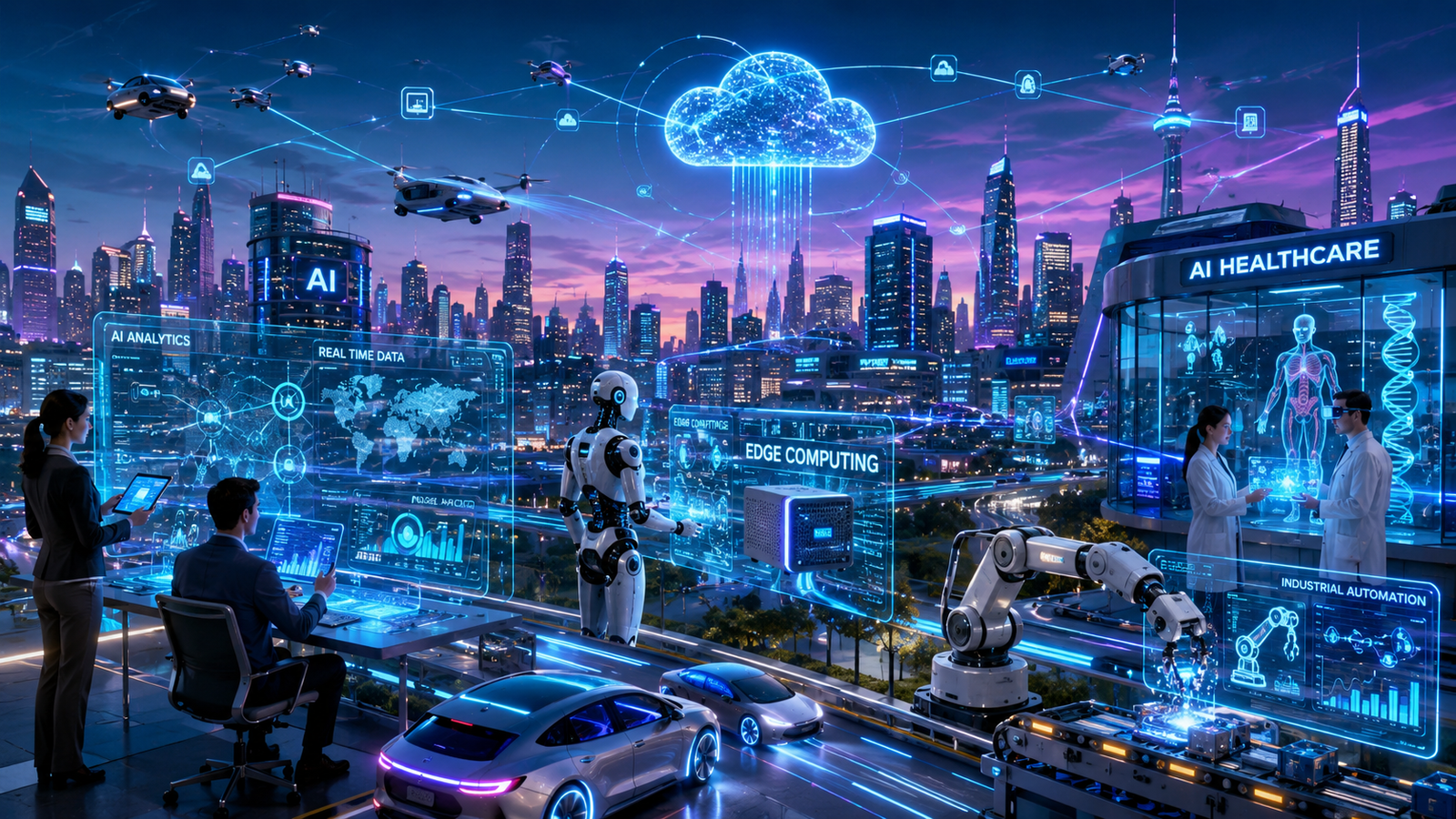
Machine learning is no longer a futuristic concept reserved for research labs and tech giants. It has become an invisible force powering everything from online shopping recommendations and virtual assistants to healthcare diagnostics, cybersecurity, autonomous vehicles, and financial forecasting. As we move through 2026, machine learning is entering an exciting new phase where intelligence is becoming faster, more efficient, more personalized, and increasingly capable of solving complex real-world problems.
Just a few years ago, businesses focused primarily on adopting artificial intelligence. Today, the conversation has shifted toward building smarter, more reliable, and more responsible machine learning systems. Organizations across industries are investing billions of dollars into AI infrastructure because they recognize that machine learning is no longer just a competitive advantage—it is becoming a business necessity.
The rapid evolution of large language models, multimodal AI, edge computing, and autonomous agents has transformed how machine learning is developed and deployed. Companies that embrace these innovations early are likely to outperform competitors, while those that ignore them may struggle to keep pace with changing customer expectations.
In this article, we’ll explore the biggest machine learning trends shaping 2026, why they matter, and how they’re transforming industries across the globe.
1. Small Language Models Are Becoming More Powerful
For years, the AI industry focused on building larger and larger language models. Bigger models often meant better performance, but they also required enormous computational resources, higher costs, and massive amounts of electricity.
In 2026, the focus has shifted toward Small Language Models (SLMs).
These compact models deliver impressive performance while consuming significantly fewer resources. Businesses appreciate them because they can be deployed on local servers, smartphones, laptops, and edge devices without relying heavily on expensive cloud infrastructure.
Smaller models also improve data privacy since sensitive information doesn’t always need to leave an organization’s internal systems.
Many businesses now combine large foundation models with lightweight specialized models that perform individual tasks more efficiently. This hybrid strategy reduces costs while maintaining excellent performance.
As organizations seek sustainable AI solutions, compact machine learning models are becoming increasingly popular.
2. Multimodal Machine Learning Is Becoming the New Standard
Machine learning systems are no longer limited to understanding text.
Modern AI models can process text, images, videos, audio, documents, code, and even sensor data simultaneously. This capability is known as multimodal machine learning.
Imagine uploading a product image, asking questions through voice, receiving a written explanation, and generating a marketing video—all within a single AI system.
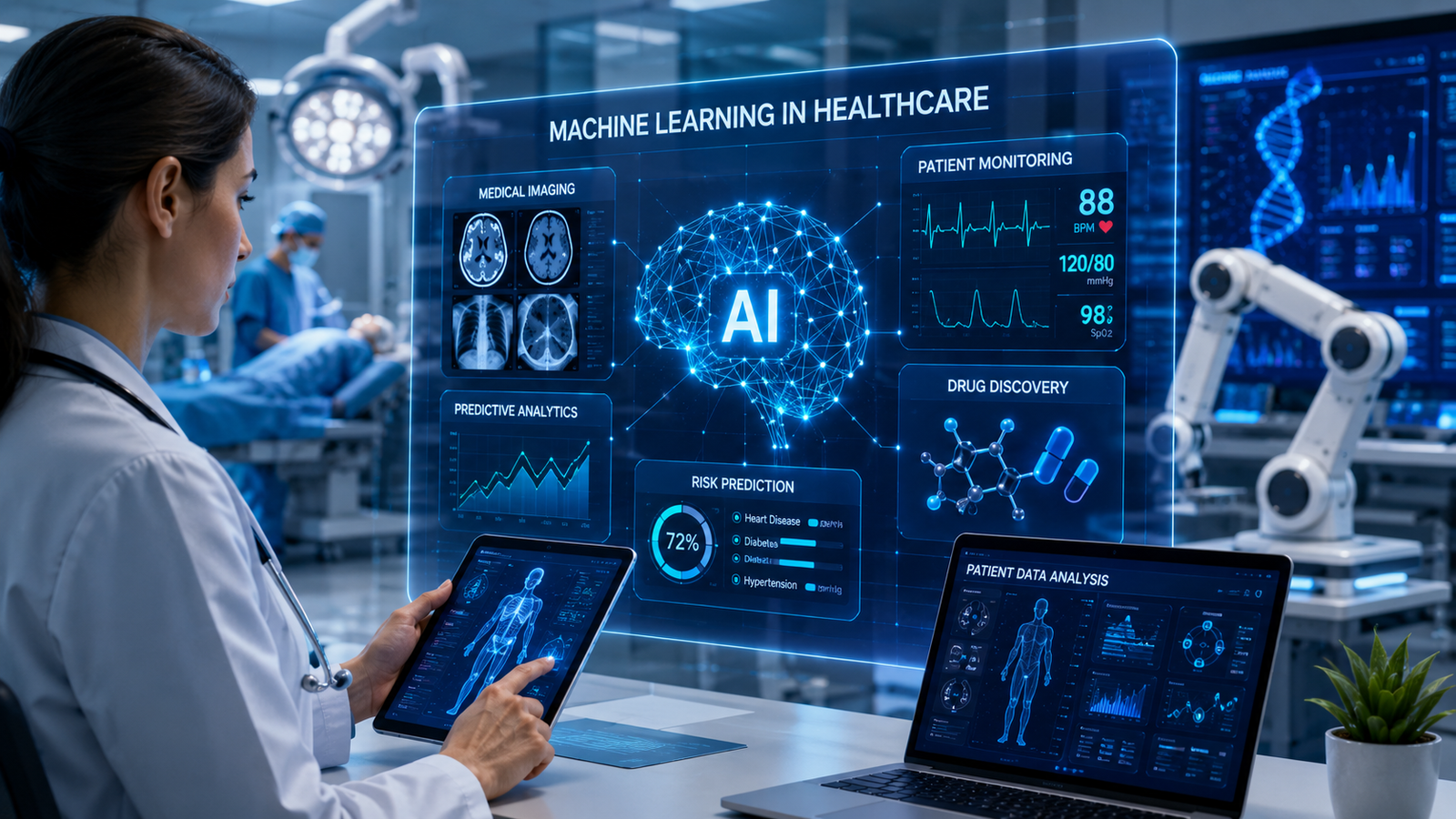
Healthcare providers are using multimodal models to analyze medical images alongside patient histories.
Manufacturers combine camera footage, equipment sensor readings, and maintenance records to predict machine failures before they happen.
Educational platforms now create personalized learning experiences using videos, speech recognition, handwritten notes, and interactive quizzes.
This ability to understand multiple forms of information makes machine learning far more capable than traditional AI systems.
3. AI Agents Are Transforming Workplace Productivity
One of the most exciting developments in 2026 is the rise of autonomous AI agents.
Unlike traditional chatbots that simply answer questions, AI agents can perform complete workflows with minimal human supervision.
A customer service agent can respond to emails, update CRM software, schedule meetings, summarize conversations, and escalate complex issues automatically.
Marketing agents can research competitors, generate campaign ideas, analyze performance data, create reports, and recommend improvements.
Software engineering teams increasingly use coding agents that write, test, debug, and optimize code throughout development projects.
Machine learning enables these agents to learn from previous interactions and continuously improve over time.
This shift is changing how businesses operate by automating repetitive tasks while allowing employees to focus on strategic decision-making.
4. Edge Machine Learning Is Growing Rapidly
Cloud computing remains important, but many organizations are moving machine learning closer to where data is generated.
Edge AI allows machine learning models to run directly on smartphones, cameras, drones, vehicles, industrial machines, and IoT devices.
Processing data locally reduces latency dramatically.
For example, a self-driving car cannot wait several seconds for cloud servers to process obstacle detection.
Similarly, smart security cameras need immediate responses when detecting unusual activity.
Edge machine learning also improves privacy because sensitive information remains on local devices rather than being uploaded continuously to cloud servers.
With increasingly powerful AI chips entering the market, edge computing is expected to expand across nearly every industry.
5. Responsible and Explainable AI Is Becoming Essential
As machine learning influences healthcare, finance, hiring, education, and legal decisions, transparency has become critical.
Organizations now recognize that accurate predictions alone are not enough.
Businesses must also explain how machine learning systems reach their conclusions.
Explainable AI provides understandable reasoning behind AI-generated decisions.
For example, if a loan application is rejected, banks need to identify the factors contributing to that outcome.
Hospitals require explanations before trusting AI-generated medical recommendations.Governments worldwide are introducing regulations encouraging responsible AI development, bias detection, fairness testing, and stronger data governance.
Companies investing in ethical machine learning are building greater trust with customers while reducing legal and reputational risks.
6. Synthetic Data Is Revolutionizing AI Training
Collecting large datasets has always been one of the biggest challenges in machine learning.
Privacy laws, limited access, and expensive data collection processes often slow AI development.
Synthetic data is changing that.
Instead of relying solely on real-world information, organizations generate artificial datasets that closely resemble real data while protecting sensitive information.
Banks create synthetic financial transactions for fraud detection.
Healthcare organizations simulate medical records without exposing patient identities.
Manufacturers generate virtual production environments to train predictive maintenance systems.
Synthetic data enables organizations to build accurate machine learning models while complying with strict privacy regulations.
7. Industry-Specific AI Models Are Replacing Generic Solutions
General-purpose AI models are useful, but businesses increasingly demand specialized expertise.
Machine learning developers are now creating industry-specific models trained on highly specialized datasets.
Healthcare AI understands medical terminology.
Legal AI interprets contracts and compliance documents.
Financial AI identifies investment risks and detects fraud.
Manufacturing AI predicts equipment failures using operational data.
Retail AI forecasts customer demand and optimizes inventory.
These specialized models often outperform generic AI because they understand industry language, workflows, regulations, and best practices.
The result is higher accuracy and greater business value.
8. Federated Learning Is Protecting Data Privacy
Organizations want smarter machine learning without exposing confidential information.
Federated learning provides an innovative solution.
Instead of sending data to centralized servers, machine learning models are trained directly on local devices.
Only model updates—not personal data—are shared with central systems.
This approach is particularly valuable for hospitals, banks, government agencies, and multinational corporations managing highly sensitive information.
Federated learning enables collaboration while preserving privacy, making it one of the fastest-growing machine learning technologies in 2026.
9. Machine Learning Is Accelerating Scientific Discovery
Researchers are increasingly using machine learning to solve problems that once required decades of experimentation.
Scientists use AI to identify promising drug candidates.
Climate researchers build sophisticated weather prediction models.
Agricultural experts optimize crop production using satellite imagery and environmental data.
Material scientists discover stronger, lighter, and more sustainable materials using predictive machine learning algorithms.
Instead of replacing researchers, machine learning acts as an intelligent assistant capable of analyzing enormous datasets in a fraction of the time.
This acceleration is leading to faster innovation across science, medicine, engineering, and environmental research.
10. Green Machine Learning Is Becoming a Global Priority
Training massive AI models consumes substantial amounts of electricity.
As sustainability becomes a global concern, organizations are seeking environmentally responsible machine learning practices.
Researchers now develop energy-efficient algorithms that require less computational power.
Cloud providers optimize data centers for renewable energy usage.
Businesses carefully select model sizes based on actual business needs instead of pursuing unnecessarily large systems.
Green machine learning not only reduces environmental impact but also lowers operational costs, making sustainable AI an attractive long-term investment.
11. Real-Time Machine Learning Is Enhancing Customer Experiences
Customers expect instant responses.
Whether shopping online, streaming videos, using navigation apps, or interacting with customer support, delays reduce satisfaction.
Real-time machine learning processes information almost instantly.
Streaming platforms personalize recommendations within seconds.
Banks detect fraudulent transactions immediately.
Retailers adjust pricing dynamically.
Cybersecurity platforms identify threats before damage occurs.
This shift toward immediate decision-making is helping organizations deliver faster, smarter, and more personalized experiences than ever before.
12. Human-AI Collaboration Is Becoming More Important Than Automation
One misconception about machine learning is that it aims to replace humans.
In reality, the strongest trend of 2026 is collaboration.
Businesses increasingly use AI to support employees rather than replace them.
Doctors receive diagnostic suggestions.
Lawyers analyze contracts faster.
Teachers personalize learning plans.
Designers generate creative concepts.
Engineers automate repetitive coding tasks.
Human expertise combined with machine learning creates better outcomes than either could achieve independently.
Organizations investing in AI literacy and employee training are seeing significantly higher returns on their machine learning investments.
Why These Trends Matter for Businesses
Machine learning has moved beyond experimentation.
Companies that once viewed AI as an optional innovation now consider it part of their long-term growth strategy.
Retail businesses use predictive analytics to understand purchasing behavior.
Manufacturers reduce downtime through predictive maintenance.
Financial institutions strengthen fraud detection.
Healthcare providers improve patient outcomes.
Educational platforms personalize learning experiences.
Even small businesses now have access to affordable machine learning tools through cloud platforms, making advanced AI capabilities available to organizations of every size.
The competitive landscape is shifting rapidly.
Businesses adopting modern machine learning strategies today will likely be better prepared for tomorrow’s challenges.
The Future Beyond 2026
While 2026 introduces remarkable innovations, the machine learning journey is far from complete.
Future systems will become increasingly autonomous, energy-efficient, explainable, and personalized.
Advances in quantum computing may dramatically accelerate machine learning training.
Brain-computer interfaces could unlock entirely new forms of human-computer interaction.
Digital twins will simulate factories, cities, hospitals, and supply chains with extraordinary precision.
Robotics powered by advanced machine learning will become more common in homes, warehouses, agriculture, and healthcare.
The pace of innovation continues to accelerate, making continuous learning essential for professionals, businesses, and technology leaders alike.
Conclusion
Machine learning in 2026 is no longer just about building smarter algorithms. It is about creating intelligent systems that are efficient, trustworthy, accessible, and capable of solving real-world challenges across every industry.
From compact language models and multimodal AI to autonomous agents, federated learning, synthetic data, and sustainable AI practices, today’s machine learning landscape is evolving faster than ever before. Organizations that embrace these innovations thoughtfully will be well-positioned to improve productivity, enhance customer experiences, reduce costs, and drive meaningful innovation.
For professionals, staying informed about these trends is equally important. The demand for machine learning expertise continues to grow, and understanding where the technology is heading can open new career opportunities and help businesses make smarter strategic decisions.
The future of machine learning isn’t about replacing people—it’s about empowering them with intelligent tools that make better decisions, solve bigger problems, and create possibilities that once seemed impossible. As 2026 unfolds, one thing is certain: machine learning will continue to redefine how we work, innovate, and interact with the world around us.




Leave a Reply