

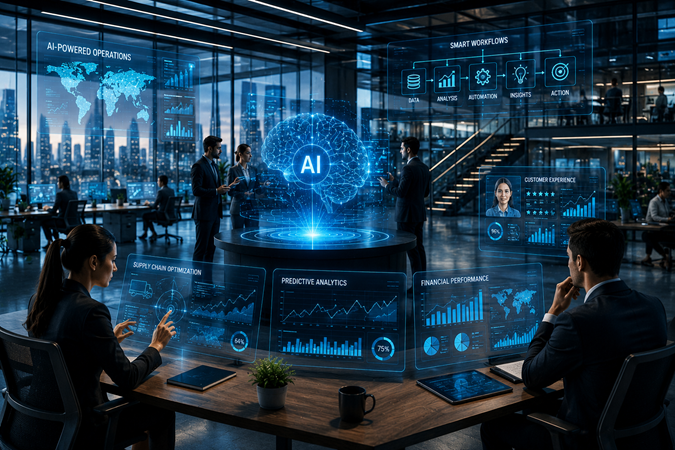
Artificial intelligence is entering a completely new phase.
For years, businesses used AI primarily for narrow tasks such as automation, analytics, recommendation engines, and customer support chatbots.
But in 2026, a far more advanced generation of AI software is beginning to transform how companies operate at a foundational level.
Modern AI systems are no longer limited to assisting employees with isolated tasks. Instead, they are increasingly capable of handling entire workflows, coordinating operations across departments, analyzing massive datasets in real time, and autonomously executing multi-step business processes.
Many experts now believe this new generation of AI software could become as transformative as the internet, cloud computing, or mobile technology.
Businesses are rapidly integrating AI into:
- Customer service
- Software development
- Marketing
- Supply chain management
- Financial analysis
- Human resources
- Cybersecurity
- Executive decision-making
What makes this shift especially significant is that AI is evolving from a support tool into an operational system.
Some companies are already redesigning entire organizational structures around AI-powered workflows.
At the center of this transformation is the rise of:
- Generative AI
- Agentic AI systems
- AI copilots
- Autonomous workflow platforms
- Enterprise AI ecosystems
Together, these technologies could fundamentally reshape productivity, management, labor markets, and global competition.
Here is how this new generation of AI software is changing companies faster than many experts predicted — and why the future of business operations may never look the same again.
AI Is Moving Beyond Simple Automation
Earlier generations of enterprise automation relied on rigid rule-based systems.
Traditional software could automate repetitive tasks, but only within tightly structured workflows.
The new generation of AI software is fundamentally different.
Modern AI systems can:
- Understand natural language
- Interpret context
- Analyze unstructured information
- Generate content
- Adapt dynamically
- Coordinate multiple tools simultaneously
This allows AI to perform tasks that previously required human reasoning and coordination.
For example, modern AI systems can:
- Draft reports from raw data
- Analyze contracts
- Summarize meetings
- Generate software code
- Manage customer interactions
- Monitor cybersecurity threats
- Optimize supply chains
Businesses increasingly view AI not simply as automation, but as a broad operational intelligence layer integrated throughout the organization.
Agentic AI Could Transform Enterprise Operations
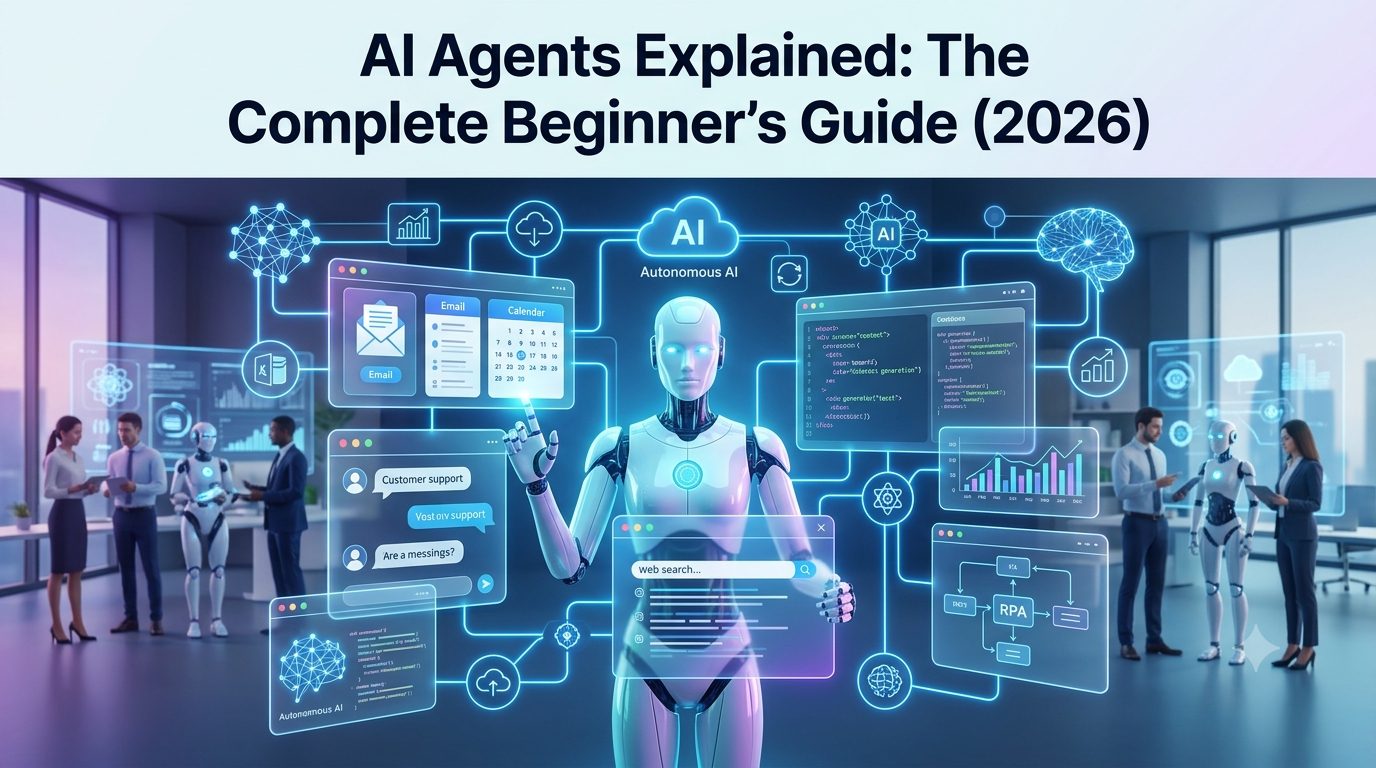
One of the most important developments is the rise of “agentic AI.”
Unlike earlier AI systems that handled single tasks, agentic AI systems can execute sequences of actions autonomously.
These AI agents can:
- Interpret goals
- Create action plans
- Access software tools
- Retrieve information
- Coordinate workflows
- Adapt based on changing conditions
Businesses are increasingly experimenting with AI agents capable of handling:
- Sales operations
- IT support
- Financial reporting
- Customer onboarding
- Research analysis
- Administrative coordination
Some analysts compare agentic AI to the shift from basic calculators to full operating systems.
Instead of assisting with isolated tasks, AI agents can potentially manage substantial portions of business operations independently.
This could radically change how companies structure teams and workflows.
AI Copilots Are Becoming Standard Workplace Tools
AI copilots are rapidly becoming integrated into everyday business software.
These systems function as intelligent assistants embedded directly inside workplace applications.
AI copilots can:
- Draft emails
- Generate presentations
- Analyze spreadsheets
- Summarize meetings
- Create reports
- Manage schedules
- Automate repetitive workflows
Major technology companies are aggressively expanding enterprise copilot systems across office productivity platforms.
For many employees, AI copilots are becoming daily operational partners rather than occasional tools.
Businesses believe AI copilots can significantly improve employee productivity by reducing administrative workload and accelerating decision-making.
AI Is Reshaping Software Development
Software engineering may be one of the industries most transformed by advanced AI systems.
Modern AI coding assistants can:
- Generate code
- Refactor applications
- Debug software
- Automate testing
- Write documentation
- Assist architecture planning
Some developers now use AI systems capable of understanding large codebases and coordinating changes across multiple files simultaneously.
This significantly accelerates software development cycles.
Small engineering teams can now build products faster and more efficiently than before.
Some experts believe AI-enhanced software development may permanently reduce barriers to innovation and startup creation.
AI Systems Are Becoming Enterprise Knowledge Engines
One major challenge inside large organizations is managing internal knowledge.
Companies generate enormous amounts of:
- Documents
- Reports
- Emails
- Meeting records
- Operational data
- Research materials
Much of this information becomes fragmented across departments and software systems.
New AI knowledge systems can analyze and organize internal information at massive scale.
Employees increasingly use AI to:
- Search internal databases
- Retrieve operational insights
- Summarize company knowledge
- Analyze historical records
- Generate strategic reports
This could dramatically improve organizational efficiency and institutional memory.
Customer Service Is Becoming AI-Centered
Customer service operations are rapidly shifting toward AI-driven systems.
Modern AI customer agents can:
- Handle complex conversations
- Resolve technical issues
- Process refunds
- Provide multilingual support
- Personalize interactions
- Operate continuously 24/7
Businesses increasingly deploy AI support agents to manage high volumes of customer interactions automatically.
This reduces operational costs while improving scalability and response times.
Human support teams increasingly focus on:
- Escalated cases
- Emotional interactions
- Complex negotiations
- Relationship management
Some experts believe AI could eventually handle the majority of routine customer service workflows.
AI Is Changing Executive Decision-Making
Executives increasingly rely on AI systems for strategic planning and operational analysis.
Modern AI analytics platforms can:
- Analyze market trends
- Forecast financial performance
- Identify operational risks
- Predict consumer behavior
- Monitor supply chain disruptions
AI-driven insights allow companies to respond more quickly to changing market conditions.
Some organizations are integrating AI directly into executive dashboards and planning systems.
This represents a major shift from traditional reporting cycles toward real-time business intelligence.
However, experts warn that human oversight remains essential because AI systems can still produce inaccurate or biased outputs.
Supply Chains Are Becoming AI-Optimized
Global supply chains have become increasingly vulnerable to disruption from:
- Geopolitical tensions
- Climate events
- Shipping delays
- Economic instability
AI systems are helping businesses improve supply chain resilience through:
- Demand forecasting
- Inventory optimization
- Route planning
- Warehouse automation
- Supplier risk analysis
Some warehouses now use AI-powered robotics capable of operating with minimal human supervision.
Businesses increasingly view AI-optimized logistics as a strategic competitive advantage.
Cybersecurity Is Becoming AI-Driven
Cybersecurity threats are growing more sophisticated every year.
Modern AI security systems can:
- Monitor networks continuously
- Detect suspicious behavior
- Analyze attack patterns
- Automate threat responses
- Predict vulnerabilities
AI allows security teams to identify and respond to threats much faster than traditional systems.
However, cybercriminals are also increasingly using AI.
AI-powered phishing attacks, deepfake scams, and automated cyberattacks are becoming more advanced.
This has created what many analysts describe as an AI cybersecurity arms race.
AI Could Reshape Workforce Structures
The new generation of AI software is changing how companies think about organizational design.
Some businesses are beginning to operate with smaller teams supported by AI-powered systems.
Instead of hiring large departments for repetitive administrative work, companies increasingly automate workflows using AI agents and copilots.
This does not necessarily mean humans disappear from the workplace.
Instead, many roles are evolving toward:
- Strategic oversight
- AI supervision
- Creative leadership
- Relationship management
- Workflow orchestration
Employees increasingly work alongside AI systems rather than independently from them.
At the same time, economists continue debating how AI automation may affect long-term employment levels across industries.
Smaller Companies Are Becoming More Competitive
One of the most disruptive effects of AI may be the democratization of business capabilities.
Historically, large corporations benefited from:
- Large workforces
- Expensive software systems
- Massive operational infrastructure
- Extensive administrative support
AI tools are reducing some of those advantages.
Small businesses and startups can now access powerful AI systems through cloud-based platforms.
This allows smaller organizations to:
- Automate operations
- Scale faster
- Compete more efficiently
- Operate with leaner teams
Some analysts believe AI could significantly increase competition across global markets.
Businesses Are Still Struggling With AI Governance
Despite rapid adoption, businesses face serious challenges involving:
- Data privacy
- Cybersecurity
- Regulatory compliance
- Bias and discrimination
- Intellectual property
- AI reliability
Governments worldwide are increasingly debating AI regulations focused on:
- Transparency
- Consumer protection
- Employment impacts
- Security risks
- Ethical AI development
Companies are now creating internal AI governance policies to manage risks associated with widespread deployment.
Why This AI Revolution Is Happening So Fast
Several major forces are accelerating AI transformation across industries.
Generative AI Breakthroughs
Large language models dramatically improved AI usability and accessibility.
Cloud Infrastructure
Businesses can deploy AI without massive infrastructure investments.
Competitive Pressure
Companies fear losing efficiency advantages to faster AI adopters.
Falling Costs
AI software is becoming cheaper and more scalable.
Data Availability
Modern AI systems train on enormous multimodal datasets involving text, images, audio, and code.
Together, these factors created one of the fastest technology adoption cycles in modern business history.
The Future Company May Operate Very Differently
The long-term implications of advanced AI software may extend far beyond productivity improvements.
Businesses may eventually operate with:
- Smaller administrative teams
- AI-managed workflows
- Continuous real-time analytics
- Autonomous operational systems
- Highly personalized customer experiences
Management structures themselves may evolve as AI systems increasingly coordinate operational execution.
Some experts believe AI could fundamentally change the relationship between labor, productivity, and corporate scale.
Conclusion
This new generation of AI software is doing far more than automating isolated tasks.
It is beginning to transform how companies organize operations, manage workflows, analyze information, develop software, support customers, and make strategic decisions.
Agentic AI systems, enterprise copilots, AI automation platforms, and intelligent workflow engines are rapidly becoming core business infrastructure.
Businesses adopting these systems hope to gain major advantages in:
- Productivity
- Efficiency
- Scalability
- Decision-making
- Competitive speed
At the same time, the rise of advanced AI raises profound questions about labor markets, governance, ethics, and the future structure of companies themselves.
In 2026, one thing is becoming increasingly clear:
This new generation of AI software may not simply improve how businesses operate — it could fundamentally redefine what a company looks like in the future.


Leave a Reply