

These AI Software Tools Are Replacing Entire Workflows in 2026
Artificial intelligence is no longer just assisting businesses.
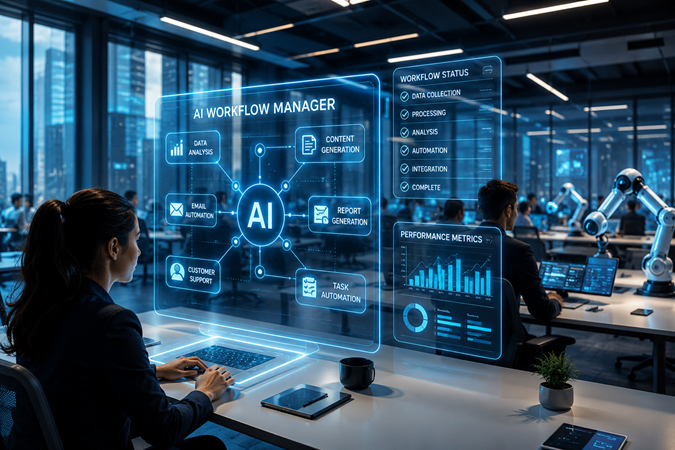
In 2026, AI software tools are increasingly replacing entire workflows that once required multiple employees, departments, or expensive enterprise systems.
What makes this shift remarkable is the speed.
Only a few years ago, most AI tools handled narrow tasks such as chatbots, predictive analytics, or basic automation. Today, modern AI platforms can execute complex, multi-step operations involving research, content creation, coding, customer support, data analysis, workflow orchestration, and business decision-making.
Companies are now deploying AI systems that can:
- Generate reports
- Analyze contracts
- Manage customer interactions
- Build software
- Coordinate marketing campaigns
- Automate HR processes
- Monitor cybersecurity threats
- Handle operational workflows end-to-end
The rise of “agentic AI” — AI systems capable of autonomously completing sequences of tasks — is accelerating this transformation even further. :contentReference[oaicite:0]{index=0}
For businesses, the appeal is obvious:
- Lower operational costs
- Faster execution
- 24/7 productivity
- Reduced manual work
- Scalable automation
But for employees and entire industries, the rapid replacement of traditional workflows is raising major questions about jobs, productivity, management structures, and the future of work itself.
Here are the AI software tools and categories transforming business operations in 2026 — and the workflows they are rapidly replacing.
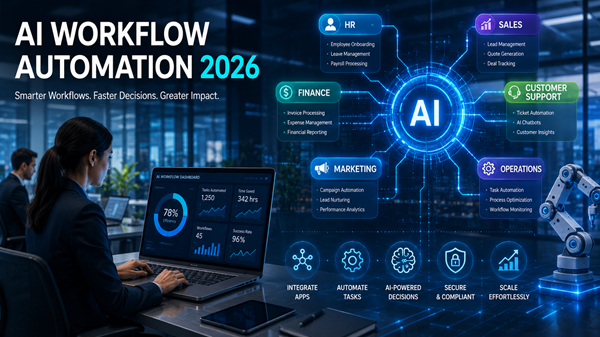
AI Workflow Automation Platforms Are Replacing Manual Operations
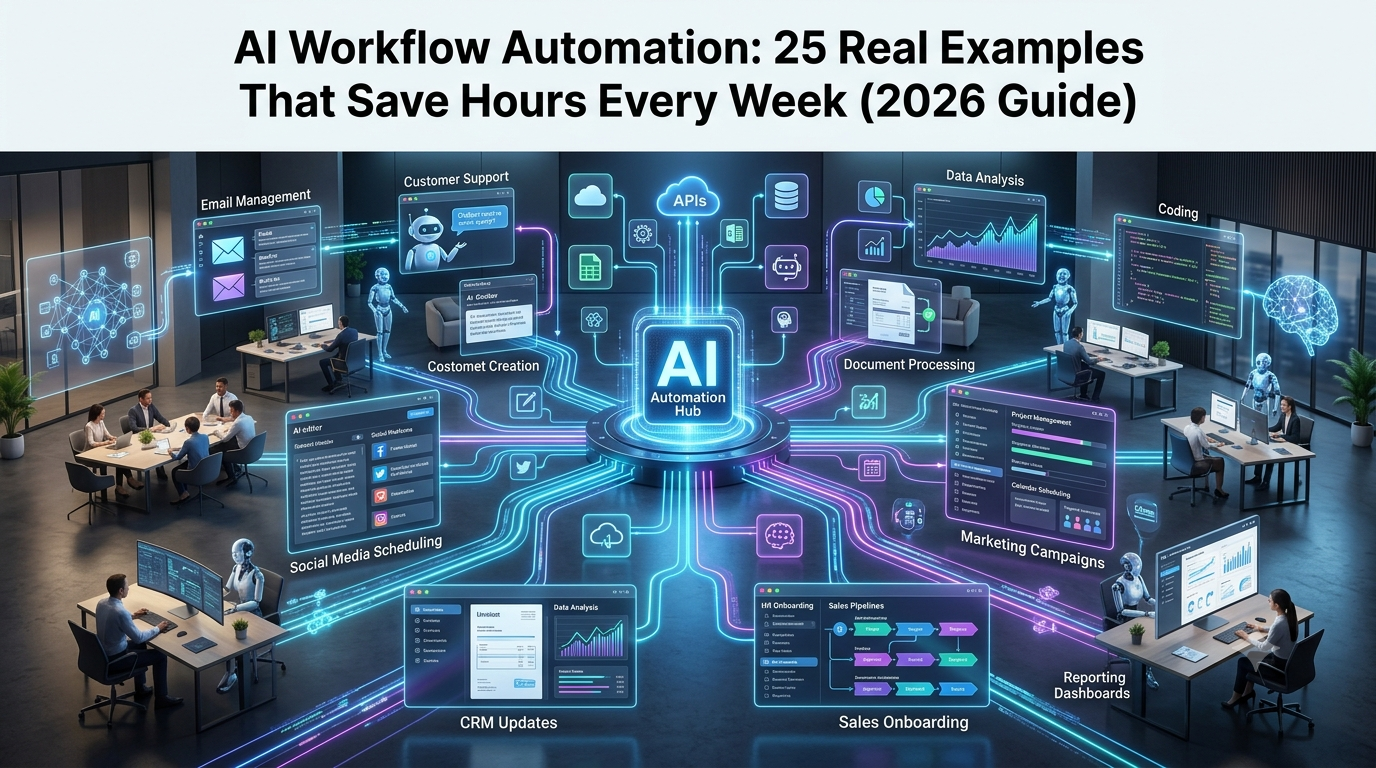
One of the biggest shifts in 2026 is the rise of AI-powered workflow automation platforms.
Traditional automation tools relied on rigid “if-then” rules and structured inputs.
Modern AI workflow systems can now:
- Interpret natural language
- Handle unstructured data
- Make contextual decisions
- Coordinate tasks across multiple applications
- Adapt workflows dynamically
Popular workflow automation platforms include:
- Zapier AI
- Make
- n8n
- Workato
- Microsoft Power Automate
- ServiceNow AI
These platforms increasingly replace workflows involving:
- Data transfers
- Email processing
- CRM updates
- Customer onboarding
- Invoice approvals
- Internal reporting
- Project management coordination
Businesses can now create multi-step AI automations using simple natural-language instructions instead of traditional programming. :contentReference[oaicite:1]{index=1}
Some enterprises report reducing operational workloads by automating processes that previously required entire support teams.
AI Coding Assistants Are Changing Software Development
Software engineering is experiencing one of the fastest AI-driven transformations.
AI coding tools now assist with:
- Code generation
- Debugging
- Documentation
- Testing
- Refactoring
- Deployment automation
Popular AI development tools include:
- GitHub Copilot
- Cursor
- Codeium
- Replit AI
- Amazon CodeWhisperer
These systems are not fully replacing software engineers.
But they are dramatically reducing the time required for repetitive programming tasks.
Developers can now prototype applications, generate boilerplate code, and troubleshoot errors much faster than before.
Some startups are operating with significantly smaller engineering teams because AI-assisted coding tools amplify developer productivity.
Experts increasingly believe AI-assisted software development could permanently reshape hiring patterns across the tech industry.
Generative AI Writing Tools Are Replacing Content Workflows
Content creation workflows have been transformed by generative AI.
AI writing systems now generate:
- Blog articles
- Marketing copy
- Product descriptions
- Social media posts
- Email campaigns
- Business reports
- SEO content
Major tools include:
- ChatGPT
- Claude
- Gemini
- Jasper AI
- Copy.ai
Many marketing teams now use AI to automate large portions of content production workflows.
Tasks that once required multiple writers, editors, and researchers can increasingly be handled by small teams working alongside AI systems.
Businesses are also integrating AI directly into content management systems and publishing pipelines.
This allows companies to scale digital content production at unprecedented speed.
However, concerns continue growing around:
- Content quality
- Misinformation
- AI-generated spam
- Search engine manipulation
- Loss of originality
AI Customer Support Agents Are Replacing Large Support Teams
Customer service has become one of the most aggressively automated business functions.
Modern AI customer support agents can:
- Answer complex customer questions
- Resolve technical issues
- Handle refunds
- Track orders
- Provide multilingual assistance
- Route tickets intelligently
Leading customer support AI platforms include:
- Zendesk AI
- Intercom AI
- Freshdesk AI
- Salesforce Einstein
- Moveworks
AI support systems increasingly replace traditional tier-one support workflows.
Instead of large call-center teams handling repetitive questions, AI agents now resolve many issues automatically.
Human representatives increasingly focus on:
- Escalated problems
- Emotional interactions
- Complex negotiations
- Relationship management
Businesses view AI-driven support as a major cost-saving opportunity while improving response speed and availability.
AI Design Tools Are Transforming Creative Production
Graphic design and creative workflows are also changing rapidly.
AI design tools can now:
- Generate images
- Create marketing graphics
- Edit videos
- Produce presentations
- Design social media content
- Generate brand assets
Popular creative AI tools include:
- Adobe Firefly
- Canva AI
- Midjourney
- DALL·E
- Runway AI
Businesses increasingly automate parts of creative production pipelines that once required dedicated design teams.
For example:
- Marketing teams generate ad creatives instantly
- Video editors use AI-assisted editing
- Brands create visual content at massive scale
Adobe executives recently noted that many firms are restructuring workflows before fully deploying advanced agentic AI systems into creative operations. :contentReference[oaicite:2]{index=2}
Creative professionals increasingly work alongside AI systems rather than handling every production step manually.
AI Meeting Assistants Are Replacing Administrative Coordination
Administrative workflows are being heavily automated by AI meeting assistants.
These tools can:
- Transcribe meetings
- Generate summaries
- Create action items
- Track tasks
- Schedule follow-ups
- Analyze conversations
Popular platforms include:
- Otter.ai
- Fireflies.ai
- Notion AI
- Microsoft Copilot
- Zoom AI Companion
These systems increasingly reduce the need for manual note-taking, meeting coordination, and administrative documentation.
Executives and teams can now automate much of the information management surrounding meetings and collaboration.
AI Research Tools Are Replacing Manual Analysis Workflows
Research-intensive industries are increasingly deploying AI systems capable of analyzing large amounts of information rapidly.
AI research tools now assist with:
- Market analysis
- Legal document review
- Financial modeling
- Academic research
- Competitive intelligence
- Business forecasting
Leading platforms include:
- Perplexity AI
- Harvey AI
- Hebbia
- BloombergGPT
- AlphaSense
Wall Street firms and financial institutions are rapidly adopting AI research agents capable of automating labor-intensive analytical tasks. :contentReference[oaicite:3]{index=3}
Some AI agents can now compile financial reports, analyze market data, summarize documents, and generate investment insights with minimal human supervision.
This is fundamentally changing workflows across law, finance, consulting, and corporate strategy.
AI HR Tools Are Replacing Recruiting Workflows
Human resources departments are increasingly automating recruitment and workforce management processes.
AI HR tools now help companies:
- Screen resumes
- Analyze candidates
- Schedule interviews
- Automate onboarding
- Track employee performance
- Personalize training programs
Popular platforms include:
- Workday AI
- HireVue
- LinkedIn Recruiter AI
- Eightfold AI
Recruiting workflows that once required large HR coordination teams are becoming increasingly automated.
However, AI hiring tools remain controversial due to concerns involving:
- Algorithmic bias
- Discrimination
- Transparency
- Privacy
Governments and regulators are increasingly scrutinizing AI use in employment decisions.
AI Cybersecurity Platforms Are Automating Threat Detection
Cybersecurity operations are becoming increasingly AI-driven.
Modern AI security tools can:
- Monitor networks continuously
- Detect suspicious activity
- Analyze threats
- Automate incident response
- Predict vulnerabilities
Major AI cybersecurity platforms include:
- CrowdStrike Falcon AI
- Darktrace
- Microsoft Security Copilot
- Palo Alto Cortex XSIAM
These systems increasingly replace parts of traditional security operations center workflows.
Instead of manually monitoring alerts, analysts increasingly rely on AI systems capable of prioritizing and investigating threats automatically.
At the same time, cybercriminals are also deploying AI-powered attacks.
This has created what experts describe as an escalating AI cybersecurity arms race.
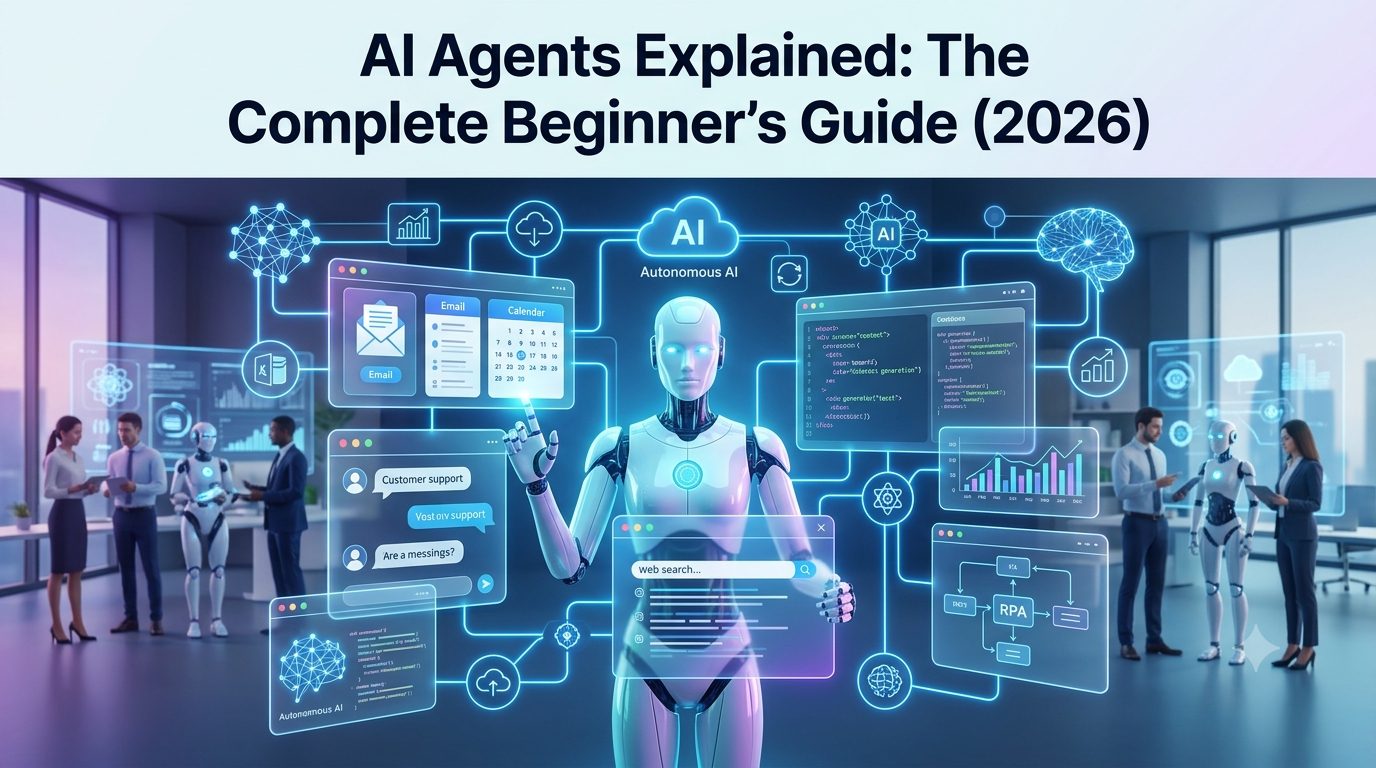
AI Agents Are Beginning to Replace Entire Multi-Step Workflows
The most important development in 2026 may be the rise of autonomous AI agents.
Unlike earlier AI systems that performed single tasks, agentic AI systems can execute multi-step workflows independently.
These systems can:
- Interpret goals
- Plan actions
- Use external tools
- Access databases
- Communicate with software systems
- Adapt dynamically during execution
Companies are increasingly experimenting with AI agents capable of handling:
- Sales workflows
- Financial reporting
- IT operations
- Research analysis
- Procurement processes
- Compliance monitoring
Some enterprises now allow employees to build internal AI agents securely through enterprise platforms. :contentReference[oaicite:4]{index=4}
Researchers are also developing systems focused on improving AI workflow reliability, security, and deterministic execution for enterprise environments. :contentReference[oaicite:5]{index=5}
Experts believe agentic AI could become the next major phase of business automation.
Why Businesses Are Deploying AI So Aggressively
Several factors are accelerating AI workflow replacement across industries.
Lower Costs
AI systems can reduce operational expenses significantly.
Labor Shortages
Some industries face ongoing staffing challenges.
Productivity Gains
Businesses can complete workflows much faster using AI.
Scalability
AI systems can handle large volumes of work simultaneously.
Competitive Pressure
Companies fear falling behind competitors adopting AI more aggressively.
As AI tools become cheaper and easier to implement, adoption continues accelerating globally.
Not Every Workflow Can Be Fully Automated
Despite rapid progress, experts caution that AI still has important limitations.
AI systems can struggle with:
- Complex judgment calls
- Ambiguous situations
- Emotional intelligence
- Strategic leadership
- Ethical reasoning
- Creative originality
Many businesses are discovering that AI works best when combined with human oversight.
Some researchers also warn that current AI workflow systems can fail unpredictably in messy real-world environments where edge cases are common. :contentReference[oaicite:6]{index=6}
As a result, many organizations still rely on “human-in-the-loop” systems where employees supervise automated workflows. :contentReference[oaicite:7]{index=7}
The Future Workplace May Look Very Different
The rise of AI workflow automation is fundamentally changing how businesses operate.
Entire categories of repetitive administrative and operational work are becoming increasingly automated.
At the same time, new roles are emerging involving:
- AI supervision
- Workflow orchestration
- AI governance
- Prompt engineering
- Human-AI collaboration
Experts increasingly believe the future workplace may revolve less around manual execution and more around managing intelligent systems.
Some economists compare the AI automation wave to earlier industrial revolutions that reshaped labor markets over decades.
The difference is that AI transformation appears to be happening much faster.
Conclusion
In 2026, AI software tools are no longer limited to assisting individual tasks.
They are increasingly replacing entire workflows across customer service, software development, marketing, research, HR, cybersecurity, administration, and enterprise operations.
Advances in generative AI, workflow automation platforms, and autonomous AI agents are dramatically increasing what software systems can accomplish independently.
Businesses see enormous opportunities in:
- Cost reduction
- Operational speed
- Scalability
- Productivity gains
But the rapid replacement of traditional workflows is also creating major questions about employment, management structures, regulation, and the future relationship between humans and machines.
One thing is becoming increasingly clear:
The companies that learn how to redesign workflows around AI may define the next era of global business competition.


Leave a Reply