

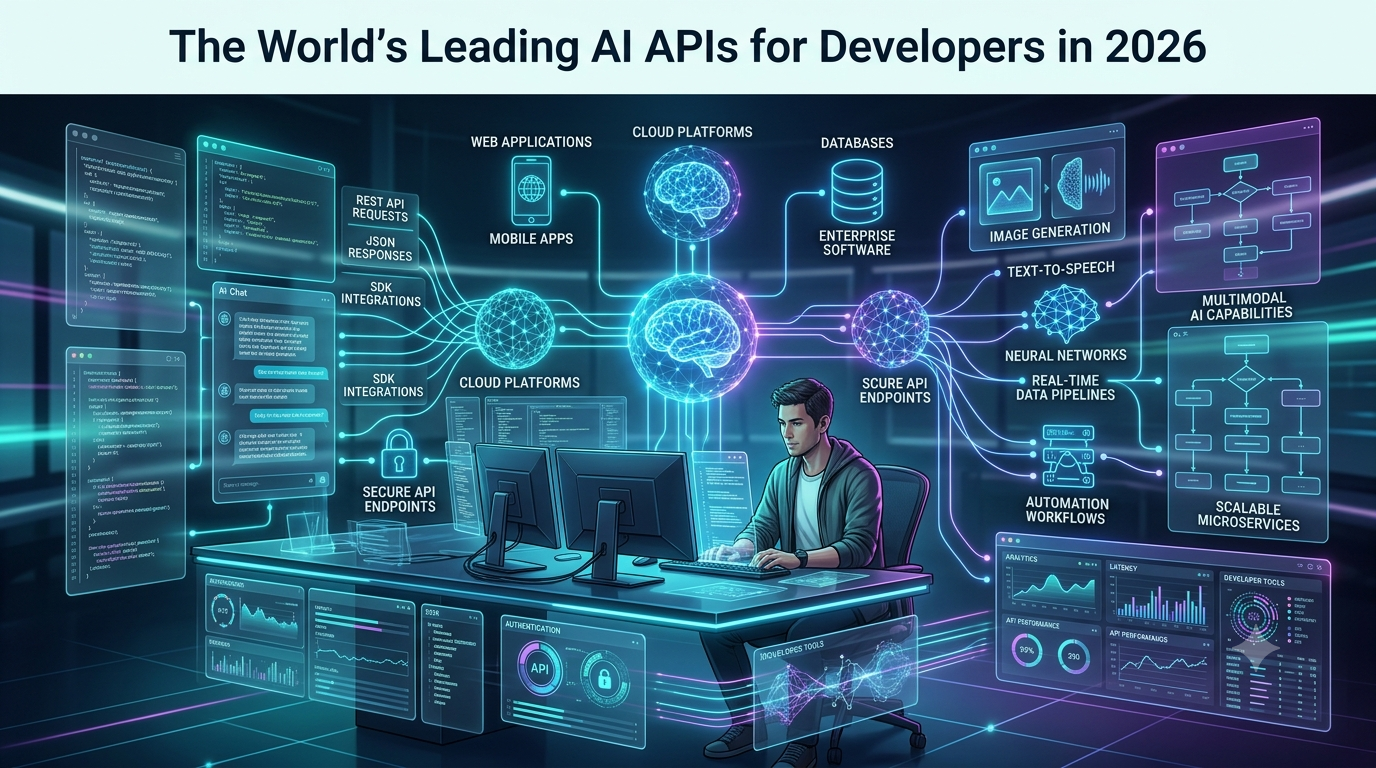
Artificial intelligence has completely changed the way modern software applications are built. A few years ago, adding AI capabilities to an application required deep machine learning expertise, massive datasets, expensive computing infrastructure, and specialized teams. In 2026, developers can integrate powerful artificial intelligence features into their products with just a few API calls.
This transformation has been made possible by AI APIs.
AI APIs allow developers to connect their applications with advanced AI models without creating, training, and maintaining complex machine learning systems from scratch. Whether developers want to build intelligent chatbots, AI coding assistants, document analysis platforms, recommendation systems, voice applications, image generation tools, or autonomous AI agents, AI APIs provide ready-to-use intelligence.
The growth of generative AI has created a highly competitive ecosystem of AI API providers. Companies such as OpenAI, Google, Anthropic, Microsoft, Mistral, Cohere, DeepSeek, Hugging Face, Groq, and other emerging platforms now offer specialized AI services for different development needs.
However, choosing the right AI API is becoming increasingly difficult. Some APIs are optimized for advanced reasoning, some focus on speed and low costs, others provide enterprise security, multimodal capabilities, or open-source flexibility.
For developers, the best AI API is not always the most powerful one. The right choice depends on factors such as application requirements, budget, performance expectations, data privacy needs, scalability, and the type of AI functionality being developed.
This complete guide compares the best AI APIs for developers in 2026, explaining their features, advantages, limitations, pricing considerations, ideal use cases, and how to choose the right API for your next AI-powered application.
What Is an AI API?
An AI API (Artificial Intelligence Application Programming Interface) is a software interface that allows developers to access artificial intelligence models and capabilities through simple programming requests.
Instead of building an AI model internally, developers can send information to an AI API and receive an intelligent response.
For example, a developer building a customer support application does not need to train a language model. The application can send customer questions to an AI API, receive generated responses, and display them to users.
Similarly, developers can use AI APIs to add features such as:
- Natural language conversations
- Text generation
- Code generation
- Image creation
- Speech recognition
- Voice synthesis
- Translation
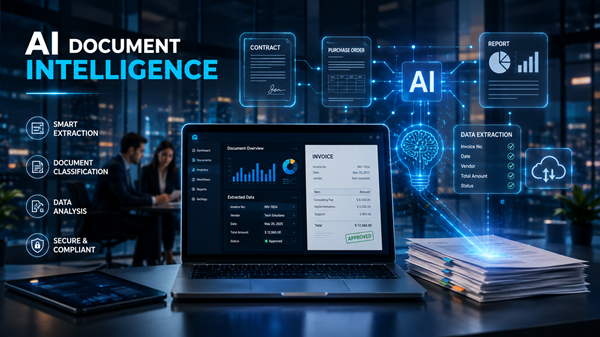
- Document understanding
- Data analysis
- AI-powered search
AI APIs act as a bridge between applications and artificial intelligence models.
They allow startups, independent developers, and large enterprises to build advanced AI products without investing millions of dollars into AI infrastructure.
Why Developers Use AI APIs in 2026
The popularity of AI APIs has increased because they remove many barriers associated with traditional AI development.
1. Faster AI Application Development
Training a modern AI model from scratch can take months or even years. It requires large datasets, specialized researchers, powerful GPUs, and extensive testing.
AI APIs eliminate this complexity.
Developers can integrate AI features into applications within days or weeks by using existing models through APIs.
For example, a startup can launch an AI writing assistant, customer support chatbot, or research tool without building its own large language model.
This allows developers to focus more on user experience, product design, and business logic rather than AI infrastructure.
2. Lower Infrastructure Costs
Running large AI models requires expensive hardware, especially GPUs and data center infrastructure.
AI APIs provide access to these models through cloud-based systems, meaning developers do not need to purchase or maintain expensive computing resources.
Companies can scale their AI usage according to demand and pay only for the resources they consume.
This makes advanced AI technology accessible to smaller companies and individual developers.
3. Access to Advanced AI Models
AI API providers continuously improve their models with better reasoning, accuracy, speed, and multimodal capabilities.
Developers using APIs automatically benefit from these improvements without rebuilding their applications.
For example, an application connected to an AI API can gain improved language understanding or coding abilities when the provider releases a newer model version.
4. Easy Integration With Existing Applications
Modern AI APIs provide developer-friendly documentation, SDKs, libraries, and tools for popular programming languages.
Developers can integrate AI capabilities into:
- Websites
- Mobile applications
- SaaS platforms
- Enterprise software
- Developer tools
- Automation systems
This has made AI development much more accessible.
Key Factors to Consider Before Choosing an AI API
Choosing an AI API requires more than simply selecting the most popular provider.
Developers should evaluate several important factors before making a decision.
1. Model Quality and Intelligence
The quality of an AI API depends heavily on the underlying model.
Some applications require advanced reasoning, while others only need simple text generation.
For example, a legal document analysis system requires stronger reasoning capabilities than a basic chatbot.
Developers should evaluate:
- Accuracy
- Reasoning ability
- Context understanding
- Coding performance
- Multilingual support
2. Speed and Response Time
Latency is critical for many AI applications.
A customer support chatbot or voice assistant needs fast responses to provide a smooth user experience.
Some AI APIs focus on maximum intelligence, while others prioritize speed and efficiency.
Choosing the right balance between intelligence and speed is important.
3. Cost and Scalability
AI API costs vary depending on:
- Model size
- Number of requests
- Input and output length
- Additional features
A developer building a small prototype may choose a low-cost API, while an enterprise application may prioritize reliability and performance.
Understanding future scalability is essential before selecting an AI provider.
4. Data Privacy and Security
Businesses handling sensitive information must carefully evaluate how AI providers manage user data.
Important considerations include:
- Data storage policies
- Encryption
- Compliance standards
- Enterprise security options
- Access controls
Industries such as healthcare, finance, and legal services require stronger privacy protections.
5. Developer Experience
A good AI API should provide:
- Clear documentation
- Software development kits
- Community support
- Testing tools
- Reliable uptime
A technically powerful API with poor developer support can create unnecessary challenges.
Best AI APIs for Developers in 2026
1. OpenAI API – Best Overall AI API for Developers
OpenAI API remains one of the most widely adopted AI development platforms in 2026.
It provides developers access to advanced AI models capable of natural language understanding, reasoning, coding, image generation, speech processing, and AI agent development.
The API ecosystem is popular because of its flexibility and extensive developer resources.
Developers use OpenAI API to build applications such as:
- AI chatbots
- Writing assistants
- Coding tools
- Customer support systems
- Research applications
- AI agents
One of the biggest advantages of OpenAI API is its broad capability range. Developers can create applications that combine text, images, audio, and automation features within a single ecosystem.
Key Features
OpenAI API provides:
- Advanced language models
- Text generation
- Reasoning capabilities
- Image generation
- Speech-to-text
- Text-to-speech
- Embeddings
- AI agent tools
Best For
OpenAI API is suitable for:
- Startups
- SaaS applications
- AI assistants
- Business automation
- General-purpose AI products
Advantages
OpenAI offers strong model performance, extensive documentation, and a large developer community.
Its ecosystem makes it easier for developers to build, test, and scale AI applications.
Limitations
The main limitation is that large-scale usage can become expensive. Applications processing millions of requests need careful cost management.
2. Google Gemini API – Best Multimodal AI API
Google Gemini API is designed for developers who need AI systems capable of understanding multiple types of information.
Unlike traditional text-only models, Gemini focuses heavily on multimodal intelligence, allowing applications to work with text, images, audio, and video.
This makes it valuable for applications that require deeper understanding of real-world information.
Developers use Gemini API for:
- AI research tools
- Data analysis applications
- Document understanding
- Enterprise software
- Creative applications
Key Features
Gemini API includes:
- Multimodal AI capabilities
- Long-context understanding
- Image analysis
- Code assistance
- Data processing
- Google Cloud integration
Best For
Gemini is ideal for:
- Multimodal applications
- Google ecosystem users
- Enterprise AI solutions
- Research platforms
Advantages
Its biggest strength is handling different data formats within a single AI system.
Developers building applications involving images, documents, and complex information workflows can benefit significantly from Gemini.
Limitations
Some developers may find it most beneficial when working within Google’s broader technology ecosystem.
3. Anthropic Claude API – Best for Reasoning and Long Documents
Anthropic Claude API has become one of the strongest alternatives for developers building applications that require advanced reasoning, detailed analysis, and reliable responses.
Claude models are especially popular for handling large amounts of text, making them useful for applications involving documents, research materials, business reports, legal information, and internal knowledge systems.
Many developers choose Claude when their applications need to understand complex information rather than simply generate short responses.
Common use cases include:
- Document analysis platforms
- Enterprise knowledge assistants
- Research applications
- AI writing tools
- Business intelligence systems
Key Features
Claude API provides:
- Advanced reasoning capabilities
- Large context window support
- Document understanding
- Coding assistance
- Enterprise-focused security features
Best For
Claude API is well suited for:
- Businesses analyzing large documents
- Research applications
- Legal and financial workflows
- Knowledge management systems
Advantages
Claude performs particularly well when working with long-form information. It can process large documents and maintain context across extended conversations.
Its focus on safety and reliable outputs also makes it attractive for organizations deploying AI in professional environments.
Limitations
Claude may not always be the cheapest option for developers building applications with extremely high request volumes.
4. Mistral API – Best Cost-Efficient AI API
Mistral AI has gained popularity among developers because of its focus on efficient and powerful AI models.
Instead of only competing through larger models, Mistral focuses on creating optimized systems that provide strong performance while requiring fewer resources.
This makes Mistral API especially attractive for startups and developers who need capable AI models while controlling operational costs.
Developers use Mistral models for:
- AI assistants
- Text generation applications
- Business automation
- Coding tools
- Enterprise solutions
Key Features
Mistral API provides:
- Language generation
- Coding capabilities
- Text understanding
- Efficient AI models
- Enterprise deployment options
Best For
Mistral is suitable for:
- Startups
- Cost-sensitive applications
- Developers building scalable AI products
- Businesses looking for flexible AI solutions
Advantages
The biggest advantage of Mistral is its balance between performance and efficiency.
Developers can create powerful applications without always relying on extremely expensive large-scale models.
Limitations
For highly complex reasoning tasks, some larger models may still provide better performance.
5. Cohere API – Best for Enterprise AI Search and Knowledge Systems
Cohere focuses heavily on enterprise artificial intelligence applications, especially systems that need to search, understand, and retrieve information from business data.
Many organizations have large amounts of internal information stored across documents, databases, and knowledge platforms. Cohere helps developers build AI systems that can understand this information and provide useful answers.
Cohere APIs are commonly used for:
- Enterprise search
- Internal AI assistants
- Customer support platforms
- Document retrieval systems
- Knowledge management tools
Key Features
Cohere provides:
- Large language models
- Embedding models
- Retrieval systems
- Enterprise search capabilities
- Text generation
Best For
Cohere is ideal for:
- Large businesses
- Internal company assistants
- AI-powered search applications
- Customer service automation
Advantages
Cohere’s major strength is its enterprise focus. Its tools are designed around helping organizations securely use their own data with AI.
Limitations
Developers building general consumer AI applications may find other platforms more suitable.
6. Hugging Face API – Best Open-Source AI Platform
Hugging Face has become one of the largest ecosystems for open-source artificial intelligence models.
Unlike providers that offer only their own models, Hugging Face provides access to thousands of AI models created by researchers, companies, and developers worldwide.
Through its API services, developers can experiment with different models for language processing, image generation, speech recognition, and machine learning tasks.
Hugging Face is widely used by:
- AI researchers
- Machine learning engineers
- Developers building customized applications
- Open-source communities
Key Features
Hugging Face provides:
- Thousands of AI models
- Open-source model access
- Model hosting
- Machine learning tools
- Community-driven development
Best For
Hugging Face is best for:
- Researchers
- Developers who need customization
- Open-source AI projects
- Experimental applications
Advantages
The biggest advantage of Hugging Face is flexibility.
Developers can choose from thousands of models instead of being limited to one company’s AI ecosystem.
Limitations
Because of the large number of available models, selecting the right model can require more technical knowledge.
7. DeepSeek API – Best AI API for Coding and Technical Tasks
DeepSeek has quickly gained attention among developers because of its strong performance in programming, mathematics, and technical reasoning.
It provides AI models designed specifically for applications requiring advanced problem-solving capabilities.
Developers commonly use DeepSeek for:
- Coding assistants
- Software development tools
- Debugging systems
- Technical documentation
- Mathematical applications
Key Features
DeepSeek provides:
- Code generation
- Programming assistance
- Reasoning capabilities
- Technical problem solving
- AI development support
Best For
DeepSeek is suitable for:
- Software developers
- Engineering teams
- Coding applications
- Technical AI tools
Advantages
Its strongest advantage is coding performance combined with competitive costs.
Developers creating programming assistants can benefit from its technical capabilities.
Limitations
It has a smaller ecosystem compared with some older AI providers.
8. Groq API – Best for Ultra-Fast AI Inference
Groq has become popular because of its focus on extremely fast AI processing.
While many AI providers compete on intelligence, Groq focuses heavily on speed by using specialized hardware designed for rapid model execution.
This makes Groq useful for applications where response time is critical.
Examples include:
- Real-time chatbots
- Voice assistants
- Interactive applications
- AI-powered customer support
Key Features
Groq provides:
- High-speed inference
- Low latency responses
- Access to popular AI models
- Real-time AI processing
Best For
Groq is ideal for:
- Voice applications
- Real-time systems
- Applications requiring instant responses
Advantages
Speed is Groq’s biggest strength.
Applications that require immediate AI responses can provide a smoother experience using fast inference platforms.
Limitations
The platform may not always provide the widest range of AI features compared with larger AI ecosystems.
9. Stability AI API – Best for AI Image Generation
Stability AI provides APIs focused on generative image technology.
Developers can integrate AI image creation into applications without building their own image generation systems.
This is useful for creative platforms, marketing tools, design applications, and visual content solutions.
Common applications include:
- AI design tools
- Marketing platforms
- Creative applications
- Product visualization systems
Key Features
Stability AI provides:
- Image generation
- Creative AI tools
- Visual content creation
- Custom image workflows
Best For
It is best suited for:
- Designers
- Creative startups
- Marketing applications
- Visual AI products
Advantages
Stability AI provides developers with powerful image generation capabilities that can be integrated directly into applications.
Limitations
Image generation quality depends heavily on prompts, model selection, and customization.
10. ElevenLabs API – Best AI Voice API
ElevenLabs specializes in realistic AI voice technology.
The platform allows developers to create applications with natural-sounding speech generation and voice capabilities.
Voice-based AI applications are becoming increasingly important as businesses move toward conversational interfaces.
Developers use ElevenLabs for:
- AI voice assistants
- Audiobooks
- Video narration
- Accessibility applications
- Voice-based customer support
Key Features
ElevenLabs provides:
- AI voice generation
- Speech synthesis
- Voice customization
- Audio content creation
Best For
ElevenLabs is suitable for:
- Voice applications
- Media companies
- Content creators
- Conversational AI systems
Advantages
Its biggest strength is producing highly realistic AI-generated voices.
Limitations
Developers creating complete AI assistants may need to combine voice APIs with language model APIs.
AI API Comparison Table
| AI API | Best For | Main Strength |
|---|---|---|
| OpenAI API | General AI applications | Overall capabilities |
| Google Gemini API | Multimodal applications | Text, image, audio, and video understanding |
| Claude API | Research and documents | Long-context reasoning |
| Mistral API | Startups | Efficiency and cost control |
| Cohere API | Enterprise search | Business knowledge systems |
| Hugging Face API | Open-source projects | Model flexibility |
| DeepSeek API | Coding applications | Programming performance |
| Groq API | Real-time applications | Extremely fast responses |
| Stability AI API | Image applications | AI-generated visuals |
| ElevenLabs API | Voice applications | Realistic speech generation |
Best AI APIs Based on Developer Requirements
Choosing the right AI API depends on the type of application being developed.
Best AI API for Building Chatbots
For conversational AI applications, developers should consider:
OpenAI API, Claude API, and Gemini API.
These platforms provide strong language understanding and natural conversations.
Best AI API for Coding Applications
Developers building coding assistants or programming tools can consider:
DeepSeek API, OpenAI API, and Gemini API.
These models provide code generation, debugging assistance, and technical reasoning.
Best AI API for AI Agents
AI agents require models that can understand goals, use tools, and complete multi-step tasks.
Strong options include:
OpenAI API, Claude API, Gemini API, and Mistral API.
Best AI API for Enterprise Applications
Businesses usually prioritize security, reliability, and integration.
Recommended options include:
Cohere API, Anthropic Claude, Microsoft Azure AI services, and Google Cloud AI platforms.
Best AI API for Image Generation
Developers creating visual applications can consider:
Stability AI APIs and image generation APIs from major AI platforms.
Best AI API for Voice Applications
For voice-focused applications:
ElevenLabs and OpenAI speech APIs are among the popular choices.
AI API vs Open-Source AI Models: Which Approach Should Developers Choose?
In 2026, developers have two major approaches for adding artificial intelligence capabilities to applications: using AI APIs or running open-source AI models.
Both approaches have advantages, and the right choice depends on the goals of the project.
AI APIs are generally easier because developers do not need to manage infrastructure, download models, or optimize performance. They can simply connect their application to an AI provider and start building.
This makes APIs ideal for startups, SaaS products, prototypes, and applications that need to launch quickly.
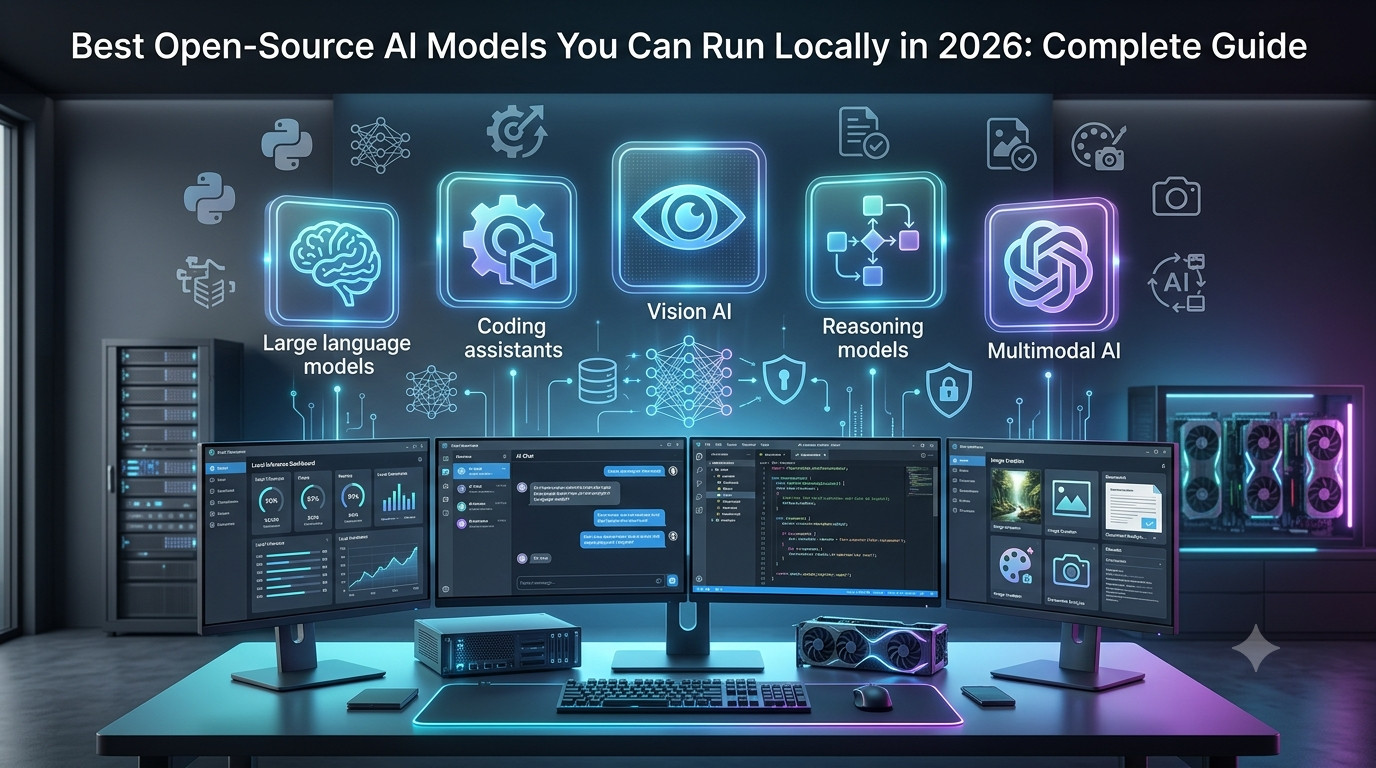
Open-source models provide more control. Developers can download models, customize them, run them locally, and modify them according to specific requirements.
This approach is especially useful for organizations that prioritize privacy, customization, and complete control over their AI systems.
However, running open-source models requires technical expertise, hardware resources, and ongoing maintenance.
The choice between AI APIs and open-source models depends on several factors:
AI APIs are better for:
- Faster development
- Access to advanced models
- Lower infrastructure requirements
- Easy scaling
Open-source models are better for:
- Data privacy
- Customization
- Offline AI applications
- Full control over deployment
Many modern companies are adopting a hybrid approach by combining both.
For example, a business may use an AI API for complex reasoning tasks while running smaller open-source models locally for private document processing.
How Developers Are Using AI APIs in Real Applications
AI APIs are no longer limited to experimental projects. Developers are integrating them into real-world products across almost every industry.
AI Customer Support Systems
Companies are building intelligent customer support platforms that can answer questions, understand customer history, search company knowledge bases, and provide personalized assistance.
AI APIs allow businesses to automate common support requests while allowing human agents to handle complex issues.
AI Coding Assistants
Programming tools powered by AI APIs help developers write code faster.
These applications can generate functions, explain programming concepts, identify bugs, create documentation, and suggest improvements.
The growing popularity of AI coding assistants shows how APIs are changing software development workflows.
AI Search Applications
Traditional search systems rely mainly on keyword matching.
AI-powered search applications understand meaning and context, allowing users to find information more naturally.
Developers use AI APIs to create:
- Enterprise knowledge search
- Research assistants
- Document discovery tools
- Customer information systems
AI Content Platforms
Content creation platforms increasingly use AI APIs for writing assistance, editing, translation, summarization, and personalization.
Businesses can create marketing tools, publishing platforms, and productivity applications by integrating AI capabilities.
AI Agents and Automation Systems
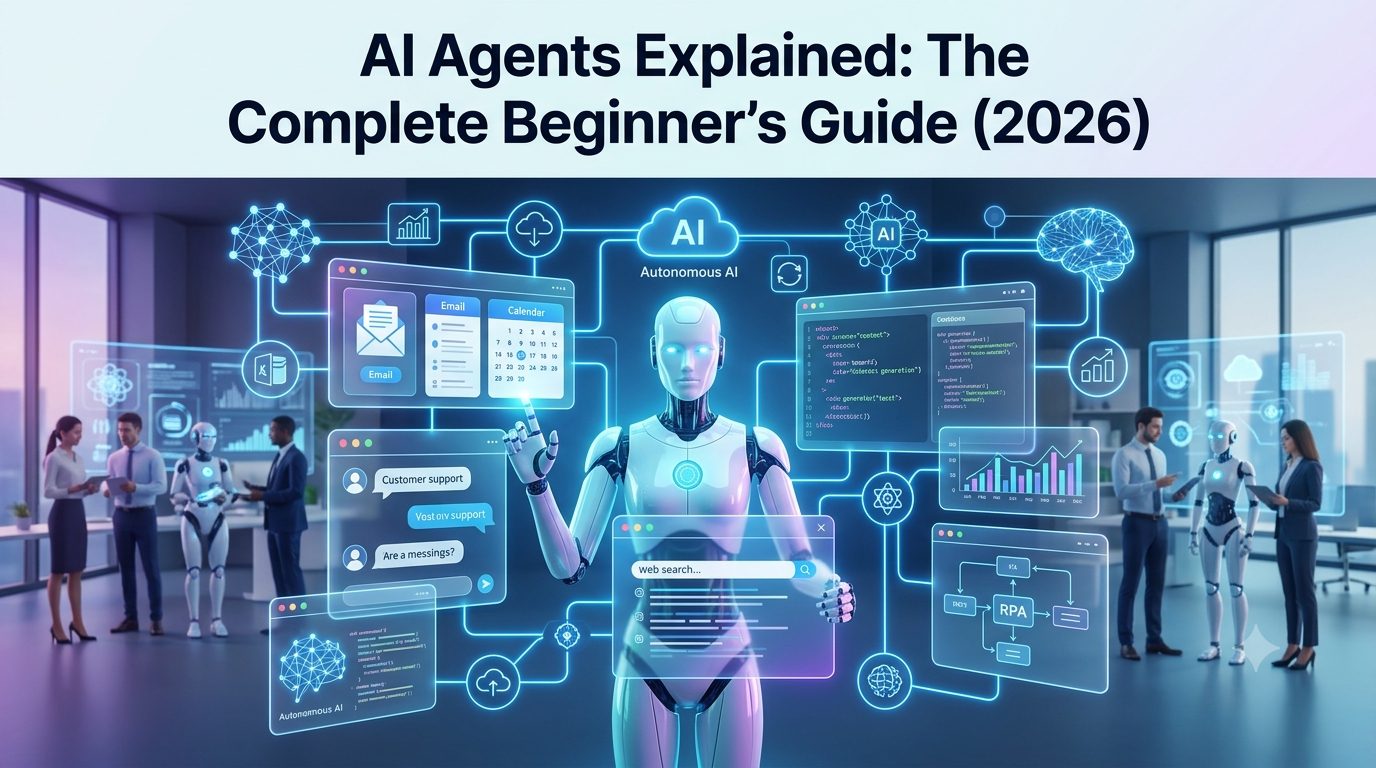
One of the biggest trends in 2026 is the rise of AI agents.
AI agents are systems that can understand goals, make decisions, use tools, and complete tasks automatically.
AI APIs provide the intelligence layer behind these agents.
For example, an AI business agent could analyze customer data, create reports, update CRM systems, send emails, and schedule meetings automatically.
Important Features Developers Should Look for in AI APIs
As the AI API market becomes more competitive, developers should evaluate more than just model intelligence.
Function Calling and Tool Integration
Modern AI applications often need models that can interact with external tools.
Function calling allows AI systems to connect with databases, APIs, applications, and automation platforms.
This capability is essential for building advanced AI agents.
Embedding Support
Embeddings allow applications to convert text, documents, and information into numerical representations that AI systems can understand.
They are widely used for:
- AI search
- Recommendation systems
- Document retrieval
- Knowledge bases
Multimodal Capabilities
Modern AI applications increasingly need to understand different types of information.
Multimodal APIs allow developers to work with:
- Text
- Images
- Audio
- Video
This enables more advanced applications such as AI assistants that can understand both conversations and visual information.
Fine-Tuning and Customization
Some applications require specialized AI behavior.
Fine-tuning allows developers to customize models using their own datasets.
This is useful for industries with specific requirements, such as healthcare, finance, education, and enterprise software.
Security and Compliance
Enterprise developers must consider security features before selecting an AI API.
Important areas include:
- Data protection
- Compliance certifications
- User access controls
- Enterprise agreements
- Privacy policies
Common Mistakes Developers Make When Choosing AI APIs
Selecting an AI API only based on popularity can create problems later.
One common mistake is choosing the most powerful model for every task.
Large models are not always necessary. Smaller and faster models may provide better performance for specific applications.
Another mistake is ignoring cost scalability.
A prototype that uses a few hundred API calls may become expensive when thousands or millions of users start using the application.
Developers should test different models and estimate long-term costs before deployment.
Another important consideration is data privacy.
Applications handling sensitive information should carefully review how AI providers process and store data.
Finally, developers should avoid depending on a single AI provider whenever possible.
A flexible architecture that supports multiple AI models can help businesses adapt as technology changes.
Future of AI APIs in 2026 and Beyond
AI APIs are becoming the foundation of modern software development.
In the coming years, AI APIs are expected to become more advanced, affordable, and easier to integrate.
Several trends will shape the future of AI APIs.
Growth of AI Agents
AI APIs will increasingly focus on autonomous systems capable of completing complex workflows.
Instead of simply answering questions, AI applications will perform tasks independently.
More Multimodal AI
Future APIs will provide stronger understanding of text, images, audio, and video together.
Developers will create applications that interact with users through multiple communication methods.
Lower Costs
As AI infrastructure improves and competition increases, API costs are expected to decrease.
This will allow smaller businesses and independent developers to build advanced AI products.
More Specialized AI Models
The future will not only depend on general-purpose models.
Developers will increasingly use specialized AI models designed for specific industries and tasks.
Examples include:
- Medical AI models
- Financial analysis models
- Legal research models
- Coding-specific models
Greater Integration With Software Development
AI APIs will become a standard part of application development.
Just as developers today integrate databases, payment systems, and cloud services, AI capabilities will become another essential building block.
How to Choose the Best AI API for Your Project
The best AI API depends on your specific requirements.
Start by defining what your application needs.
If you are building a general AI assistant, OpenAI API, Claude API, or Gemini API may be suitable choices.
If your application requires strong coding capabilities, DeepSeek and OpenAI are strong options.
If you need enterprise search and internal knowledge systems, Cohere may be a better fit.
For fast real-time applications, Groq can provide excellent performance.
For creative applications, image and voice-focused APIs such as Stability AI and ElevenLabs can add powerful capabilities.
Before making a final decision, developers should test multiple APIs, compare performance, evaluate costs, and choose the platform that best matches their application goals.
Conclusion
AI APIs have become one of the most important tools for modern developers. They have transformed artificial intelligence from a complex research field into an accessible technology that can be integrated into almost any application.
From chatbots and coding assistants to AI agents, enterprise software, voice applications, and creative platforms, AI APIs provide developers with the building blocks needed to create the next generation of intelligent software.
There is no single AI API that is perfect for every project. OpenAI provides a strong all-purpose solution, Google Gemini offers powerful multimodal capabilities, Claude excels at reasoning and long documents, DeepSeek is valuable for coding applications, Cohere focuses on enterprise AI search, and Groq delivers high-speed inference.
The right choice depends on your application’s goals, budget, technical requirements, and scalability plans.
As artificial intelligence continues evolving, developers who understand how to select and integrate AI APIs will have a significant advantage. The future of software development will not simply involve writing code—it will involve combining human creativity with powerful AI systems to build smarter, faster, and more capable applications.




Leave a Reply